Edinburgh homeowners are going solar faster than ever, but many are caught off guard when their systems shut down unexpectedly. In most cases, the cause is not a faulty panel or a broken inverter. It comes down to where you live and how the local grid behaves.
In this article, we break down the most common reasons Edinburgh solar systems shut down and what you can do about it.
What Does a Solar Shutdown Actually Mean?
When your solar system shuts down, it is not always cause for alarm, but it is always worth understanding why it happened.
A solar shutdown is when your inverter stops converting power and your system temporarily stops generating. This can last seconds or several minutes depending on the trigger. There are two broad categories:
- Protective shutdowns triggered by grid or voltage conditions
- Fault-based shutdowns caused by equipment issues, shading, or wiring faults
Why Edinburgh Sees More Shutdowns Than Most UK Cities
Edinburgh’s grid infrastructure and local geography create conditions that make solar shutdowns more frequent than in other parts of the UK.
The Lothians distribution network was not built to handle large volumes of locally generated solar electricity.
As more households install panels, the grid in many Edinburgh streets becomes congested, particularly during summer afternoons when hundreds of systems peak simultaneously.
If you are considering solar panel installation in Edinburgh, understanding these local grid dynamics before choosing your system size and inverter settings will save you headaches later.
Grid Voltage Rise
When your panels generate more than your home can use, surplus power pushes into the grid. If neighbouring systems are doing the same, street-level voltage can rise above 253V, the legal upper limit under UK regulations.
Your inverter shuts down automatically to protect your appliances and the network, and this is the most common cause of shutdowns in Edinburgh’s higher-density residential areas.
DNO Export Restrictions
Scottish Power Networks, the Distribution Network Operator for Edinburgh, can impose export limits on solar installations, particularly systems above 3.68 kW.
Understanding G98 and G99 regulations is essential here, as these rules directly govern how your inverter responds when export capacity is restricted.
When limits are breached, your inverter curtails output, and if it cannot manage that curtailment cleanly, a full shutdown follows.
Grid Frequency Deviations
Your inverter monitors grid frequency constantly and disconnects if it drifts outside 47 Hz to 52 Hz as defined by the UK Grid Code. Frequency deviations happen more often during periods of high national renewable generation, which increasingly coincides with Edinburgh’s best solar days in summer. It is a protective mechanism, not a fault, but it can shut your system down on the clearest day of the year.
Shading From Edinburgh’s Roofscape
Edinburgh’s tenement streets, mature trees, chimneys, and dormer windows create shifting shading patterns throughout the day. On string inverter systems, shading on even one panel can drag down the entire string.
When the voltage mismatch falls outside the inverter’s operating window, it shuts down rather than generating inefficiently.
Inverter Overtemperature
Inverters have built-in thermal protection that reduces output or shuts the unit down if internal temperatures exceed safe limits. South-facing loft installations in Edinburgh can push inverters past their threshold on summer afternoons even when outdoor temperatures are modest. Correct ventilation during installation prevents this entirely.
Wiring Degradation and Isolation Faults
Edinburgh’s wet climate accelerates the degradation of DC cables, connectors, and roof penetrations over time. Moisture ingress and loose connections cause isolation faults that trigger automatic shutdowns. Staying on top of solar panel maintenance with annual inspections is the most effective way to catch these faults before they develop into shutdowns or safety risks.
How to Reduce Shutdowns Without Replacing Your System
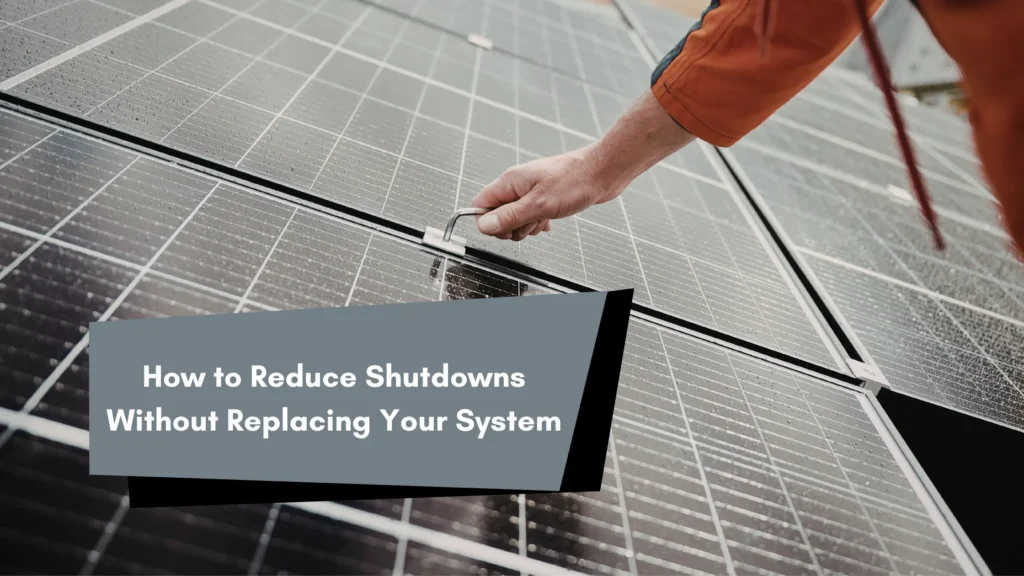
Most Edinburgh shutdown issues can be significantly reduced with targeted changes, and not all of them require major expenditure.
Adjust Inverter Voltage Settings
Many inverters are factory-set conservatively. A qualified engineer can widen the operating voltage window within DNO-approved limits, reducing the frequency of voltage-rise shutdowns without any hardware changes.
Install Battery Storage
A battery absorbs surplus generation before it pushes grid voltage up, which directly reduces the most common cause of Edinburgh shutdowns. Home battery storage also means that energy your system would have lost during a shutdown is stored and used later instead.
Apply for a Higher Export Limit
If your system is being curtailed by DNO restrictions, your installer can apply to Scottish Power Networks for a higher export allowance. This is a straightforward process for MCS-certified installers and can make a significant difference for larger systems.
Upgrade to Micro Inverters or Power Optimisers
These give each panel independent operation and eliminate the string-level shading losses that cause mismatch shutdowns. For Edinburgh’s complex rooflines, this upgrade is often the most effective long-term solution.
Improve Inverter Ventilation
If overtemperature shutdowns are the cause, repositioning the inverter or improving airflow around it is a low-cost fix that resolves the issue permanently.
Book an Annual Service
Loose connections and early-stage wiring faults are caught during routine inspection before they escalate. Annual servicing is the simplest and most cost-effective way to prevent fault-based shutdowns across the board.
When a Shutdown Is a Warning Sign
Not every shutdown is a routine grid event. Some are early indicators of a fault that will worsen if left unaddressed.
Contact a qualified engineer promptly if your system is shutting down multiple times per day, if you are seeing error codes related to isolation resistance or earth faults, or if shutdowns are happening during low-generation conditions with no obvious grid cause. Solar energy performance in Scottish weather gives a useful baseline for what normal output looks like throughout the year, making it easier to spot when something is genuinely wrong.
According to the MCS, all solar PV systems should be installed and maintained by an MCS-certified contractor to ensure ongoing compliance and safe operation.
Conclusion
Solar shutdowns in Edinburgh are more common than most homeowners expect, and the majority are caused by local grid conditions rather than equipment failure. Voltage rise, DNO export limits, and Edinburgh’s dense roofscape all play a role.
Most of these issues are manageable with the right inverter settings, battery storage, and regular maintenance.
If you are experiencing regular shutdowns or planning a new installation, speaking to a local MCS-certified installer who knows Edinburgh’s grid is the most important first step.
Frequently Asked Questions
Why does my solar system keep turning off on sunny days?
This is most commonly caused by grid voltage rise. When many systems in your area generate simultaneously, local voltage can exceed 253V and your inverter shuts down as a safety measure.
Is a solar shutdown dangerous?
Routine protective shutdowns are not dangerous as they are a designed safety feature. Shutdowns caused by isolation faults or wiring degradation should be investigated by a qualified engineer promptly.
Can a battery stop my solar system from shutting down?
In many cases, yes. A battery absorbs surplus generation before it pushes grid voltage up, which is the most common cause of shutdowns in Edinburgh.
How do I know if my inverter is set correctly?
If you are experiencing frequent shutdowns and your system is over two years old, have a qualified engineer review the voltage settings. DNO requirements in Edinburgh have tightened as solar uptake has grown.
Who do I contact if my DNO is restricting my solar exports?
Contact Scottish Power Networks directly or ask your MCS-certified installer to apply for a higher export limit or G99 connection agreement on your behalf.