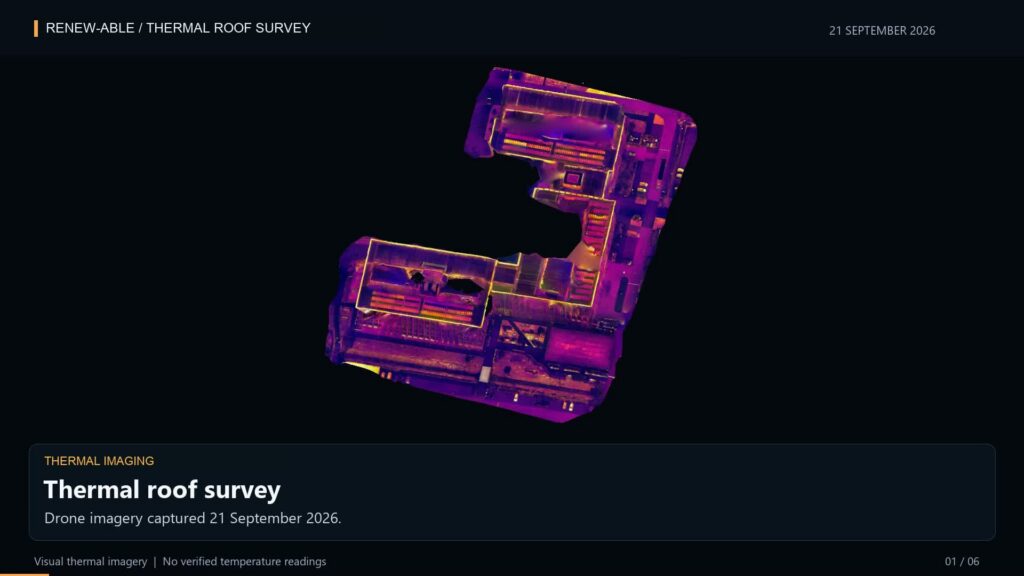
A roof or solar installation can look perfectly ordinary in a photograph while showing an unusual pattern in a thermal image. At Renew-Able Solutions, we use thermal imaging alongside visual inspection and appropriate testing to help identify where heat may be building up and where closer investigation is needed.
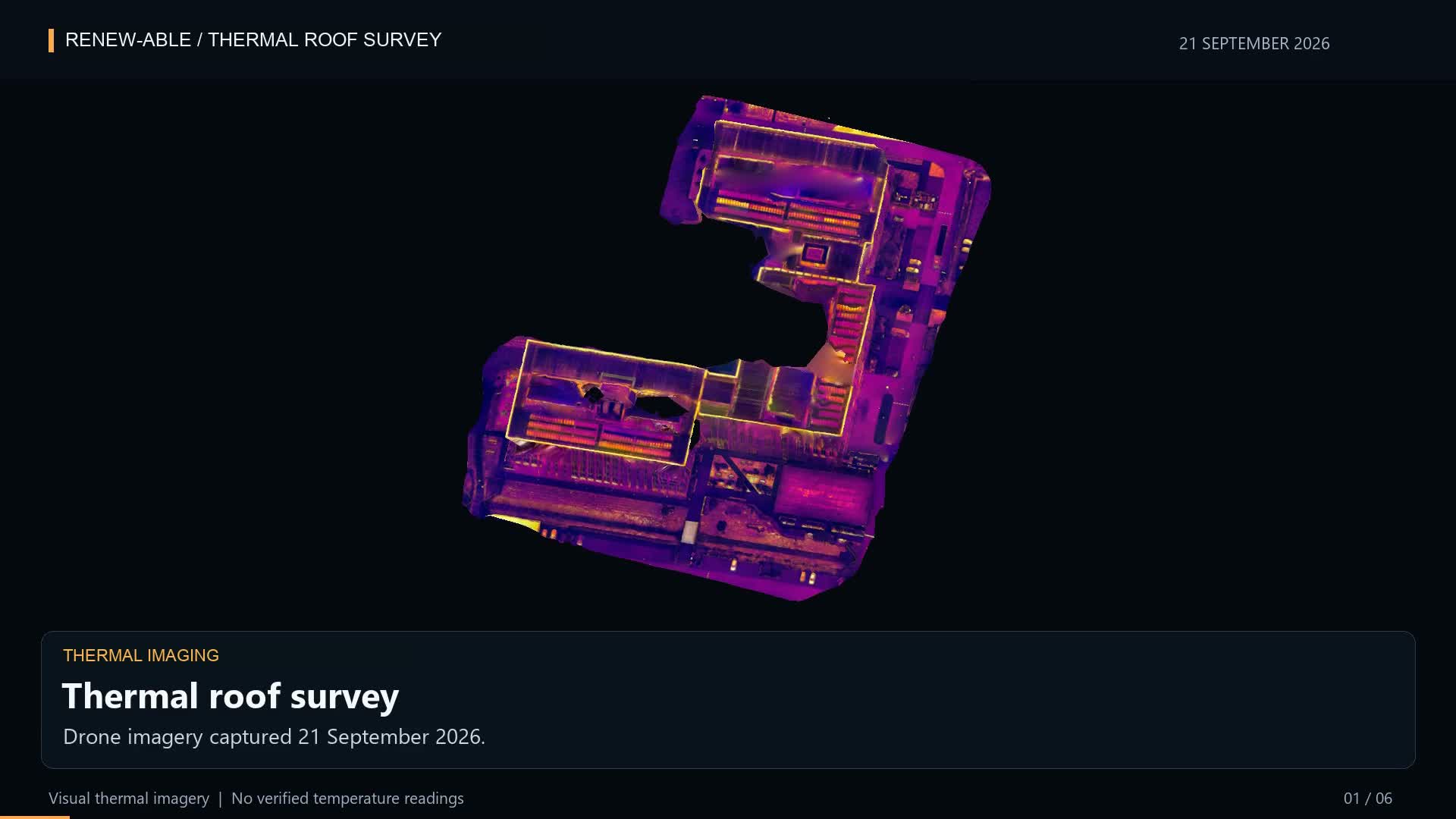
These two short videos show how we review a commercial roof and its solar arrays using a thermal 3D model. They give a clear overview of the roof layout and the relative thermal appearance of different areas.
Watch: a thermal drone survey in 3D
The first video moves around the roof model, highlighting the solar arrays, roof features and visible thermal patterns. Seeing the site from several angles helps us locate areas of interest and relate them back to the original survey photographs.
Watch: understanding the thermal colours
The second video includes a colour guide. In this display, purple represents a relatively cooler appearance, pink and orange show intermediate tones, and yellow or pale areas appear relatively warmer. This makes differences easier to see across the roof and panel rows.
These videos are visual survey overviews, not temperature reports. Individual image scales may vary, and no verified temperature values or confirmed faults are assigned. A bright area is a reason to review the evidence, rather than an automatic diagnosis.
What thermal imaging adds to an inspection
Thermal cameras detect infrared radiation from surfaces and turn it into a visible image. This can reveal patterns that an ordinary photograph or a check with the naked eye may miss. On a solar installation, localised heating or differences between comparable modules can help direct a closer inspection.
The cause still needs to be established. Sunlight, shading, reflections, surface materials, wind and the way the equipment is operating can all influence the picture. Thermal imaging does not see through a roof or prove that a component has failed. Camera guidance from FLIR explains why thermal inspection and electrical diagnostics are used together.
Why we combine imaging with testing
The value comes from connecting the thermal view with the condition and performance of the installation. We compare areas of interest with visual observations, the original survey images and relevant operating or monitoring information. Appropriate electrical testing then helps establish whether further action is needed.
The checks depend on the equipment, access and findings. Our aim is to give the customer a clear explanation of what has been observed, what has been tested and what needs further investigation. A colourful image on its own cannot provide that answer.
A useful record for maintenance
A 3D overview makes it easier to explain where an observation sits on a large roof and to plan follow-up access. Keeping the imagery alongside inspection notes and test results also gives the maintenance team a useful reference. Repeat surveys can help review change when capture conditions and operating information are considered.
For more on our wider approach, read our commercial solar maintenance case study, which brings together testing, thermal imaging and panel care.
Discuss a thermal survey or solar inspection
If you manage a commercial property or solar installation and want to understand its condition, we can discuss the right combination of inspection, thermal imaging and testing for the site. Find out more about our commercial solar PV servicing and maintenance, or contact Renew-Able Solutions to tell us about your installation.