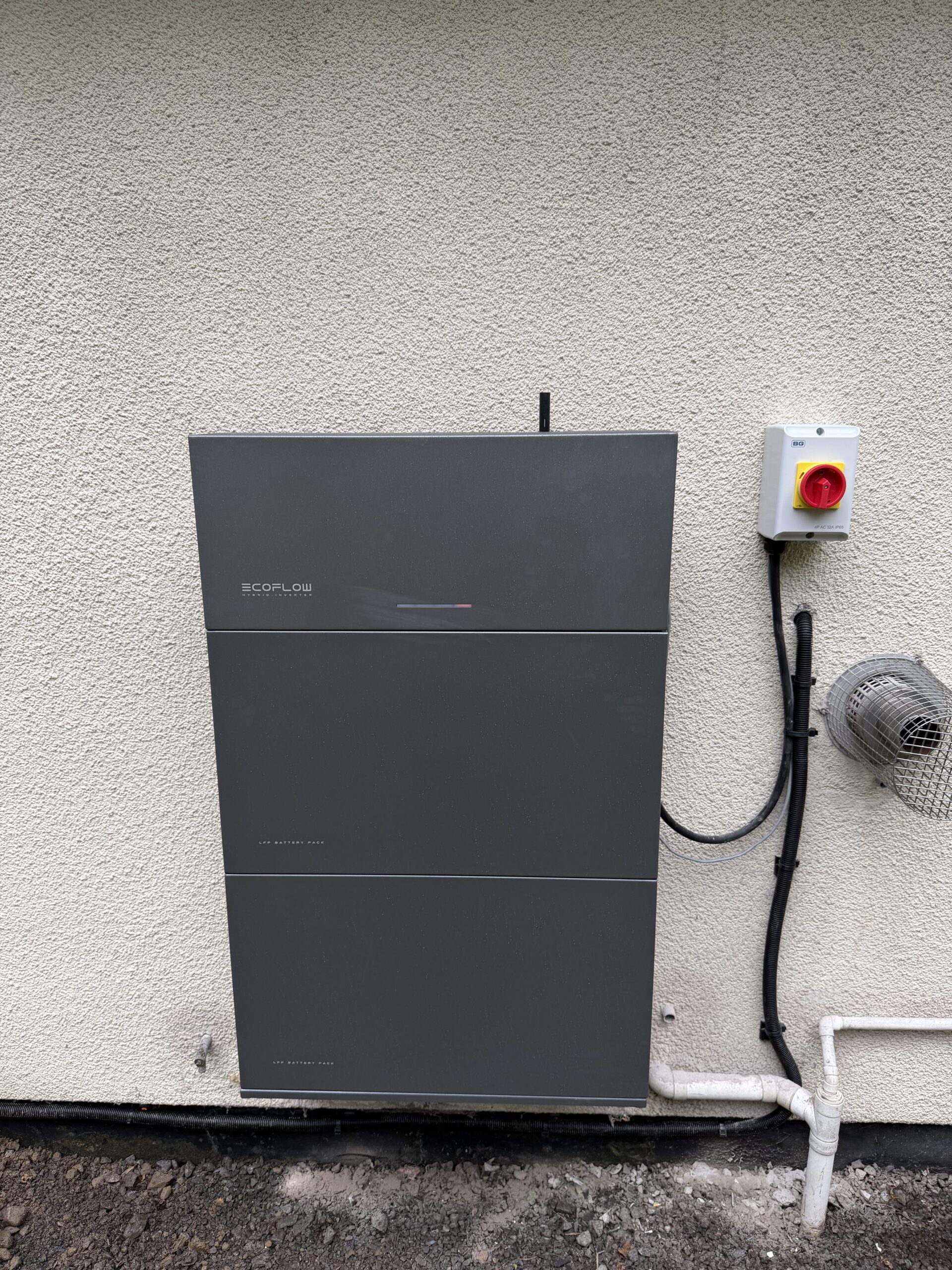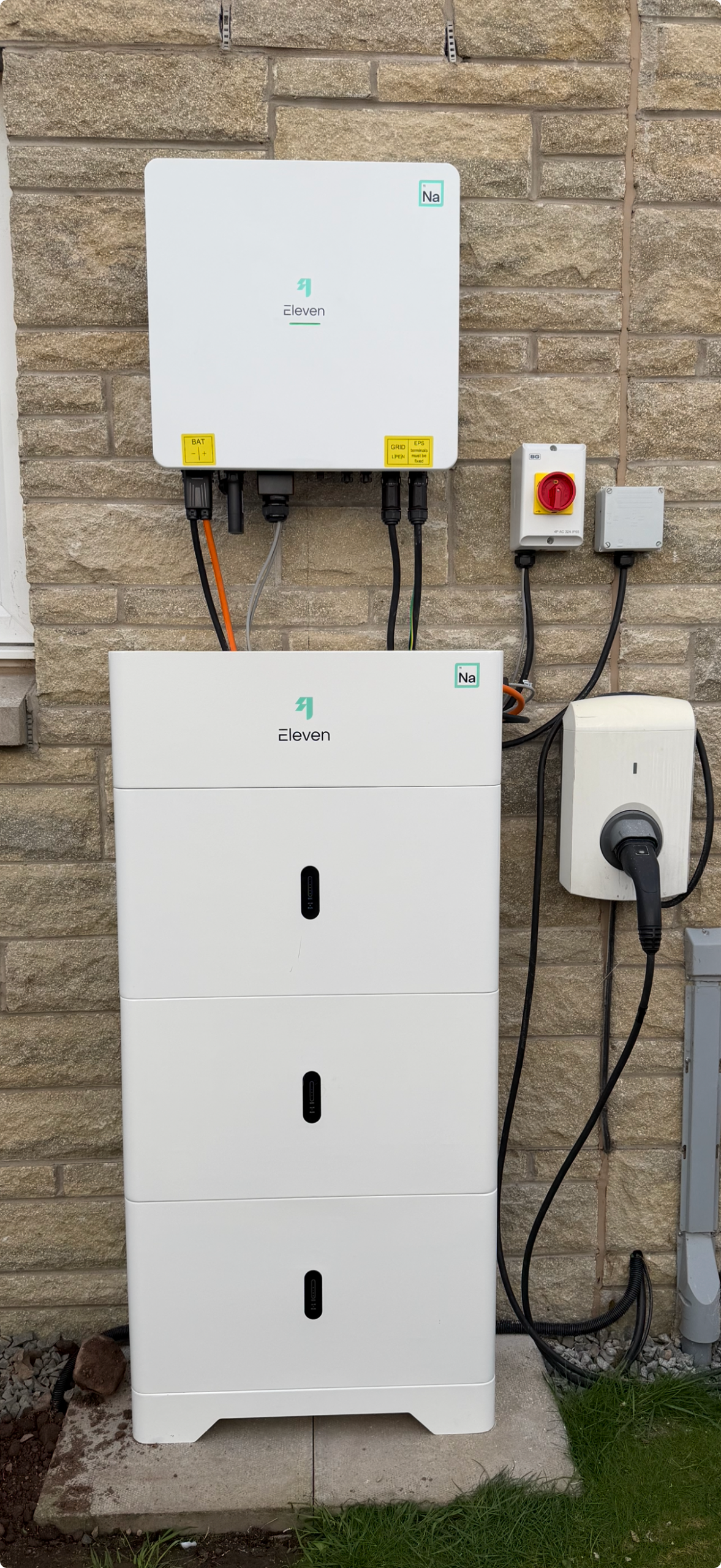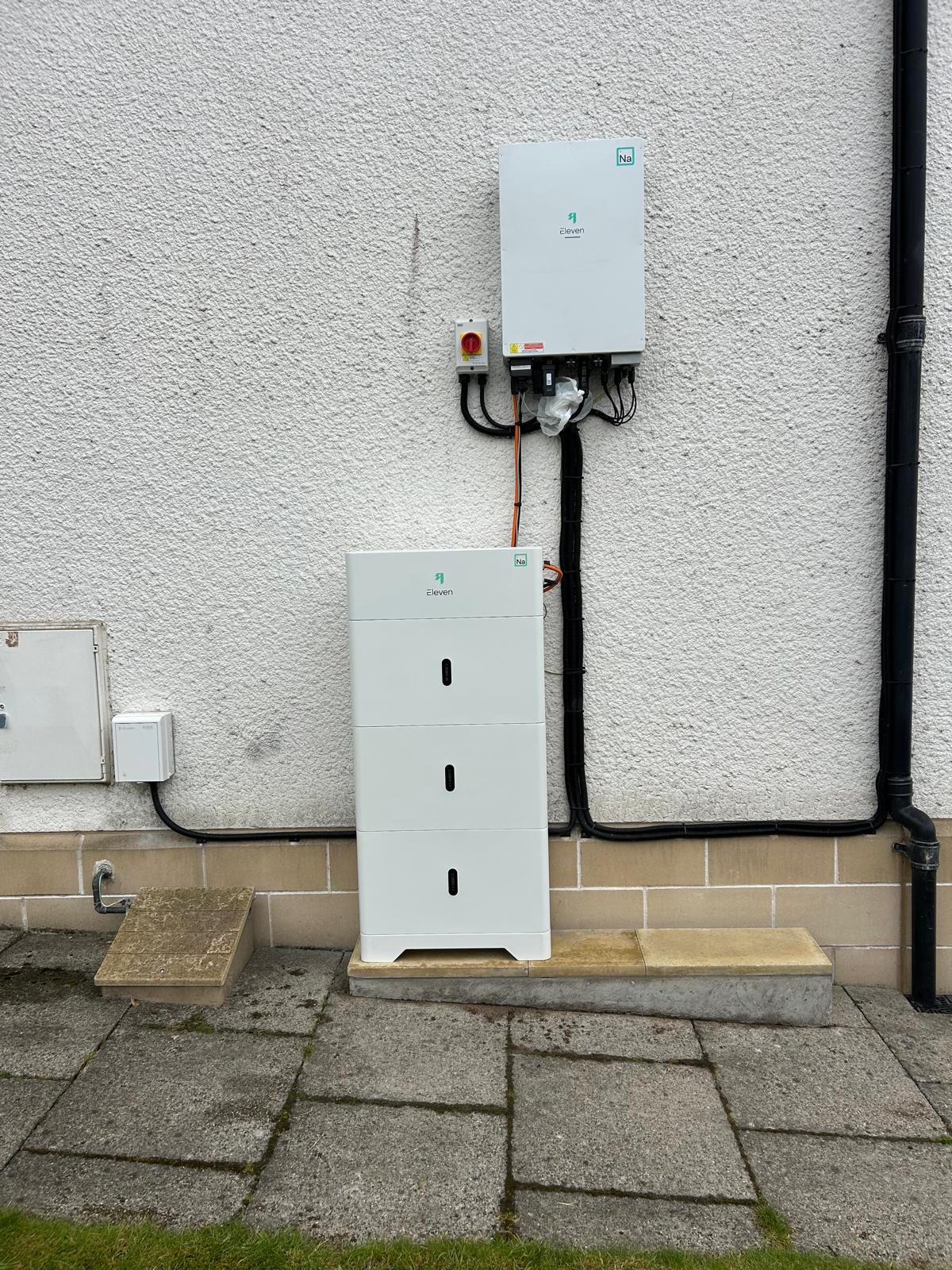
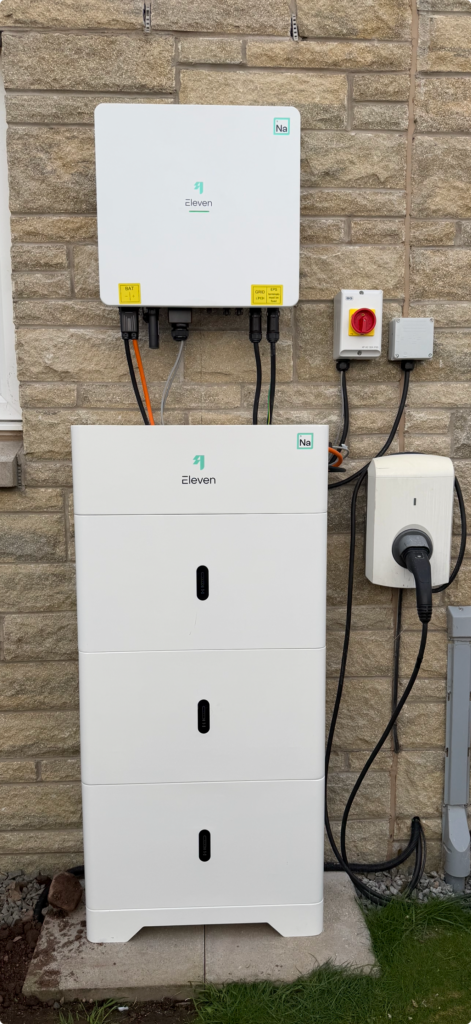
Our installation team has completed a new home battery storage project in Milnathort, Fife, built around Eleven Energy’s sodium-ion technology. The system combines a 3.68 kW Eleven Energy hybrid inverter with three 4.5 kWh Galvani battery modules, giving the property 13.5 kWh of usable energy storage, together with backup EPS functionality and a dedicated Condudisc TT earth arrangement.
The customer’s aim was straightforward: use their low-cost overnight electricity window to charge the battery, then use that stored energy during the more expensive parts of the day. Based on their household consumption and current Intelligent Octopus Go off-peak rate of 6.9p per kWh, they expect the system to reduce their annual electricity costs by more than £1,000.
Project at a glance
- Location: Milnathort, Fife
- Hybrid inverter: Eleven Energy 3.68 kW
- Battery storage: 3 × 4.5 kWh Galvani sodium-ion batteries
- Total storage capacity: 13.5 kWh
- Backup power: EPS installation for designated circuits
- Earthing: Condudisc electrode used for the dedicated TT earth arrangement
- Tariff strategy: overnight charging on Intelligent Octopus Go at the customer’s current 6.9p/kWh off-peak rate
Why the customer chose battery storage
Battery storage is not only for homes with solar panels. A well-sized battery can also be charged when grid electricity is cheapest and then discharged later, reducing the amount of electricity purchased at peak rates.
For this Milnathort household, the three Galvani modules provide enough storage to shift a meaningful proportion of daily consumption into the lower-cost period. The Eleven Energy hybrid inverter controls charging and discharging, while the customer can monitor the system and adjust its operating schedule to suit changes in household demand or tariff times.
Learn more about our home battery storage installations in Scotland and the Eleven Energy Galvani sodium-ion battery system.
How the customer is targeting savings of over £1,000 a year
The financial benefit comes from the difference between the customer’s off-peak and peak electricity prices. Charging up to 13.5 kWh overnight at 6.9p per kWh allows that cheaper energy to be used later in the day instead of importing the same amount at the higher daytime rate.
As a simple illustration, shifting around 13.5 kWh each day across a price difference of approximately 21p per kWh equates to just over £1,030 a year before battery conversion losses and variations in consumption are taken into account. Actual savings will depend on the household’s energy use, tariff rates, battery settings, seasonal demand and the amount of stored energy used each day; they are not guaranteed.
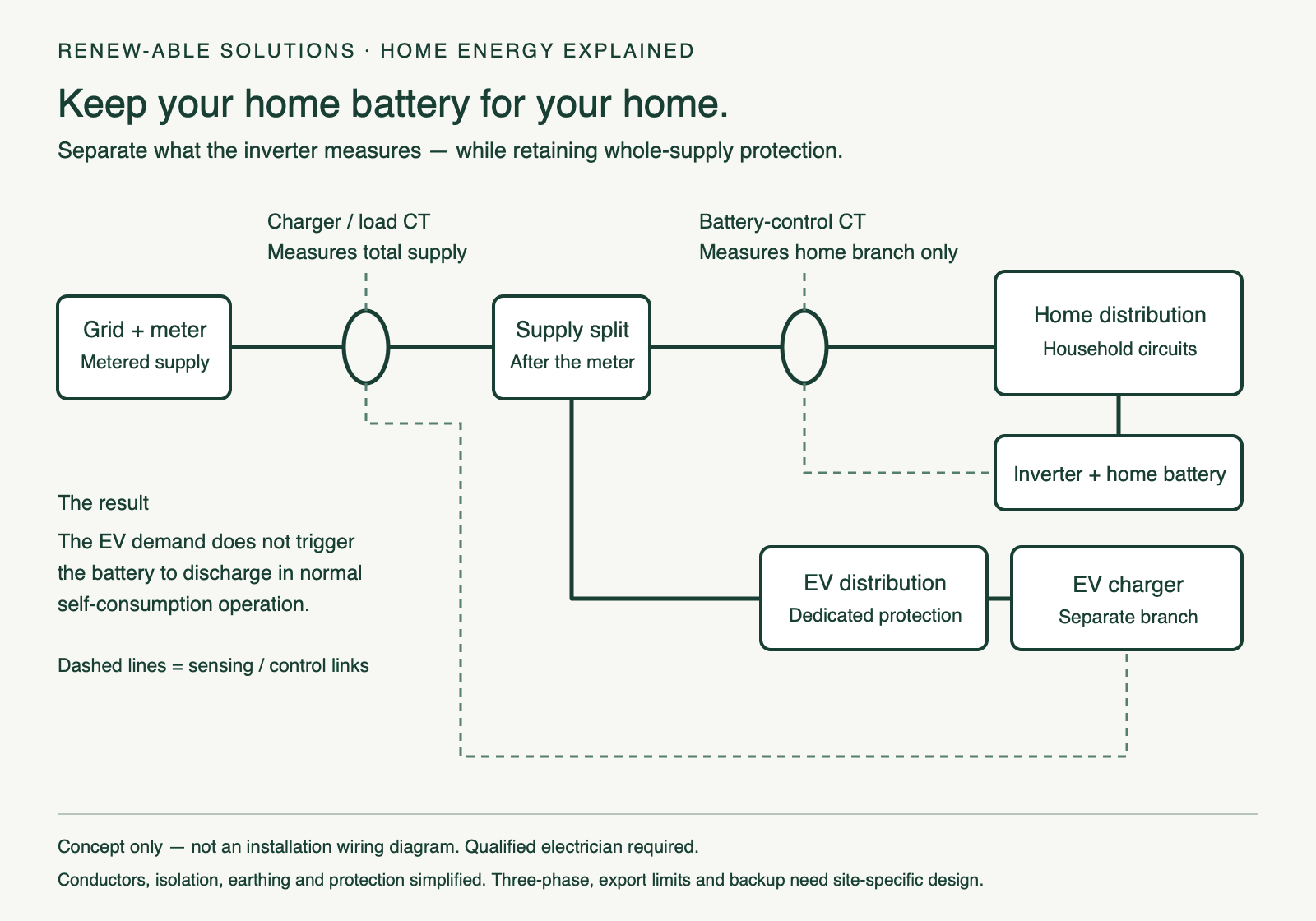
The same tariff can also support smart overnight EV charging. By coordinating the EV and home battery schedules, the customer can take advantage of low-cost electricity without unintentionally allowing the car charger to empty the home battery. Our guide explains how to stop an EV charger draining a home battery, while our Intelligent Octopus Go guide covers the tariff in more detail.
Why sodium-ion battery technology?
The Galvani batteries use sodium-ion chemistry. This offers an alternative to conventional lithium-based home storage and is one of the reasons Eleven Energy has become an increasingly interesting option for Scottish homes. The modular format also allowed us to build a 13.5 kWh stack neatly beside the inverter while keeping the installation compact.
The 3.68 kW hybrid inverter manages the flow of energy between the grid, battery and property. Although the battery can store 13.5 kWh, the inverter’s 3.68 kW rating defines the maximum power available through the inverter at any moment. We size both energy capacity and power output around how the household is expected to use the system.
EPS backup for added resilience
The installation also includes an Emergency Power Supply, or EPS. If the grid supply fails, the EPS arrangement allows the designed backup circuits to be supplied from the battery, subject to the inverter’s available power, the battery state of charge and the agreed circuit design.
Backup capability requires more than simply fitting a battery. It must be designed so the property is safely separated from the grid during an outage and has a suitable earthing arrangement in island mode. For this project, our electricians used a Condudisc as part of the dedicated TT earth arrangement. This provides the required earth electrode solution for the backup installation while avoiding a conventional long earth rod at this location.
Read more about battery storage with EPS backup power.
A compact installation designed for the property
The inverter, three battery modules, isolation equipment and associated backup components were installed together on the external wall. The result is a tidy, serviceable arrangement that keeps the equipment accessible while minimising the footprint around the customer’s existing EV charging area.
Following installation, the system is commissioned and configured around the customer’s tariff schedule. We also explain how to monitor charging, battery state of charge and household consumption through the app so the settings can be reviewed as usage changes.
Could a time-of-use battery work for your home?
A battery charged on a low-cost overnight tariff can be a strong option for households with higher daytime consumption, an EV tariff, or a need for backup power—even where solar PV is not yet installed. The right result depends on accurate sizing, realistic tariff assumptions and correct electrical design.
Renew-Able Solutions designs and installs home battery, solar PV, EV charging and EPS systems across Fife, Edinburgh, the Lothians and Central Scotland. Contact our team to discuss your electricity use, tariff and the most suitable storage capacity for your property.
Frequently asked questions
Can a home battery be charged from the grid overnight?
Yes. A compatible battery can be scheduled to charge during a cheaper overnight tariff window and discharge later when electricity is more expensive.
How much storage was installed in this Milnathort project?
Three 4.5 kWh Galvani battery modules were installed, providing a combined storage capacity of 13.5 kWh.
Will EPS power the whole house during a power cut?
That depends on the agreed backup design. In this installation, EPS is provided for the designated backup circuits and remains subject to the inverter output, connected loads and battery state of charge.
Are savings of £1,000 a year guaranteed?
No. The figure is the customer’s forecast based on their current tariff and expected energy-shifting pattern. Actual savings vary with consumption, tariff prices, battery losses, settings and how consistently the stored energy is used.