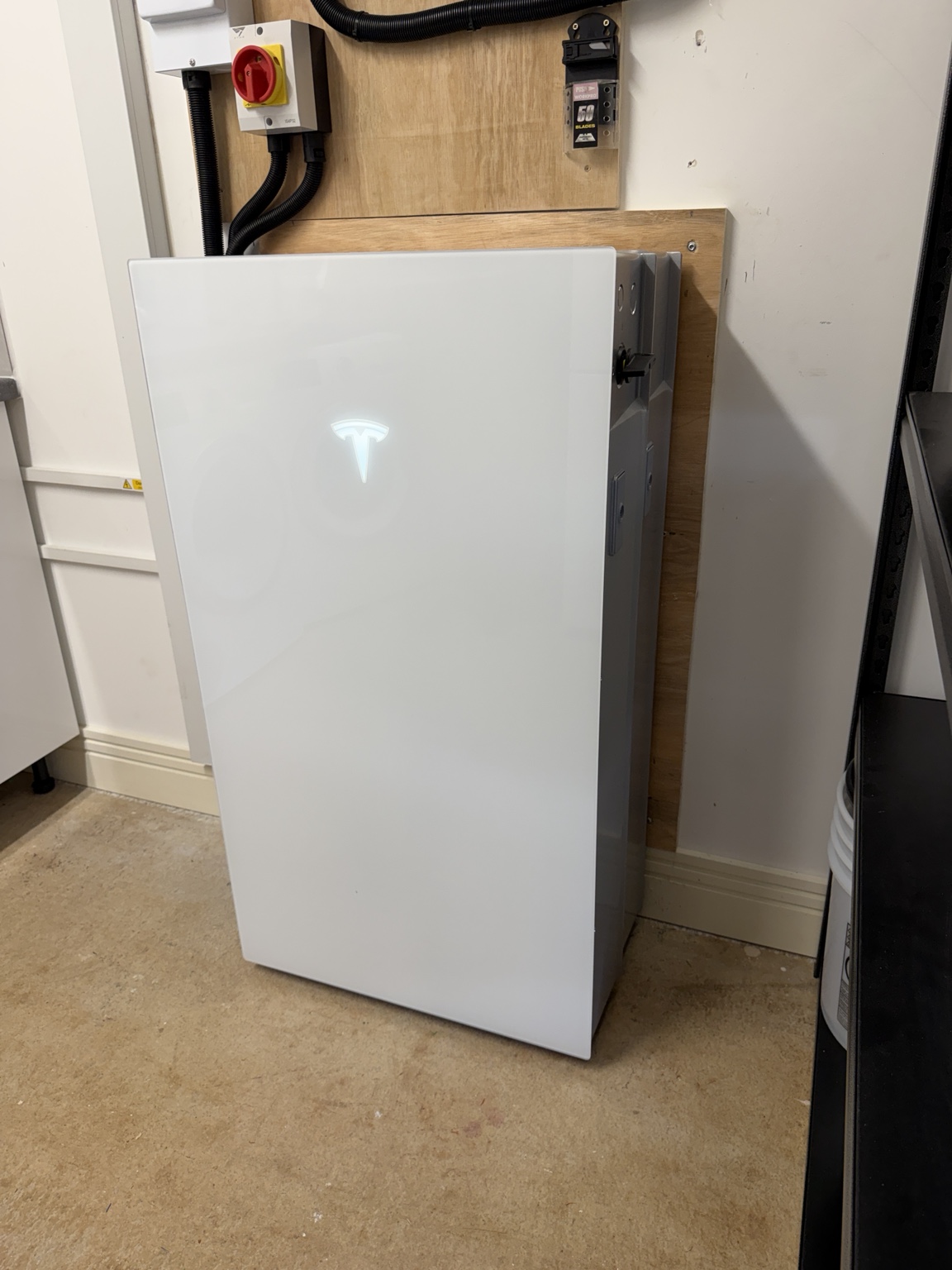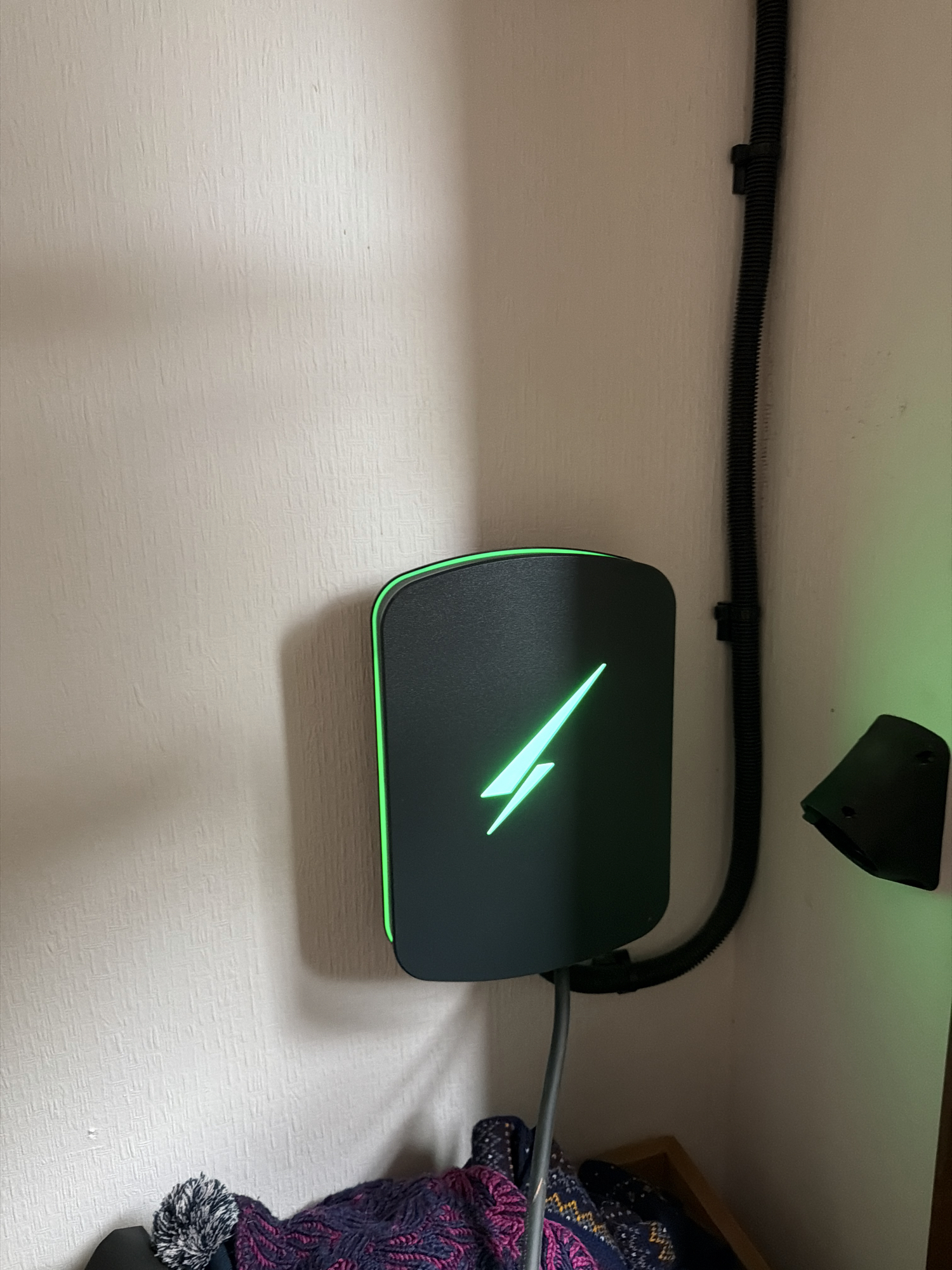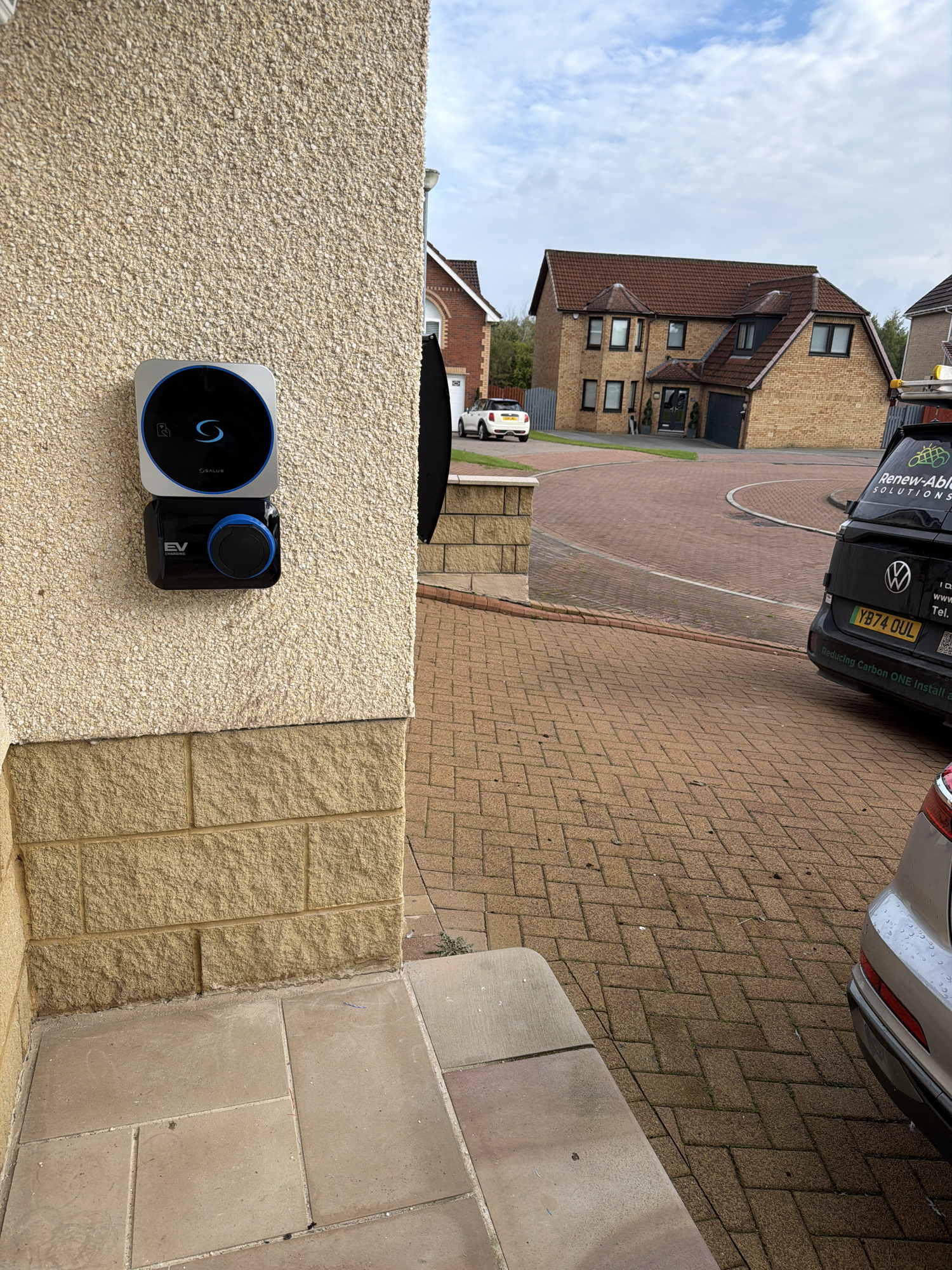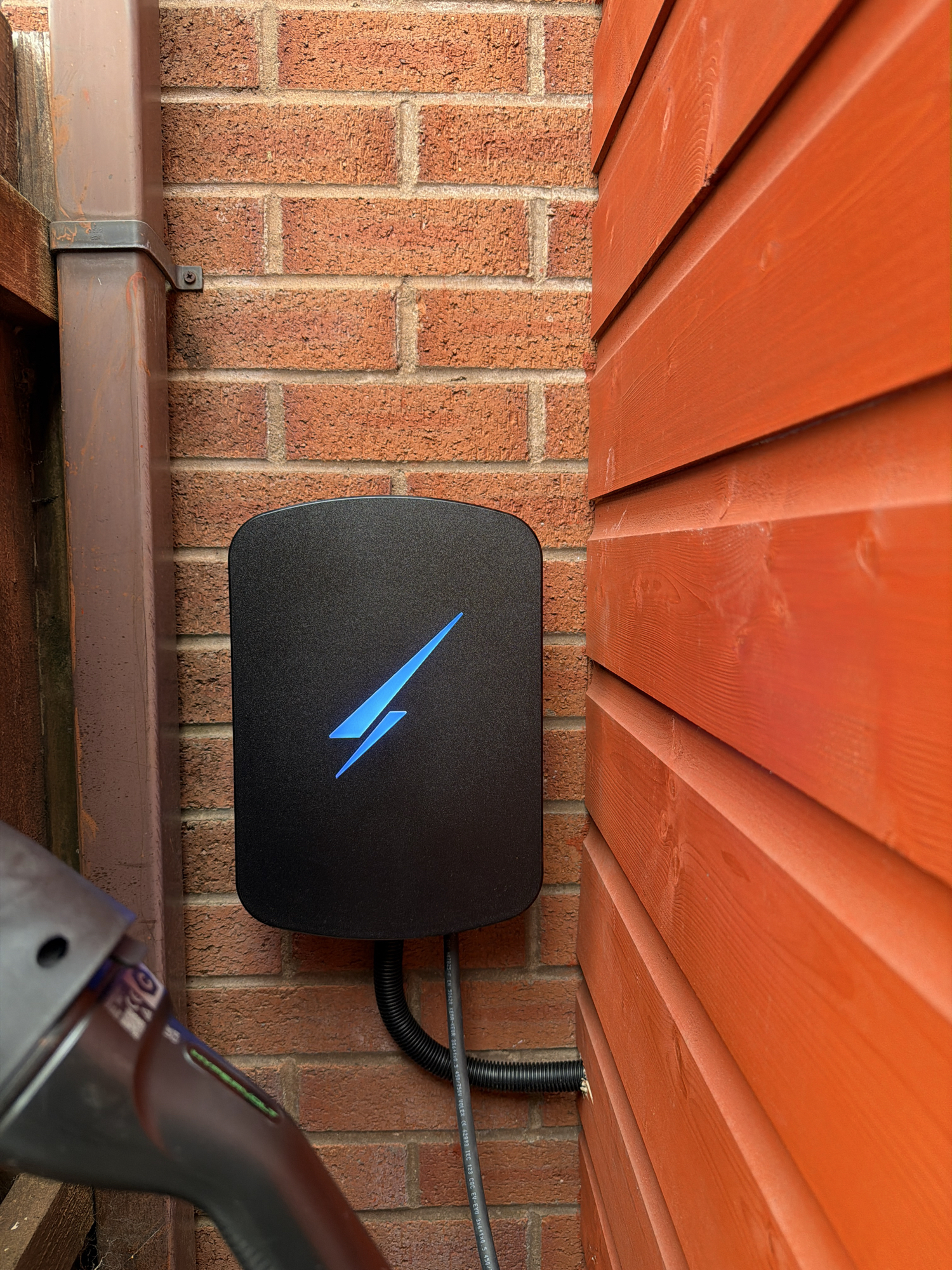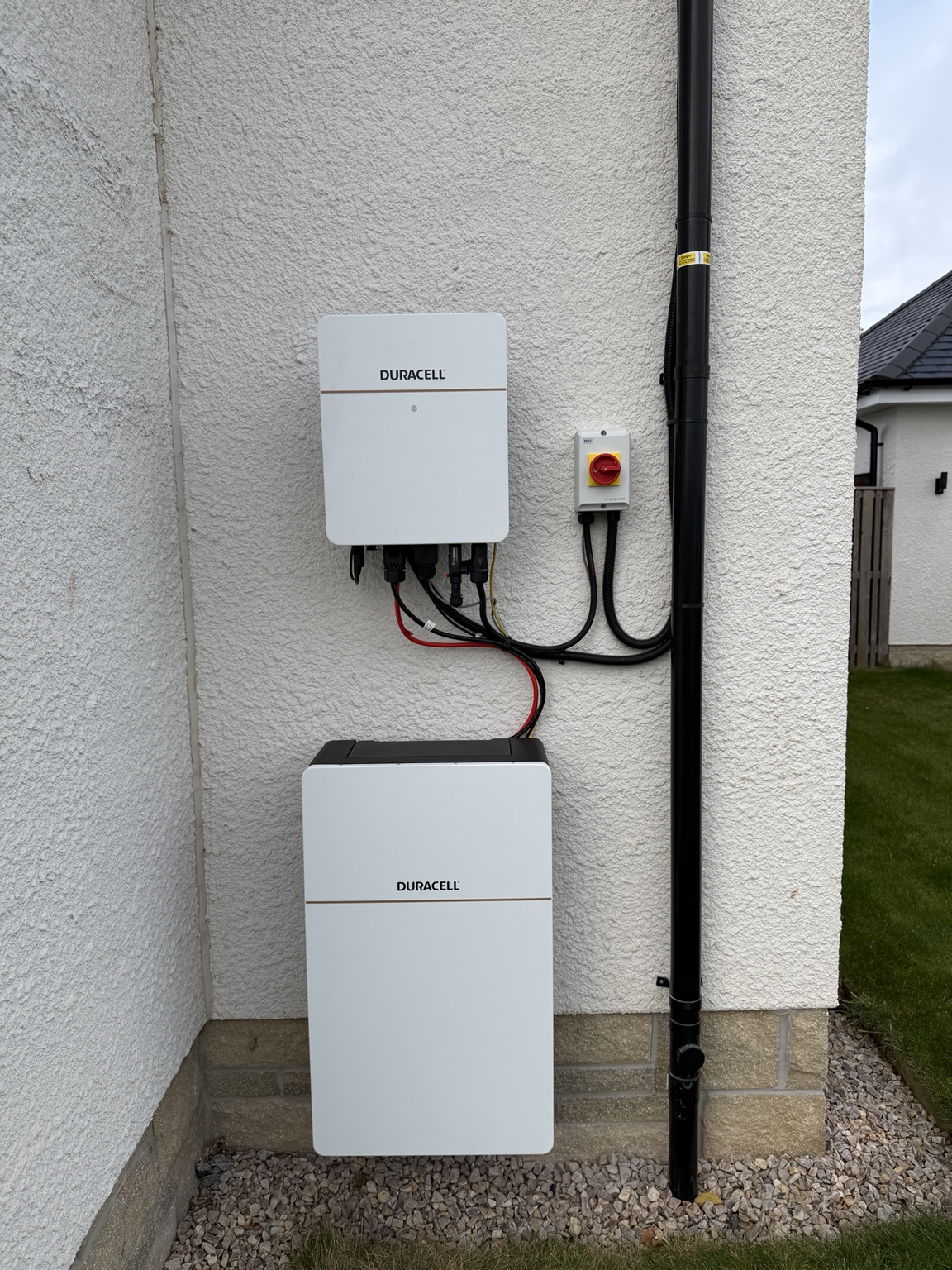
A frosty night should not make your home battery an afterthought. Eleven Energy hybrid inverters and Galvani sodium-ion batteries offer a compelling option for Scottish homes: below-freezing charging capability, modular storage and controls that bring solar, tariffs and household demand together.
Already have an Eleven system? Open the Eleven Energy app guide.
Renew-Able Solutions was the first installer in Scotland to install Eleven Energy’s sodium-ion battery technology. We have since completed many installations, and the systems have worked well for our customers. That practical experience is why we are interested in what this technology can do for homes across Edinburgh, East Lothian and wider Central and East Scotland.
Here we explain the inverter ranges, the cold-weather advantage and a question customers often ask: how many Galvani batteries can you connect? Specifications checked on 9 September 2026; our installation experience is separate from the manufacturer’s published performance ratings.
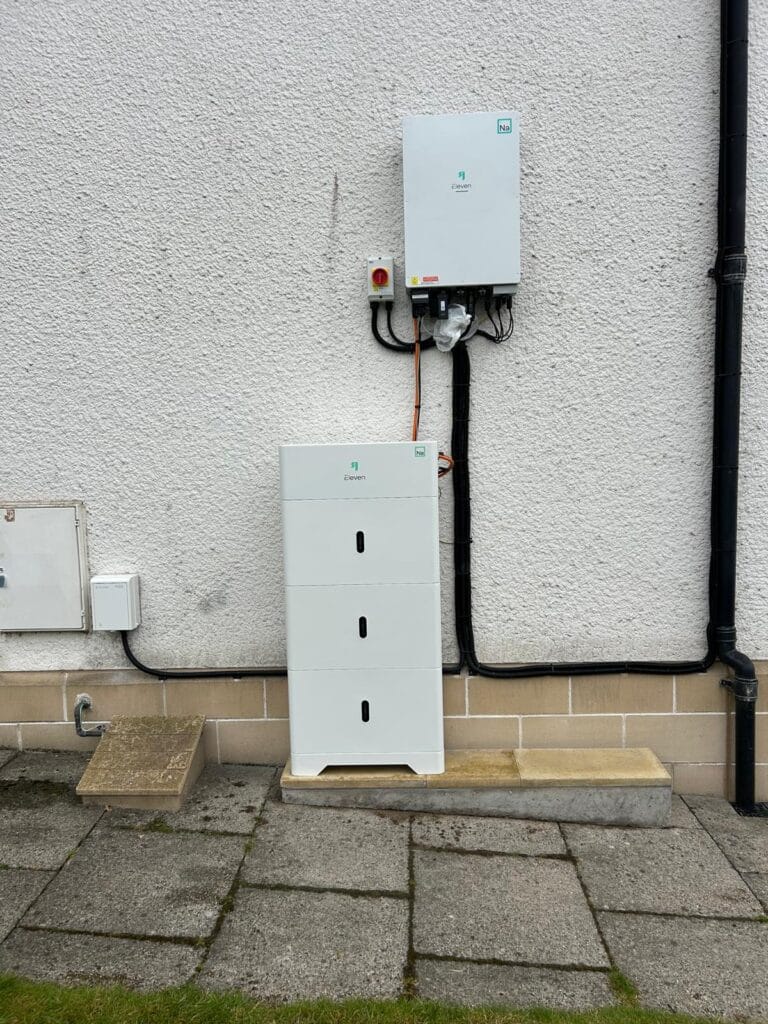
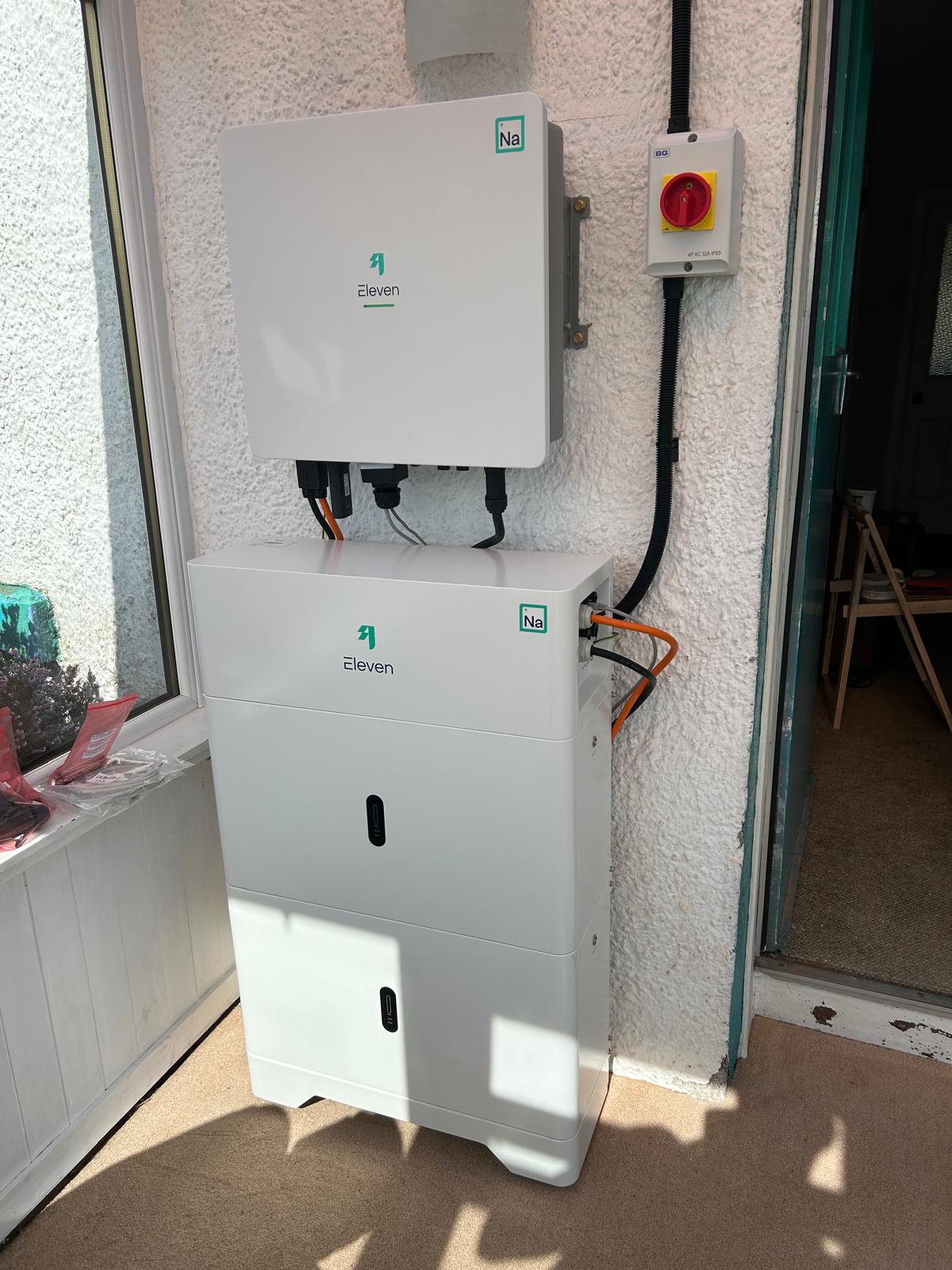
The outdoor installation pictured above is one of our Scottish projects: three Galvani modules provide 13.5kWh nominal storage.
The key figures at a glance
Each Galvani module stores 4.5kWh nominally. A stack holds up to four modules. One battery input supports up to eight packs; a suitable two-input inverter can support up to sixteen. The largest configuration is therefore 72kWh nominal, or 66.24kWh calculated usable energy at 92% on-grid depth of discharge. Stack height, battery-input limits and total inverter capacity are three different things.
Galvani’s published temperature limits are −20°C to 55°C for charging and −30°C to 55°C for discharging. See the Galvani datasheet and Eleven’s battery-input guidance.
Why sodium-ion is an important advance
Sodium-ion batteries store and release electricity using sodium ions instead of lithium ions. The broad operating principle is familiar, but changing the chemistry creates another route for home energy storage. Sodium is abundant, and using it reduces dependence on lithium. It does not make a finished battery impact-free: the other materials, manufacturing process and eventual recycling still matter.
The International Energy Agency’s 2026 assessment identifies cold-weather performance and battery-supply diversification as important strengths. It also notes the trade-offs: sodium-ion generally has lower energy density, a less mature supply chain and is not automatically cheaper than today’s lithium iron phosphate batteries.
For a battery that stays at home, weight and size can be less restrictive than in an electric car. Galvani is still substantial equipment: each module weighs 59kg. We assess the position, base, access and installation clearances accordingly. The advance is a useful new choice for a particular home, rather than a reason to assume every lithium system should be replaced.
Cold-weather battery performance in Scotland
A battery may spend winter in an unheated garage or outdoors, exactly when a household wants to store cheap overnight electricity for the following day. Many lithium iron phosphate systems protect their cells by restricting charging when the cells are too cold; some use heaters to bring them into a suitable range. Those systems can work well when correctly designed, but their thermal management affects winter operation.
Galvani’s ability to accept charge below freezing is therefore a practical advantage. Eleven describes its sodium batteries charging at −20°C at a reduced 0.2C rate in its technical discussion with Gary Does Solar. It can keep charging in conditions that would otherwise require cell heating in many LFP designs.
Cold-capable does not mean temperature-independent. Eleven’s FAQ acknowledges that performance can reduce below 0°C. We distinguish the ability to operate from a promise of full charging power at every temperature, and never use the −30°C discharge limit as a charging limit.
Galvani is IP65 rated and supports indoor or outdoor installation in suitable locations. We still consider standing water, weather exposure, mounting, ventilation and the current installation instructions. Our positive installation experience supports recommending an assessment; the published temperature envelope explains why sodium is particularly interesting for Scottish conditions.
What does the Eleven hybrid inverter do?
The inverter converts electricity and manages its movement between solar panels, the battery, household loads and the grid. In a hybrid system it can work with solar and storage together. The app and energy-management platform add monitoring and charging decisions around that electrical equipment.
Galvani operates across a wide battery-voltage range, published as 33–59.2V. Eleven’s inverters are designed for sodium chemistry and its control requirements. The Galvani installation manual requires pairing with Eleven Energy inverters; this is not a drop-in battery for another brand’s hybrid inverter.
The Eleven Energy hybrid inverter range
| Range | Models and supply | Design features |
|---|---|---|
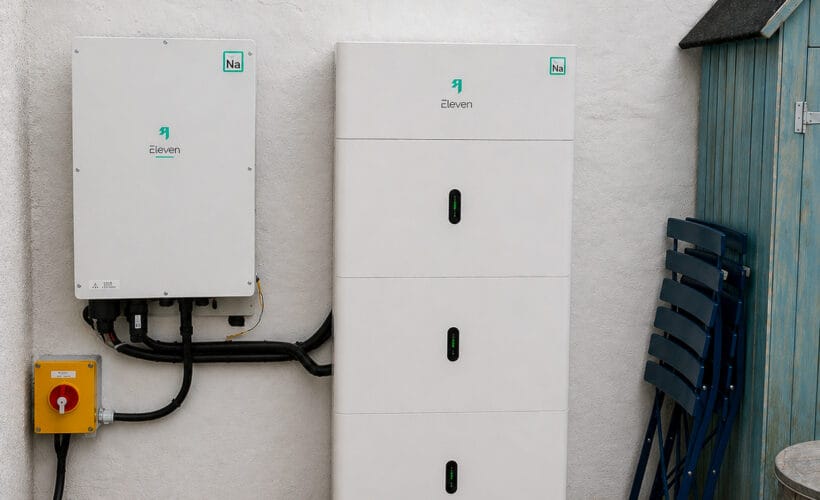
| North Sea | 3.6kW, 5kW and 6kW; single phase | Two MPPT solar trackers; one battery input; EPS capability; AC-coupled retrofit support. |
| Mediterranean Sea | 8kW, 10kW and 12kW; single phase | Three MPPT trackers; two independent battery inputs; silicon-carbide electronics; EPS and generator-input support. |
| Celtic Sea | 12kW; three phase | Three MPPT trackers; two battery inputs; silicon-carbide electronics; dedicated EPS output. |
An MPPT tracker manages a solar string’s operating point to help harvest its available power. Additional independent trackers can help with a more complex roof layout, such as panels on different orientations. The appropriate inverter rating also depends on the electrical supply, solar design, household demand and network connection arrangements.
The North Sea range covers smaller single-phase ratings. The Mediterranean Sea range adds higher single-phase output and dual battery inputs. The Celtic Sea datasheet describes the 12kW three-phase model; 12kW is the system rating, not 12kW on each phase.
Silicon carbide, or SiC, is a development in the inverter’s power electronics. It helps efficient power conversion. Eleven lists maximum PV conversion efficiency of 98.2% for Mediterranean Sea and Celtic Sea. That is a peak inverter figure, not a promise that a complete battery charge-and-discharge cycle is 98.2% efficient. The datasheets list the battery-conversion figures separately.
How many Galvani batteries can be in a stack?
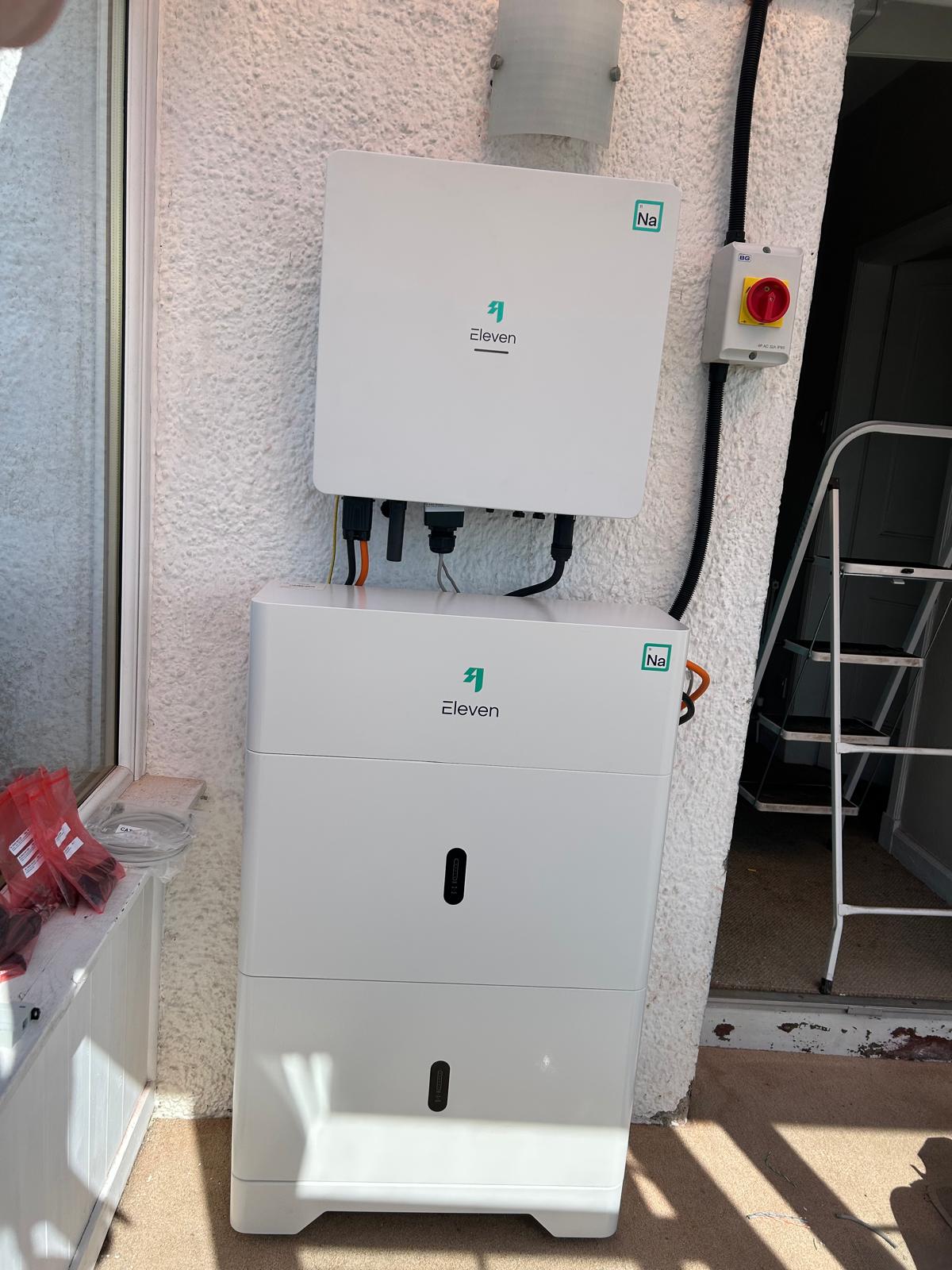
A physical Galvani stack contains one to four battery modules, with a base and its own junction box. Integrated stacking connectors join the modules, reducing inter-battery cabling, and Galvani does not require DIP-switch configuration between stacked modules. Electrical connections between stacks and the inverter remain part of the installation.
| Battery modules | Nominal capacity | Calculated on-grid usable capacity |
|---|---|---|
| 1 | 4.5kWh | 4.14kWh |
| 2 | 9kWh | 8.28kWh |
| 3 | 13.5kWh | 12.42kWh |
| 4 | 18kWh | 16.56kWh |
Usable figures above are calculated as nominal capacity × the published 92% on-grid depth of discharge. Energy delivered to appliances will be lower after conversion losses, and a configured backup reserve reduces the energy available for normal daily use. The datasheet separately lists 95% depth of discharge for off-grid operation.
How many batteries can connect to each inverter?
| Inverter arrangement | Maximum Galvani configuration | Capacity at 92% on-grid depth of discharge |
|---|---|---|
| North Sea: one battery input | Up to 8 modules, arranged as up to 2 full stacks | 36kWh nominal / 33.12kWh calculated usable |
| Mediterranean Sea: two battery inputs | Up to 16 modules, arranged as up to 4 full stacks | 72kWh nominal / 66.24kWh calculated usable |
| Celtic Sea: two battery inputs | Up to 16 modules, arranged as up to 4 full stacks | 72kWh nominal / 66.24kWh calculated usable |
These limits combine Eleven’s eight-pack-per-input guidance with the input arrangements of the named inverter ranges and Galvani’s four-module stack limit. The larger sixteen-module layout uses both battery inputs; it does not mean putting sixteen batteries in one tower or on one input. We confirm the exact model, product generation and approved multi-stack arrangement before specifying an expansion.
More kWh does not automatically mean more kW. Adding modules increases how much energy you can store. Charging and discharging power also depend on the inverter, battery-current limits, state of charge and temperature. A large battery bank on a smaller inverter can run for longer without increasing the inverter’s rated output.
Smarter control of solar, tariffs and EV charging
Eleven’s intelligent battery optimisation guide describes using tariff information, consumption history and generation forecasts to plan charging and discharging. This can help preserve solar for later or make use of lower-price electricity. Supported supplier integrations, an internet connection, tariff terms and the household’s actual usage all matter; savings are not a fixed product specification.
There is also a useful option for EV owners. With compatible Shelly monitoring equipment and the correct setup, the Eleven app provides a control to disable battery discharge while the car charges. The manufacturer’s Shelly integration guide explains this feature. It requires the relevant monitoring and commissioning, so we include it in the design where appropriate rather than assuming every installation already has it.
If you are planning a charger at the same time, our EV charger comparison explains the controls, cable choices and solar features across six popular options.
Existing solar, battery-only installations and backup
An Eleven system can be designed as an AC-coupled addition to existing solar, allowing the existing solar inverter to remain where suitable. It can also operate without solar, for example to store off-peak grid electricity. The correct arrangement depends on the existing installation and tariff economics; see Eleven’s retrofit and battery-only FAQs.
The inverter ranges provide EPS capability for a designed backup arrangement. Selected circuits, isolation, protection and commissioning must be included before relying on it during an outage. Read our home battery power-cut guide for the difference between owning a battery and having working backup power.
Warranty: read the throughput limit as well as the years
Eleven’s published warranty provides ten years from commissioning for the inverter. Battery cover ends at ten years or a lifetime throughput of 8MWh per 1kWh of battery capacity, whichever comes first, with a minimum 75% capacity-retention commitment during the applicable period. For a 4.5kWh module, that throughput limit is 36MWh.
This is more precise than treating the “8,000 cycles” headline as unlimited use for ten years. The terms also require professional commissioning through the Eleven app and internet connectivity for monitoring, updates and support. We explain the applicable warranty and accessory cover as part of the quotation and handover.
Still comparing systems? Explore our solar and battery brands guide for Eleven Energy, Fox ESS, Sigenergy and Tesla, with their different strengths and our local aftercare.
Sizing a sodium battery for your Scottish home
We start with electricity usage, solar generation, the tariff, future loads and the customer’s priorities. A household wanting to move some lunchtime solar into the evening needs a different design from a larger home with an EV, heat pump and backup requirements. Maximum expandability is useful; buying the maximum capacity is not automatically the best investment.
Our installation experience helps us discuss equipment positioning, cable routes, stack size and controls in practical terms. We can assess solar PV and battery storage together, or review a retrofit around equipment already at the property.
Already have Eleven Energy?
For setup, settings and video help, open our Eleven Energy app guide.
Frequently asked questions
How many Galvani batteries fit in one stack?
A maximum of four 4.5kWh modules fits in one physical stack. That is 18kWh nominal capacity, or 16.56kWh calculated usable energy at the published 92% on-grid depth of discharge, before conversion losses and any additional reserve.
Can every Eleven inverter take sixteen batteries?
No. Eleven specifies up to eight packs per battery input. The North Sea range uses one battery input; the Mediterranean Sea and Celtic Sea models discussed here have two. Sixteen modules require a suitable dual-input design, normally four stacks of four, with the exact configuration checked against current manufacturer guidance.
Do Galvani sodium batteries work below freezing?
Yes. Galvani is specified to charge from −20°C to 55°C and discharge from −30°C to 55°C. Cold-weather operation is a key strength, but charging power and performance can reduce at low temperatures. The charging and discharging limits are different.
Can Galvani connect straight to my existing inverter?
Galvani must be paired with a compatible Eleven Energy inverter. An existing solar installation may be retained through a correctly designed AC-coupled retrofit; that does not mean connecting Galvani directly to another brand’s battery terminals.
Can I add more batteries later?
Expansion can be possible within the stack, battery-input and inverter limits. We check product-generation compatibility, available space, electrical capacity and the current manufacturer guidance before adding modules.
Will the system power my house during a power cut?
The inverter’s EPS capability can support properly designed backup circuits. The necessary isolation, protection and backup wiring must be included and commissioned. A battery installation does not automatically provide whole-home backup.
Speak to Scotland’s first Eleven sodium-battery installer
Renew-Able Solutions has moved from Scotland’s first installation of this Eleven Energy technology to many completed systems. If you are considering Galvani batteries, send us your postcode, recent electricity usage, existing solar and inverter details, and whether you want backup power. We will explain the suitable inverter and stack configuration for your home.
Request an Eleven Energy and Galvani battery assessment · Call 0131 210 0405. Serving Edinburgh, East Lothian and wider Central and East Scotland.
Technical sources are linked beside the relevant claims. Product specifications and compatibility can change; we check the current documents when designing each installation. Installation photographs © Renew-Able Solutions. The separately credited manufacturer image is from Eleven Energy.