Renew-Able Solutions / EV charger comparison / 2026
EV charger comparison: Ohme vs Andersen vs Simpson & Partners vs zappi vs Hypervolt vs Sigenergy
Six popular options. Very different strengths. Compare the features, cable choices, solar controls, warranties and installation extras that will actually matter on your driveway.
Start with your priorities
Which home EV charger should you choose?
For a conventional single-phase home, start with the features you will use each day:
- Ohme: a screen and mobile connectivity.
- Andersen A3: a cable that stores out of sight.
- Simpson & Partners Plus: compact metal styling and configuration choices.
- zappi: detailed solar controls.
- Hypervolt: long attached leads and solar modes.
Sigenergy DC belongs in a wider home-energy system discussion. Compare that system separately from a conventional AC wallbox.
Simpson & Partners Home Series V3 Plus
7kW-class AC; Home 22 Plus offers 22kW three phase
Sigenergy Sigen EV DC Charging Module
12.5kW or 25kW DC · system-dependent output
This is an installer’s feature comparison based on the official sources linked below, not a laboratory test or a scored reliability survey. “Shortlist” recommendations are our assessment of the published features.
Like-for-like EV charger feature table
We compare the Ohme Home Pro, Andersen A3, Simpson & Partners Home Series V3 Plus, full-size myenergi zappi, Hypervolt Home 3 Pro and Sigenergy’s 12.5/25kW DC module. Where a different variant is needed for 22kW, it is named explicitly.
On a phone or smaller screen, swipe the table sideways. Every charger also has a readable individual section below.
| Feature | Ohme Home Pro | Andersen A3 | Simpson & Partners Home Series V3 Plus | myenergi zappi | Hypervolt Home 3 Pro | Sigenergy Sigen EV DC Charging Module |
|---|---|---|---|---|---|---|
| Charging power | 7.4kW AC · single phase | 7kW AC · single phase | 7kW-class AC; Home 22 Plus offers 22kW three phase | 7.4kW AC; 22kW three-phase variants | 7.4kW AC · single phase | 12.5kW or 25kW DC · system-dependent output |
| Cable and connector | Tethered Type 2 · 5m or 8m | Tethered Type 2 · concealed 5.5m | Type 2 socket or tethered 6.8m / 9.6m options | Type 2 socket or tethered 6.5m model | Tethered Type 2 · 5m, 7.5m or 10m | Tethered CCS2 · cable length specified with the module |
| Solar approach | Solar Boost on eligible installations; check Solar Only rollout | Solar charging supported; sensing/setup required | Plus models support solar integration | ECO, ECO+ and FAST modes | Boost, Eco and Super Eco modes | Integrated with compatible Sigen energy system |
| Connectivity and controls | Built-in 4G; screen, buttons and app | Wi-Fi and Andersen app | Wi-Fi, Bluetooth; optional Ethernet on Plus | Wi-Fi/Ethernet on current full-size units; screen and app | Wi-Fi/Ethernet; Bluetooth setup, app and status lighting | mySigen app and system communications |
| Intelligent Octopus Go | Native charger integration | Native integration on A3 | Native integration on current Home Series | Native integration on eligible connected zappi | Native integration on Home 3 Pro | Do not assume native charger integration; check exact route |
| Manufacturer warranty | 3 years | 7 years; registration and supply-route terms apply | 10-year enclosure; 5-year power electronics | 3 years; eligible extension to 5 years | 3 years; ask about 5-year extension eligibility | 3 years for the DC module under European terms |
| Options to price | 8m lead; CT installation and compatible solar setup | Premium finishes; installation scope and solar sensing | Wood/metal cap; wireless Energy Manager; Ethernet; cable choice | harvi wireless CT link; pedestal; eligible extended warranty | Longer lead; colour; Ethernet route; extended cover | Sigen Energy Controller; system design; cable; gateway/backup equipment where required |
Power is a maximum, not a guaranteed charging rate. Cable availability, bundled accessories and software features can change. Follow the model-specific source links and confirm the written specification before ordering.
7kW, 22kW or DC: what will your car actually use?
An AC charger supplies electricity to the car’s onboard charger. The car, the household supply and the installation’s load limit determine the usable rate. A 22kW AC unit cannot make a car with an 11kW AC limit accept 22kW, and a normal single-phase supply does not provide 22kW AC charging.
DC equipment supplies the vehicle through its DC inlet, bypassing the AC onboard-charger limit. That can make Sigenergy DC worth exploring for suitable cars, but available system power and the vehicle’s DC charging behaviour still set the outcome.
Before choosing, tell us the exact vehicle, daily mileage, parking position and whether the property has single- or three-phase electricity. Those facts are more useful than choosing the largest kW number.
The individual comparison
Features, pros, cons and optional extras
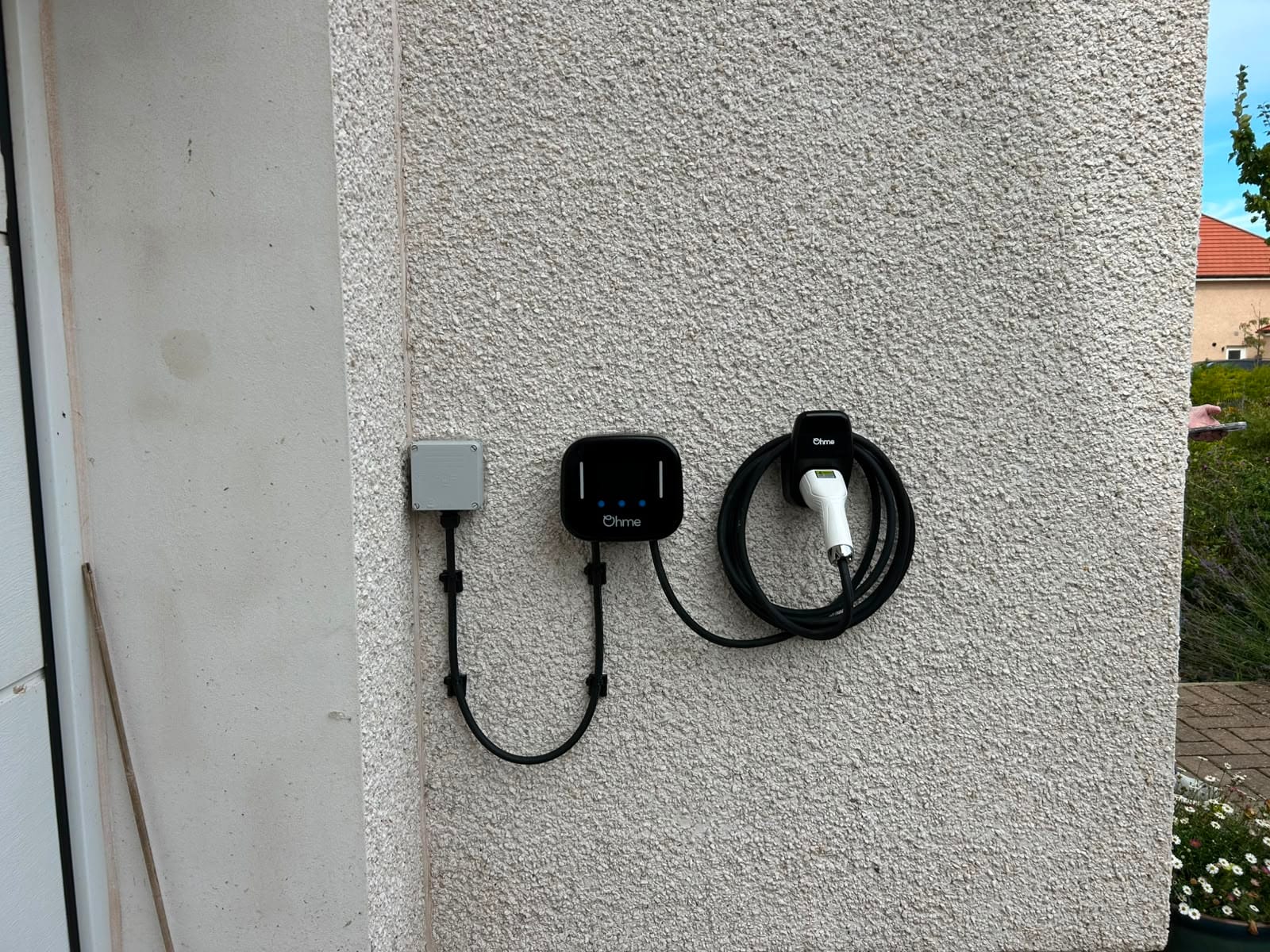
01 / A screen and mobile connection
Ohme Home Pro
Shortlist Ohme if you want a visible charging screen and smart charging without relying on the Wi-Fi reaching your driveway.
Manufacturer specifications · Our Ohme Home Pro installation guide
Pros
- The screen and buttons provide useful feedback beside the car.
- Built-in mobile connectivity suits locations with good cellular reception but weak home Wi-Fi.
- The 8m cable option can help with an awkwardly positioned charging port.
Cons and limitations
- Single-phase charging only: there is no 22kW Home Pro.
- Smart functions depend on mobile coverage and the connected service.
- The cable remains on show; solar features depend on installation date, CT setup and software eligibility.
Solar Boost can combine available solar with grid energy to meet your target. Ohme’s guidance describes Solar Only availability separately, so we check the feature actually enabled on your unit rather than promising it on every Home Pro. Read Ohme’s solar-mode guidance.
Extras to check in your quote: 8m lead; CT installation and compatible solar setup.
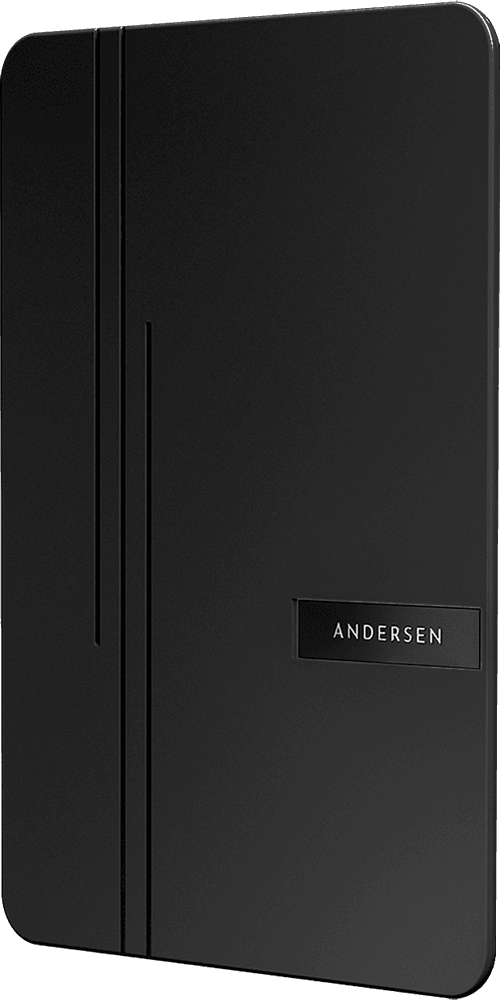
02 / Concealed cable and premium finishes
Andersen A3
Shortlist the A3 when the appearance of the charger and a cable hidden away after use matter as much as the charging controls.
Pros
- The 5.5m lead stores inside the enclosure for a tidy finish.
- A wide choice of colours and wood finishes helps it suit the property.
- A seven-year manufacturer warranty is a meaningful differentiator when its conditions are met.
Cons and limitations
- The A3 is single phase; choose a different Andersen model if you need 22kW.
- Its 5.5m lead needs a careful reach check before installation.
- Warranty attendance and labour cover depend on whether Andersen or an affiliate supplies and installs it.
The A2 is the relevant alternative for three-phase charging up to 22kW and longer-cable configurations. The Quartz offers a different enclosure and socketed options. These are separate products: an A2 specification should not be used to sell an A3. Compare the Andersen range.
Extras to check in your quote: Premium finishes; installation scope and solar sensing.
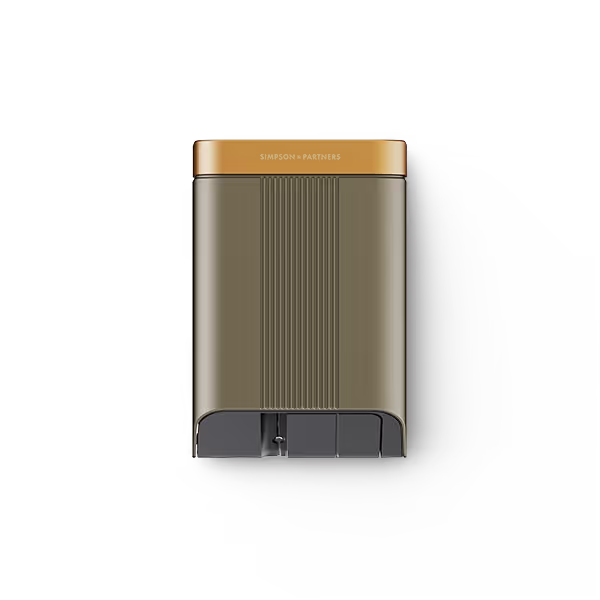
03 / Compact metal design, with choices
Simpson & Partners Home Series V3 Plus
Shortlist Home Series Plus if you want a compact metal charger and the freedom to choose a socket, attached cable, finish and power variant.
Pros
- Socketed and tethered configurations suit different parking routines.
- Home 22 Plus provides a three-phase option without moving to a large DC system.
- Local Bluetooth/basic charging can remain useful when an internet connection is unavailable.
Cons and limitations
- Basic and Plus have different features; specify Plus when comparing solar and finish options.
- Wireless energy management, Ethernet and cable choices need an itemised quote.
- The 10-year headline applies to the enclosure; electronics have five-year cover.
A wired Energy Manager is included. Wireless sensing can help where running a data cable is difficult. The advertised Future Charge upgrade is a development path involving extra hardware and software; “V2G-upgradable” should not be treated as a guarantee of working bidirectional charging with your car today. Manufacturer configuration and connectivity FAQs.
Extras to check in your quote: Wood/metal cap; wireless Energy Manager; Ethernet; cable choice.
04 / Detailed solar and energy controls
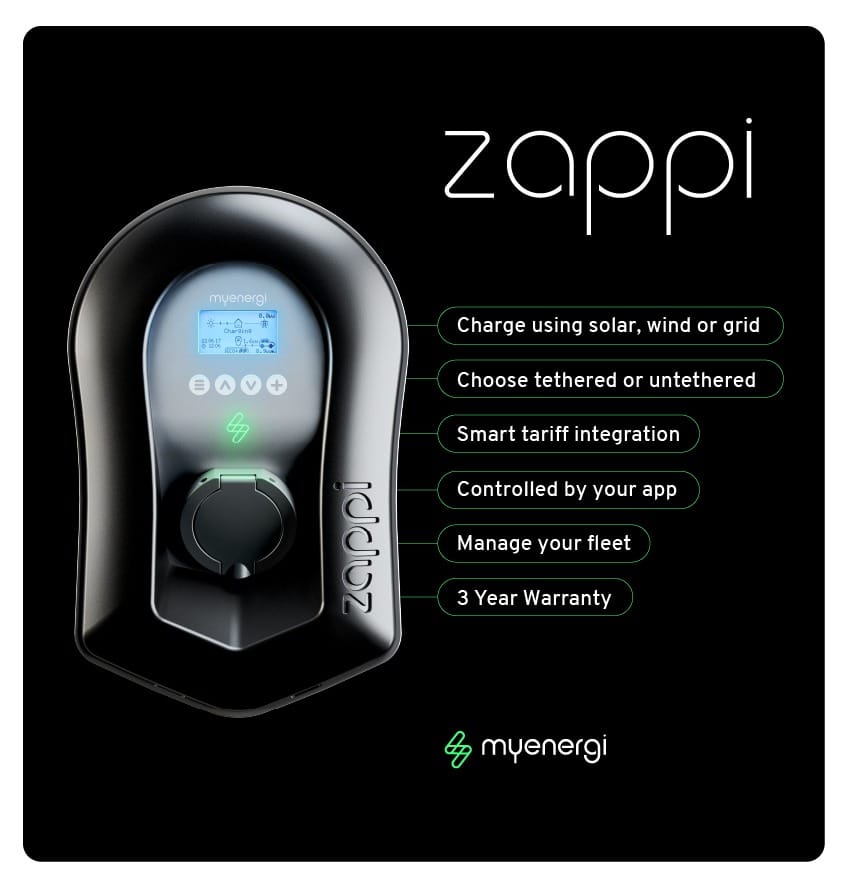
myenergi zappi
Shortlist zappi if controlling surplus solar is central to the purchase, especially when you want a charger with its own screen.
Manufacturer specifications · Our myenergi zappi installation guide
Pros
- ECO, ECO+ and FAST provide different approaches to solar and grid charging.
- Socketed, tethered and three-phase options cover several installation needs.
- The myenergi ecosystem also includes eddi, libbi and harvi for broader energy management.
Cons and limitations
- Solar priorities and CT configuration need careful commissioning, particularly with an existing battery.
- A wireless CT installation may require the optional harvi accessory.
- This table describes the full-size zappi; the newer zappi GLO is a separate model with different hardware.
Choose the exact model and supply arrangement before comparing prices. A 22kW unit still needs three-phase supply and a car that accepts 22kW AC to deliver that rate. The standard three-year cover can be extended to five years on eligible units under myenergi’s extended-warranty terms.
Extras to check in your quote: harvi wireless CT link; pedestal; eligible extended warranty.
05 / Long cable options and solar modes
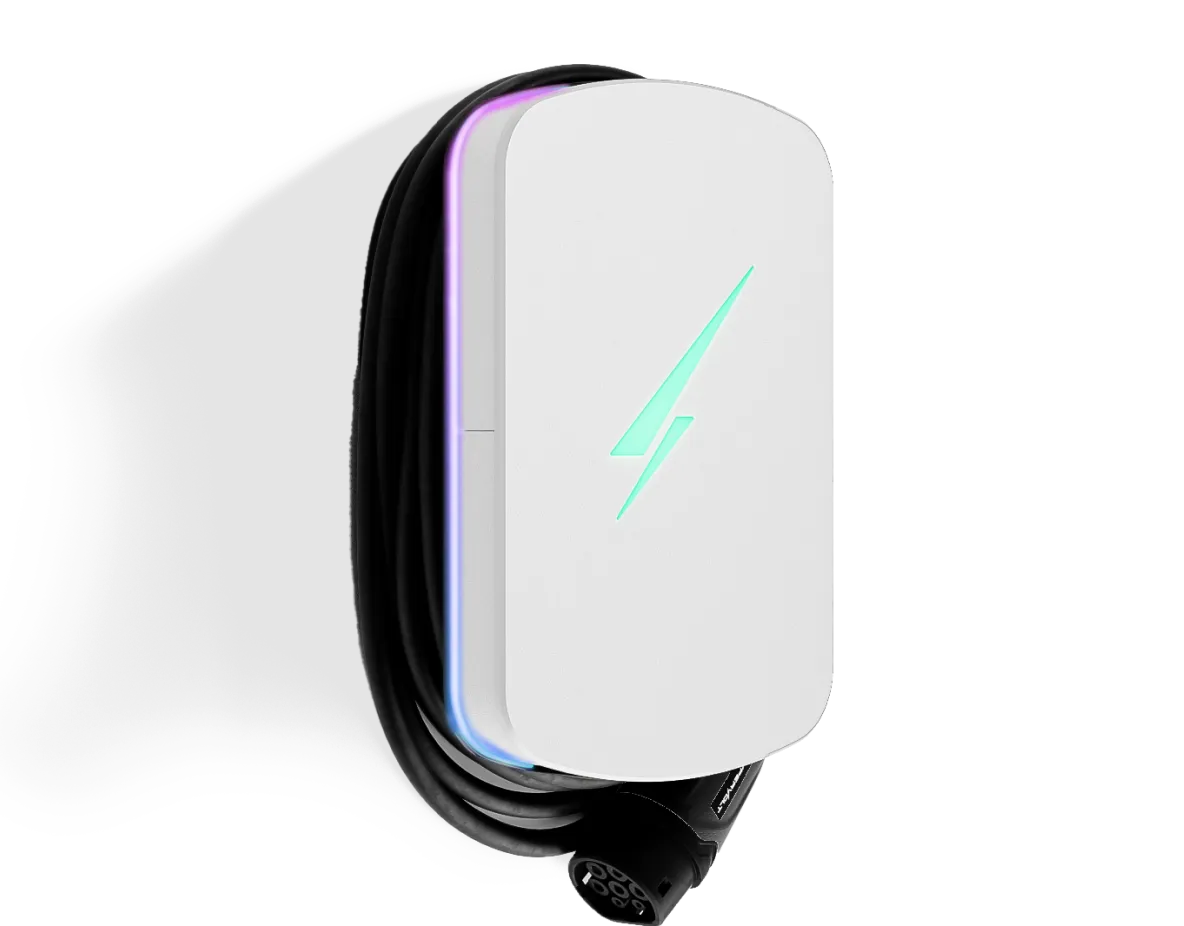
Hypervolt Home 3 Pro
Shortlist Hypervolt if you want an attached cable with generous reach, app control and a choice of solar charging modes.
Manufacturer specifications · Our Hypervolt Home 3 Pro installation guide
Pros
- The 10m Type 2 option can reach across a wider parking area.
- Boost, Eco and Super Eco suit different grid/solar preferences.
- Status lighting and cable storage are integrated into the enclosure.
Cons and limitations
- Home 3 Pro is a single-phase charger with no 22kW or socketed version.
- There is no charging-information screen; detailed control is through the app.
- A longer lead creates more cable to store, and battery behaviour still needs checking.
Automatic load management helps the charger work within the configured household supply limit. For solar and a home battery together, we assess the inverter, sensing and charging schedule as one installation. See Hypervolt’s installation guidance and manufacturer warranty policy.
Extras to check in your quote: Longer lead; colour; Ethernet route; extended cover.
06 / DC charging within a SigenStor system
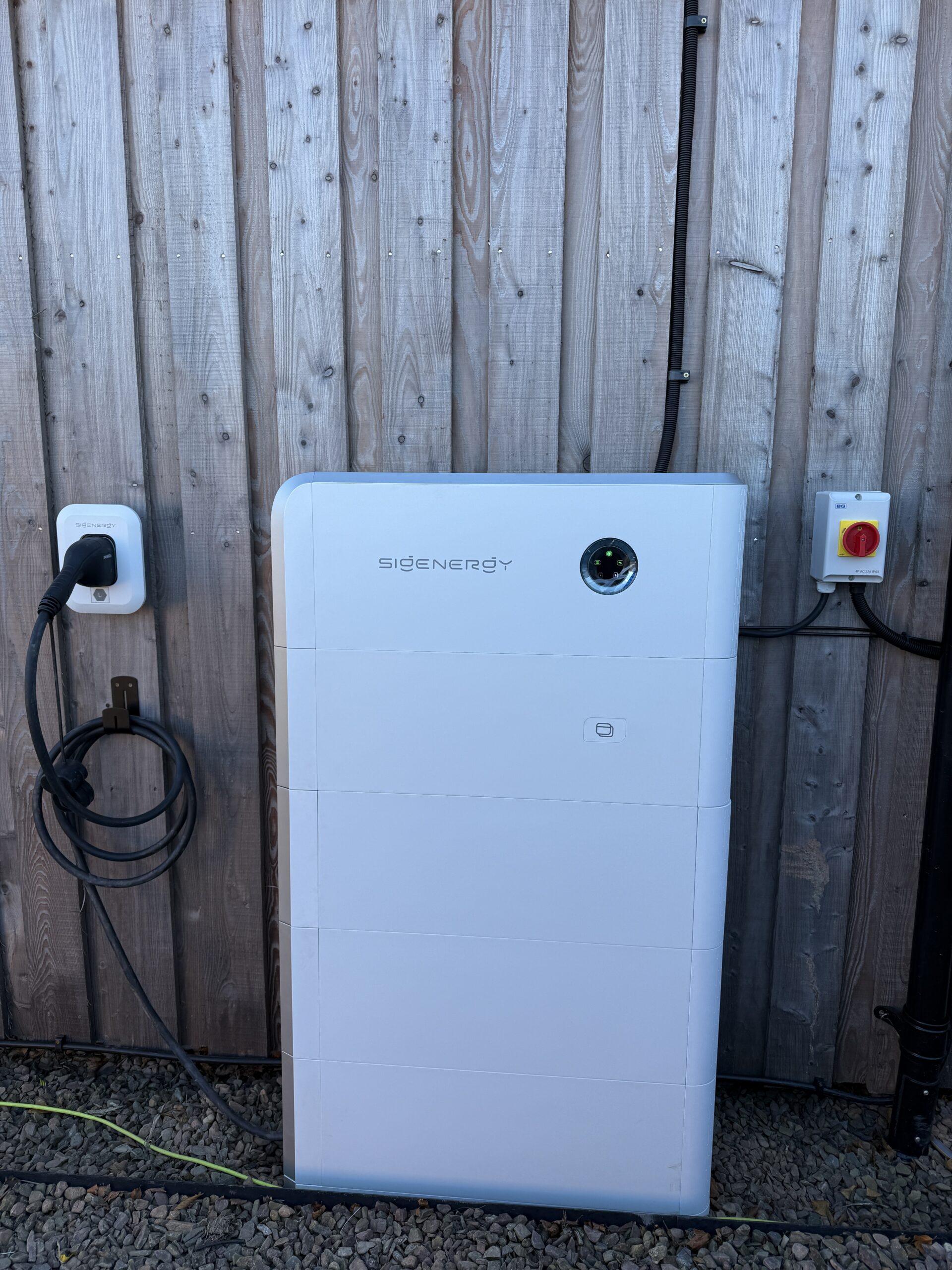
Sigenergy Sigen EV DC Charging Module
Shortlist Sigenergy DC when the project includes a compatible Sigen energy system and there is a real reason to seek more than ordinary home AC charging.
Pros
- DC charging can bypass the car’s AC onboard-charger limit.
- The module can form part of an integrated solar, storage and EV system.
- Bidirectional capability offers possibilities for supported vehicles and approved installations.
Cons and limitations
- It requires compatible Sigen Energy Controller equipment; it is not a standalone replacement wallbox.
- CCS2 DC compatibility is essential, and 25kW is a maximum rather than a promised household charging rate.
- V2H/V2G operation depends on the specific vehicle, firmware, system equipment and applicable approvals.
The 12.5kW and 25kW variants have different power/current limits. Available grid, solar and battery power, controller capacity and the vehicle determine actual output. The DC module has its own three-year warranty in the European SigenStor warranty; do not assume the battery/controller warranty length also covers it.
Extras to check in your quote: Sigen Energy Controller; system design; cable; gateway/backup equipment where required.
Smart tariffs, solar panels and home batteries
Intelligent Octopus Go
A compatible charger is only part of the setup. The exact vehicle or charger integration, meter, account and connectivity also matter. Use the live Octopus compatibility checker before buying; do not infer eligibility from a brand name alone.
Ohme, Andersen A3, current Simpson & Partners Home Series, eligible zappi and Hypervolt Home 3 Pro have charger integration routes. Sigenergy DC requires a separate check; this guide does not claim an equivalent native integration.
Read our Intelligent Octopus Go charger compatibility guide and tariff explainer for the next steps.
Solar is not the same as battery protection
A solar-capable charger can still cause a home battery to discharge. The inverter may see the car as household demand and try to support it. Choosing the right charger does not, by itself, solve that interaction.
We check inverter behaviour, CT sensing, load management and the charging schedule together. Manufacturer-approved configuration or professionally designed changes may be appropriate; in other homes, charging the car during the battery’s charging window is a practical option.
Smart-tariff scheduling and solar-only modes can also compete. Agree which system controls charging rather than running conflicting schedules. If you use Intelligent Octopus Go, keep the required smart-controlled charging: a permanent timer override may conflict with the tariff’s conditions. myenergi explains the integration and scheduling requirements. Explore our solar installation and home battery storage services.
Compare the installed package, including the extras
A charger-only online price and a fitted quote cover different things. Premium finishes, a longer lead or a wireless energy sensor can change the total, while a difficult cable route can matter more than the difference between two charger units.
Ask every installer to price the same work
- Exact model, generation, power rating, socket/tethered choice and cable length.
- VAT treatment, electrical cable length and route, drilling, trenching or a pedestal.
- Required circuit protection, load-management equipment and CT/data cable installation.
- Wi-Fi, mobile signal or Ethernet provision at the charger.
- Solar and battery configuration, app/tariff setup, testing and certification.
- Manufacturer warranty, registration, installer workmanship and attendance/labour cover.
Where optional costs commonly appear
Ohme: longer lead and the correct solar-sensing setup. Andersen: finish and model selection. Simpson & Partners: Plus configuration, wireless energy management, Ethernet and cable choice.
zappi: harvi where wireless CT communication is needed, mounting accessories and extended cover. Hypervolt: longer cable, data route and optional cover. Sigenergy: the compatible controller and complete energy-system design as well as the DC module.
We provide a survey-based quote so the recommendation fits your car and property. Use our EV charger installation service to start a like-for-like comparison.
EV charger comparison FAQs
Which EV charger is best for a typical single-phase home?
Start with the car’s AC limit, cable reach, tariff and solar/battery setup. Ohme Home Pro, Andersen A3 and Hypervolt Home 3 Pro offer single-phase charging, while suitable Simpson & Partners and zappi variants do too. The best fit depends on those practical requirements rather than a universal winner.
Will a 22kW home charger charge every EV three times faster?
No. You need a suitable three-phase supply and a vehicle that accepts 22kW AC. A car limited to 11kW AC will not take 22kW AC just because the charger is rated for it. The installation’s available capacity can reduce output further.
Can these chargers use Intelligent Octopus Go?
Ohme Home Pro, Andersen A3, current Simpson & Partners Home Series, eligible connected zappi and Hypervolt Home 3 Pro have charger integration routes. Eligibility depends on the exact hardware, vehicle, account and current Octopus checker. Do not assume Sigenergy DC has the same native charger integration.
Which chargers can charge from solar panels?
All six ranges offer a route to using solar energy, but the controls and prerequisites differ. Compare Ohme’s eligible solar features, Andersen solar control, Simpson & Partners Plus, zappi ECO/ECO+, Hypervolt Eco/Super Eco and the integrated Sigen system. Ask which modes are enabled on the exact unit and how your home battery will behave.
Can my EV charger drain my home battery?
Yes. A home inverter can interpret EV charging as household demand and discharge the battery to help supply it. Solar compatibility alone does not prevent this. The installer should check battery schedules, sensing and manufacturer-approved configuration; matching EV charging to the battery’s charging window may be a practical alternative.
Does bidirectional-ready mean my EV can power my home now?
No. Working vehicle-to-home or vehicle-to-grid charging needs compatible hardware, supported vehicle and firmware, the appropriate system design and any required network permissions. A future upgrade claim is not confirmation that the function is available for your car today.
Should I choose a tethered or untethered charger?
A tethered charger keeps its lead ready for daily use. An untethered charger uses a separate cable and can look tidier when it is put away. Andersen A3 conceals its attached cable; Simpson & Partners and zappi offer socketed choices in the ranges compared here.
What should a like-for-like EV installation quote include?
Ask for the exact charger model, power variant, cable length, VAT treatment, electrical cable route, protection, load-management sensing, data connection, groundworks, commissioning and certification. List solar/battery integration, optional accessories and warranty labour cover separately so that two totals represent the same work.
Choose the charger that fits your home
Let’s compare your two favourites
Renew-Able Solutions serves Edinburgh, East Lothian and wider Central and East Scotland. Send us your vehicle model, postcode, preferred parking position and details of any solar panels or battery. We’ll assess suitability and explain the installation extras before you commit.
Request an EV charger comparison & quoteManufacturer references and how we compared
We used current UK product information where available and regional warranty documents where stated. Our practical pros and cons interpret those specifications; they are not claims that one brand is more reliable than another. Product photographs illustrate the named model or range and may show optional equipment or a complete installation.
- Ohme Home Pro: official specifications / manual
- Andersen A3: official specifications / manual
- Simpson & Partners Home Series V3 Plus: official specifications / manual
- myenergi zappi: official specifications / manual
- Hypervolt Home 3 Pro: official specifications / manual
- Sigenergy Sigen EV DC Charging Module: official specifications / manual
- Ohme: Solar Boost and Solar Only eligibility
- Andersen: seven-year warranty conditions
- Andersen: Intelligent Octopus Go model eligibility
- Simpson & Partners: configuration and connectivity FAQs
- Simpson & Partners: enclosure and electronics warranty
- myenergi: standard and extended zappi warranty
- myenergi: zappi and Intelligent Octopus Go
- Hypervolt: warranty policy
- Sigenergy: European SigenStor and EV DC warranty (PDF)
- Octopus Energy: current compatibility checker
Image credits: Ohme and Sigenergy installation photographs © Renew-Able Solutions; Andersen, Simpson & Partners, myenergi and Hypervolt product images are credited to their respective manufacturers. All product names and trademarks belong to their owners. Last specification review: 9 September 2026.