Some electric vehicles can supply energy back to a home or the grid when paired with the correct bidirectional charging system. This changes the car from a device that only consumes electricity into a potentially useful energy store. It is already possible in specific arrangements, but it is not a feature of every EV or home charger.
Availability and source information checked 27 September 2026. Verify the exact UK vehicle, software, charger and service combination before buying; product announcements and compatibility can change.
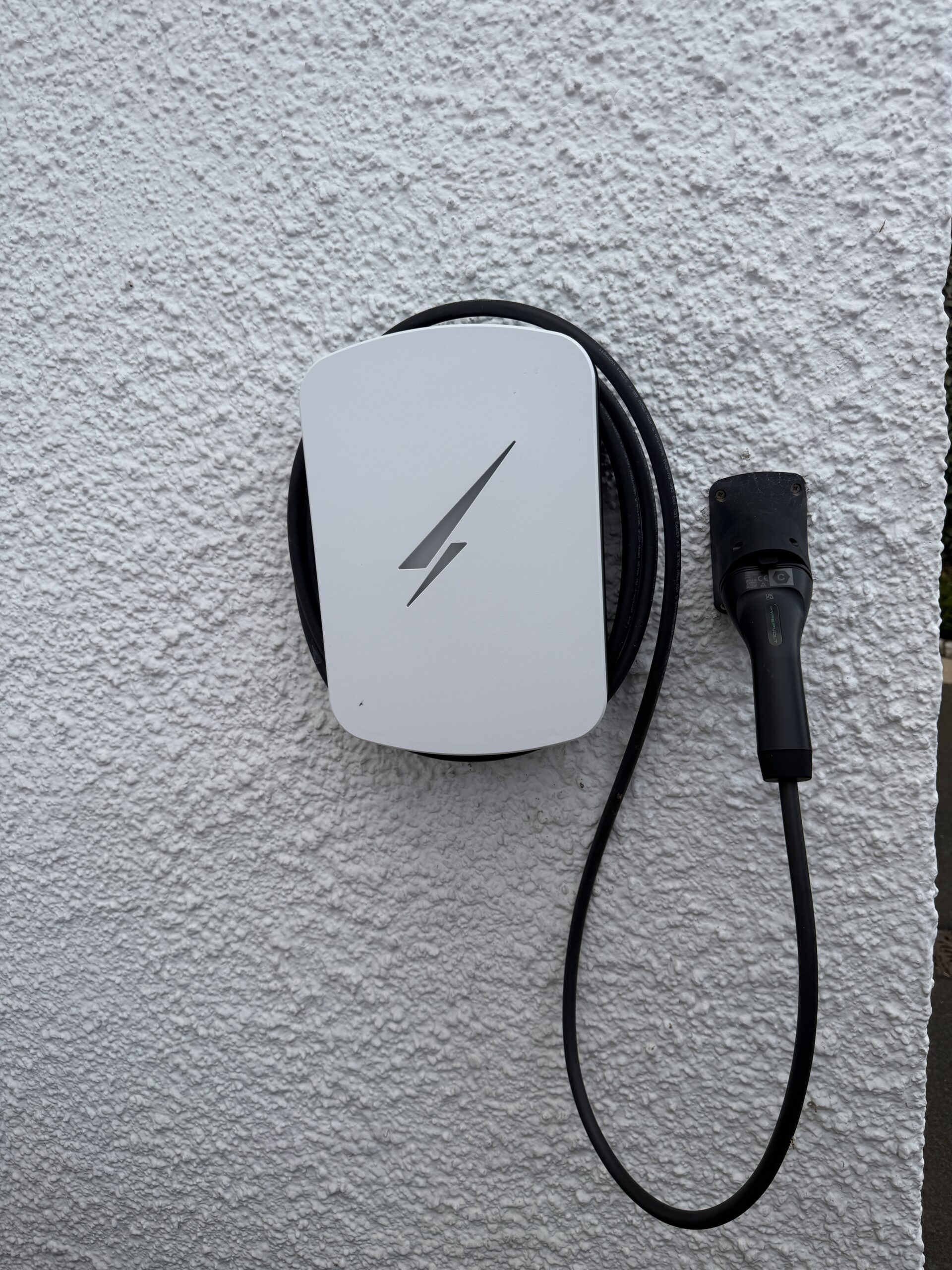
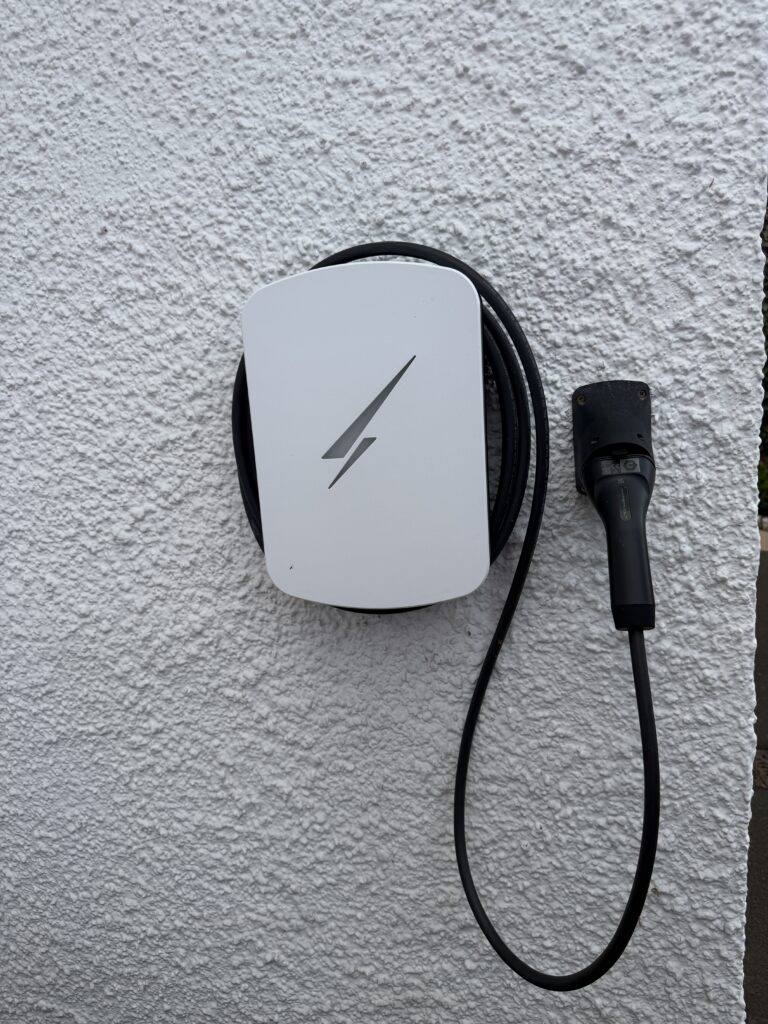
Photo note: the Hypervolt charger pictured is our conventional Colinton installation, not a V2H or V2G system.
V2H, V2G and V2L: what is the difference?
| Term | What it means | What to check |
|---|---|---|
| V2H: vehicle-to-home | The car supplies electricity to the home through a suitable system | Vehicle support, controls, installation and whether outage backup is included |
| V2G: vehicle-to-grid | The car can export energy to the electricity network | Compatible service, metering, tariff and network permission |
| V2L: vehicle-to-load | The car supplies individual appliances through a supported outlet or adaptor | Appliance and outlet power limits; this is not automatically whole-home supply |
| Smart one-way charging | Charging is timed or adjusted around tariffs, solar or demand | Useful today, but it does not discharge the car into the home |
The Energy Saving Trust V2G guide describes the potential for EV storage to support the electricity system. The distinction above matters when comparing a charger’s advertised features with the outcome you want.
What can people access now?
A concrete UK example is Octopus Power Pack. At our research date, its compatibility page lists a V2G-enabled BYD Dolphin paired with a V2G-enabled Zaptec Pro. Eligibility also includes a suitable smart meter, export permission and participation conditions. This does not mean every Dolphin or Zaptec Pro already supports the service.
Octopus describes the benefit as credits for eligible EV charging while ordinary household consumption remains chargeable. Energy physically flowing through the home is not the same thing as a promise of free household electricity. Check current tariffs, limits and contract terms directly with the provider.
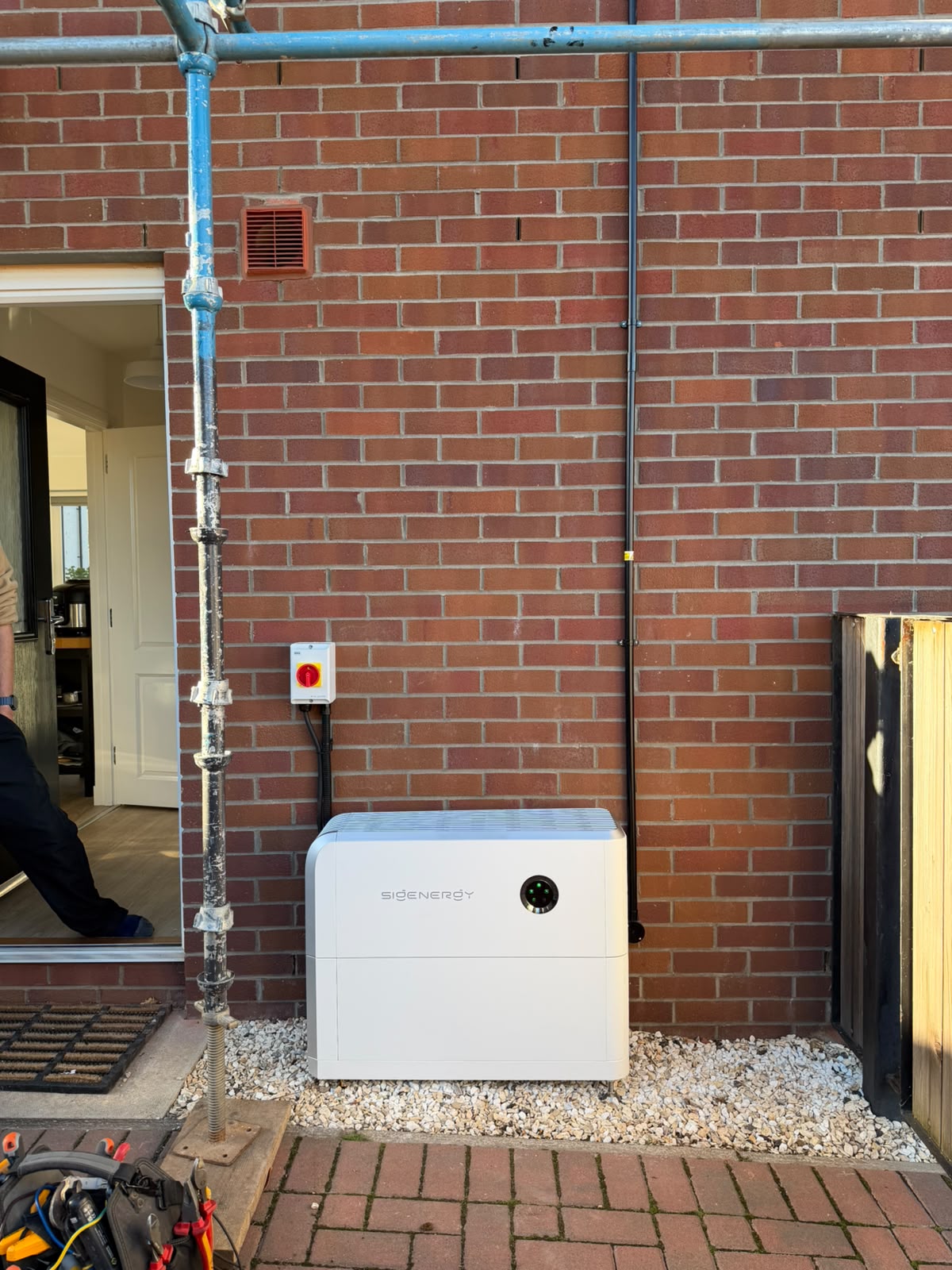
For an integrated home-energy approach, Sigenergy’s EV DC module documentation describes V2H and V2G capability, with functionality limited by the connected vehicle. Its compatibility information and the exact system design need to be checked. A successful field test or future software promise is not a universal guarantee for every UK vehicle.
How could an EV help run a home?
In a suitable V2H arrangement, energy stored in the car can supply household loads while it is connected. Depending on the system and tariff, that energy might have come from solar or lower-cost grid charging. Controls must leave enough charge for the next journey and respect both the car and installation’s limits.
As an illustration, reserving a 20 kWh slice of a compatible vehicle’s battery for household use and assuming 90% discharge-path efficiency would deliver about 18 kWh. At an average household load of 1 kW, that is about 18 hours of energy. Higher loads shorten that time; charger output limits may prevent some appliances running together. This is an energy calculation, not a backup promise or a specification for a particular car.
Does bidirectional charging work in a power cut?
Not automatically. A grid-connected system may stop supplying power when the network fails. Outage operation requires an explicitly designed backup or islanding arrangement, suitable changeover equipment and confirmed vehicle support. Ask which circuits can run, at what power and for how long. Never connect a vehicle outlet to a household socket to backfeed the wiring.
What should you check before investing?
Your driving routine: the car must be home and plugged in when the energy is needed. A vehicle away all day cannot collect rooftop solar directly during those hours.
The complete cost: compare the vehicle or lease requirements, charger, installation, control equipment, tariff and any subscription. Include energy losses and the value of battery use in the calculation.
Warranty and permissions: confirm manufacturer and lease terms, the supported software version and network requirements. A connector that fits does not prove two-way compatibility.
Driving reserve and control: set a realistic minimum charge and departure target. Understand who controls discharging and how to override the schedule.
What makes sense for your home today?
Our EV charging service assesses supply capacity, load management and appropriate controls. You can see a conventional installation in our Colinton, Edinburgh case study. For many homes, smart one-way charging already offers useful tariff or solar integration.
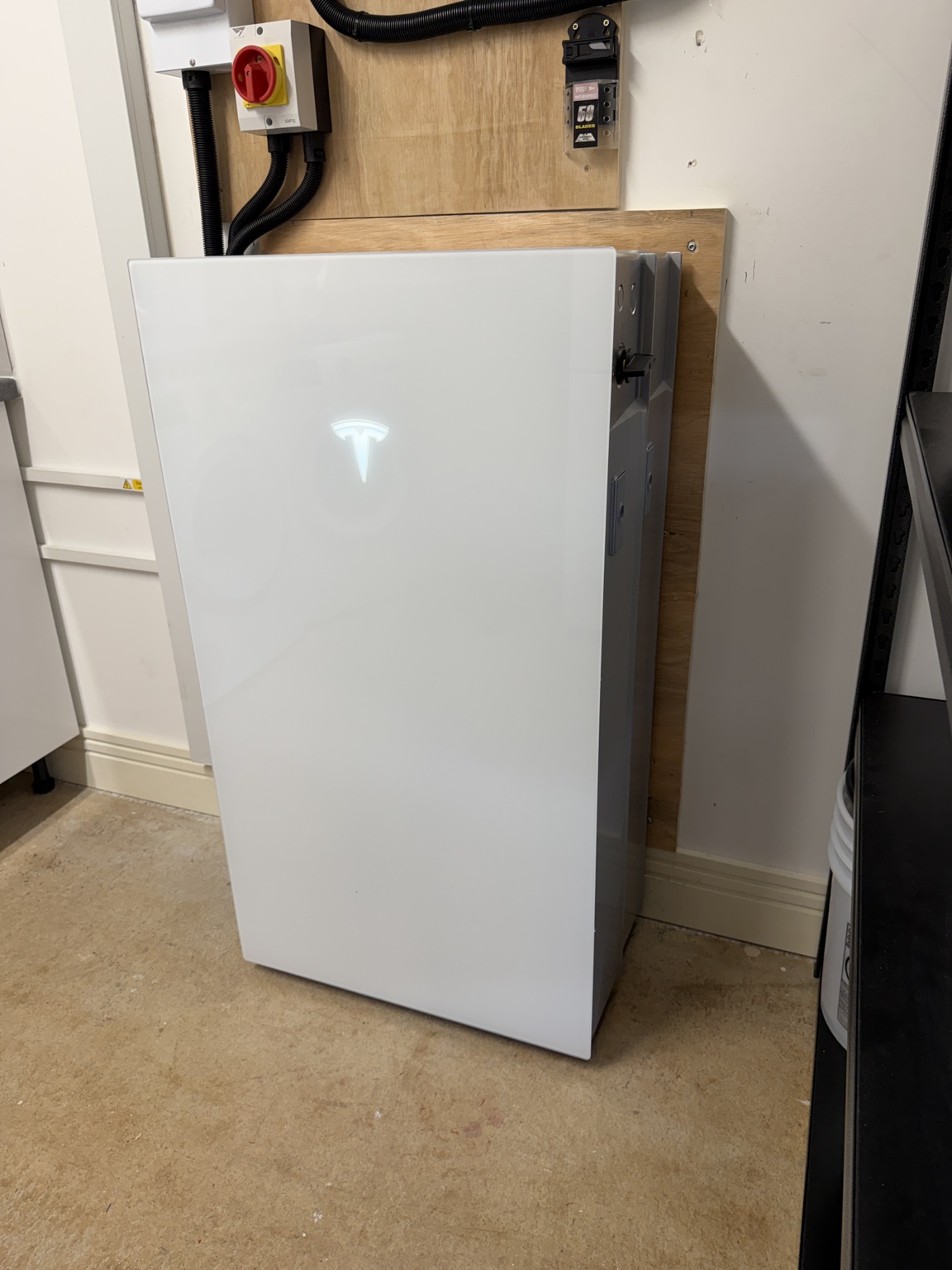
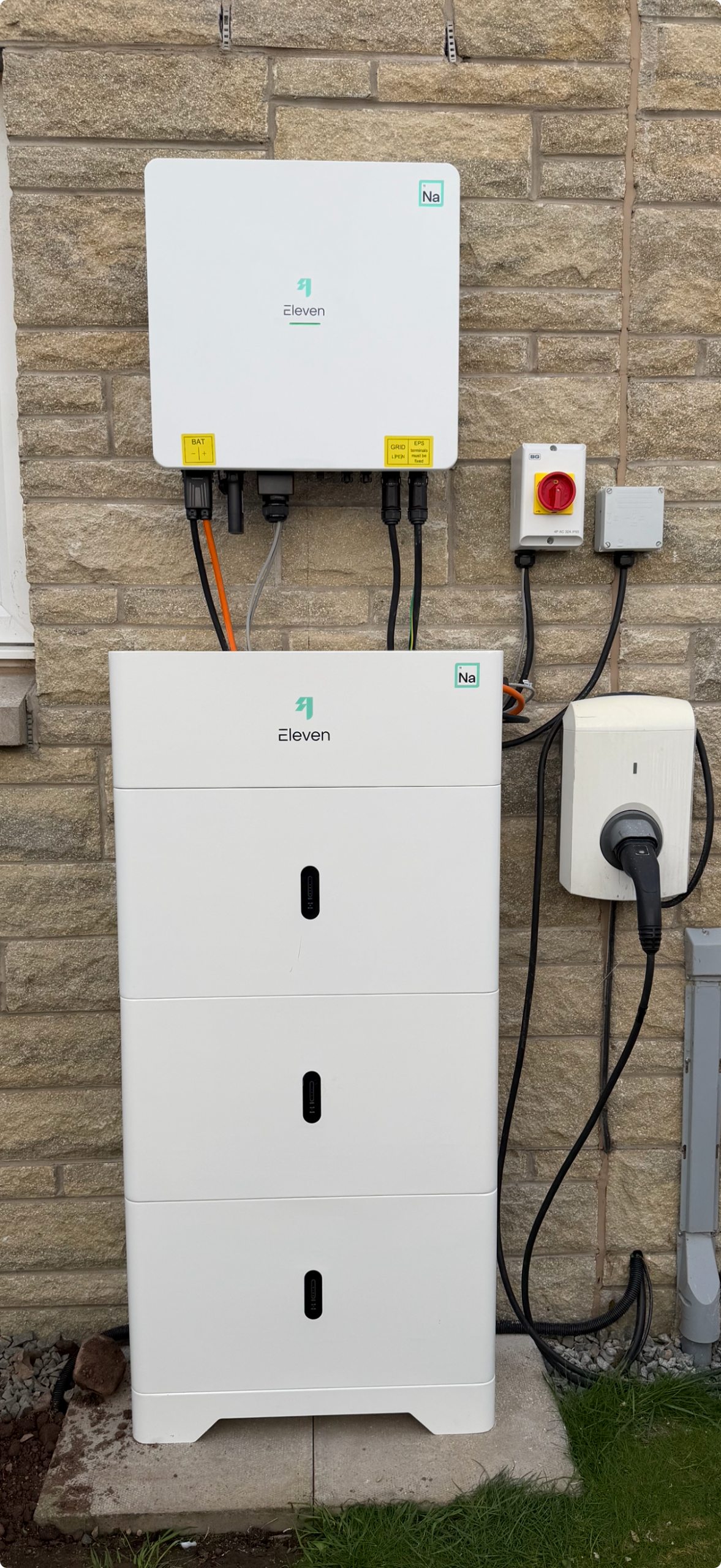
Where bidirectional charging is of interest, we start with the exact vehicle and the intended result. We can assess how it relates to solar PV and a stationary home battery. A stationary battery remains at the property when the car is away; the technologies may complement each other.
Frequently asked questions
Can my existing charger be upgraded? Only if the manufacturer explicitly supports that hardware and configuration. A software update cannot be assumed to add missing bidirectional hardware.
Will V2G guarantee income? No. Returns depend on the service, availability, tariff and operating conditions. Compare the whole arrangement against ordinary smart charging.
Should I buy based on a future feature? Base the decision on functionality confirmed for delivery, with any future capability clearly identified as conditional.
Planning an energy upgrade in Edinburgh, East Lothian or Central and East Scotland? Tell Renew-Able Solutions about your property and we can assess the options around your energy use, equipment and budget.