Skip to content

An EV charger can often be installed in a detached garage or beside a parking space some distance from the house, but the cable route and electrical supply need a proper survey. The charger itself is only one part of the job. Groundworks, connectivity and the way you park can determine whether the finished installation is convenient.
For homes in Edinburgh and East Lothian, the practical question is not simply whether a cable will reach. It is how to create a suitable permanent installation without an awkward charging lead, unexpected excavation or unreliable smart controls.
Choose the parking position before the charger
Park as you normally would and consider where the vehicle’s charging port sits. Check whether a cable would obstruct a path, garage door or the route used to bring bins out. If a second vehicle may use the space later, include that in the conversation.
A charger on the house wall might be the simplest installation but a poor everyday location. Conversely, fitting one beside a remote garage may be convenient while requiring a longer supply route. Sketch both options and ask for the implications of each.
Do not assume the existing garage supply is sufficient
A cable that currently powers lights and sockets is not automatically suitable for sustained EV charging. The installer needs to assess its condition, capacity, protective arrangements and the other equipment served by it. They also need to assess the property’s overall electrical demand.
SP Energy Networks explains the network application process for adding a charger. Your installer should identify the relevant network requirements and whether anything must be resolved before installation. A long driveway is not itself evidence that you need a supply upgrade.
Agree the whole cable route
Walk through the proposed route from the supply position to the charger. Note walls, paths, steps, planted areas and the surfaces that would need to be opened and restored. Ask who checks for existing services before any excavation and who takes responsibility for reinstatement.
For example, an illustrative route along an accessible wall may require different work from one crossing a paved courtyard. The same charger could therefore have two very different installation totals. Cable length alone does not describe the entire job.
- Confirm the start and end points and the proposed mounting position.
- Identify any land or shared areas requiring permission.
- Agree who provides groundworks and how surfaces will be made good.
- Ask whether provision for future equipment is sensible while a route is accessible.
- Get the electrical design confirmed before arranging independent excavation.
Plan connectivity as carefully as power
A garage can have adequate electricity but poor Wi-Fi. Check the actual charger location, with doors closed if that reflects normal use. The appropriate connection may depend on the charger’s supported Wi-Fi, Ethernet or mobile data options.
Ask which functions remain available if the connection drops and whether tariff integration needs the charger, car or both to stay online. Do not assume every model works the same way. If the proposal includes solar charging or load management, ask how the required measurements and control signals will reach the charger.
Make the quote easy to compare
A useful quote identifies the charger model, cable route, mounting arrangements, electrical works, testing, commissioning and any groundworks. It should also explain what is excluded. A low headline price for a short standard installation may not describe a detached garage project.
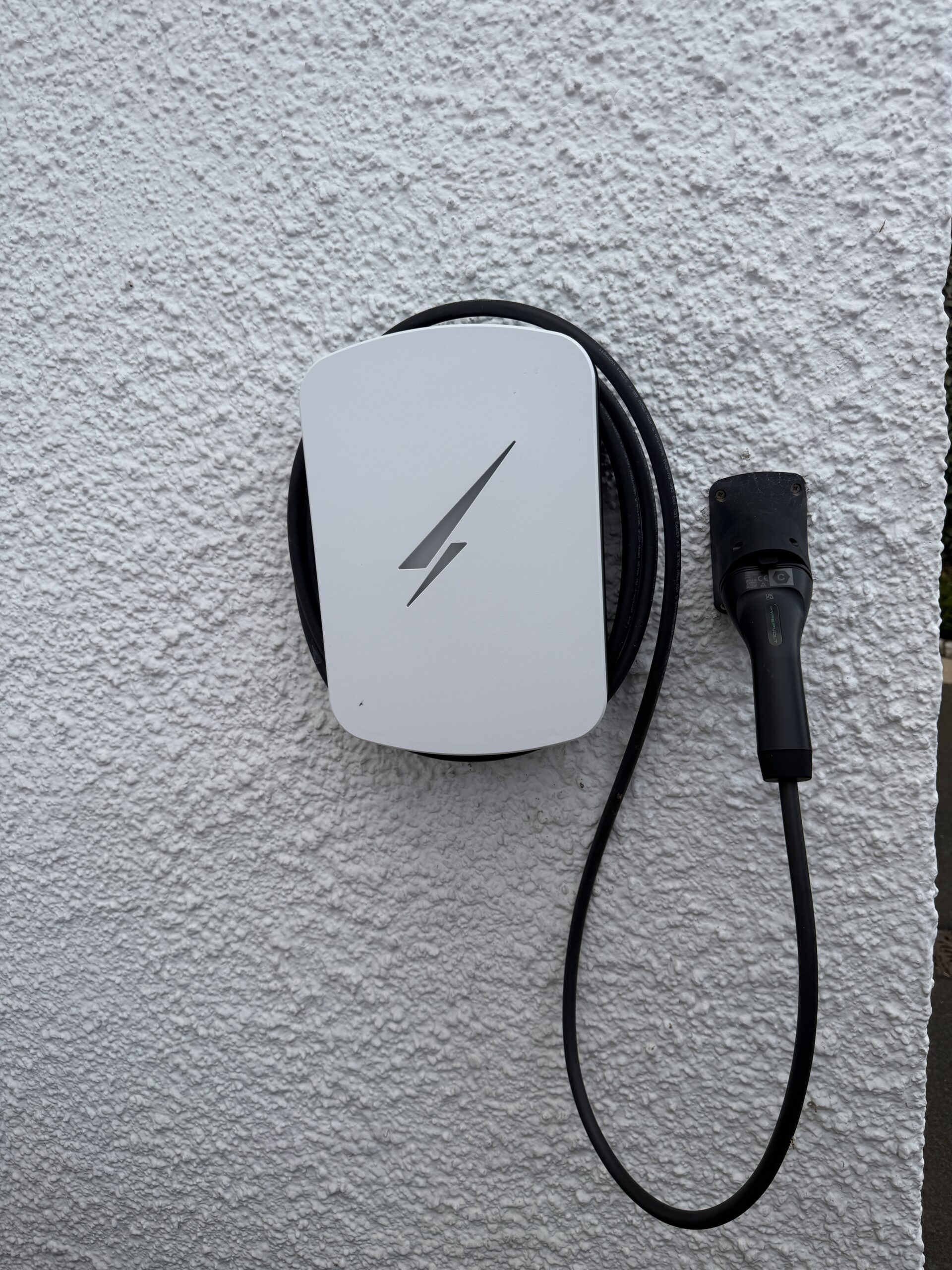
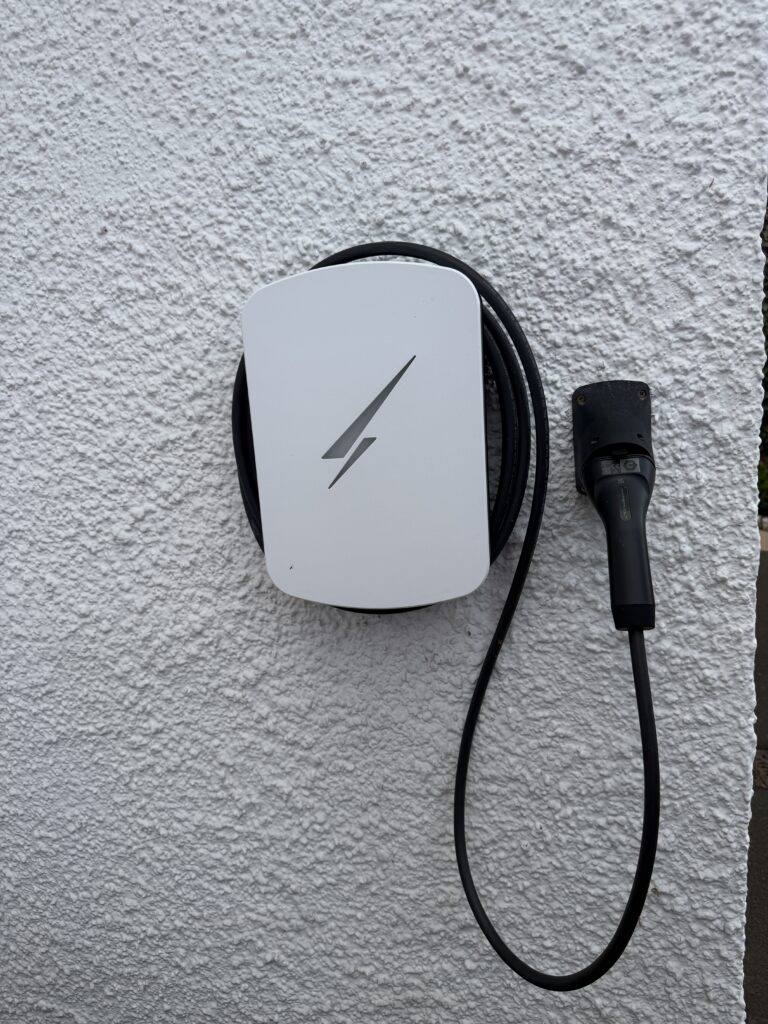
Our tethered versus untethered charger guide helps with the cable choice. For a real local equipment example, see our Hypervolt installation in Colinton; every property’s route and supply still need their own assessment.
Questions about garage and driveway charging
Will a longer cable route make charging slower?
Distance affects electrical design and installation cost, but a correctly designed route is not simply a reason to accept poor performance. Ask what charging power the completed installation will support and what may limit it.
Can an extension lead solve the distance problem?
Do not use a domestic extension lead as a substitute for a properly designed permanent installation. Energy Saving Trust’s charging guide explains dedicated home chargepoints and the role of a registered installer.
Can I send photographs for an initial discussion?
Yes. Useful photographs show the parking area, proposed route and accessible supply equipment with covers closed. They help identify questions for a survey; they do not replace the installer’s electrical checks.
Plan your installation with Renew-Able Solutions
Explore our EV charger installation service in Edinburgh and East Lothian, then request an EV charging assessment. Include your postcode, vehicle model, parking arrangement and approximate distance between the house and charging position.
Featured image: a Renew-Able Solutions Hypervolt installation in Colinton, Edinburgh. It illustrates the equipment; the planning scenarios in this guide are examples, not claims about that property.