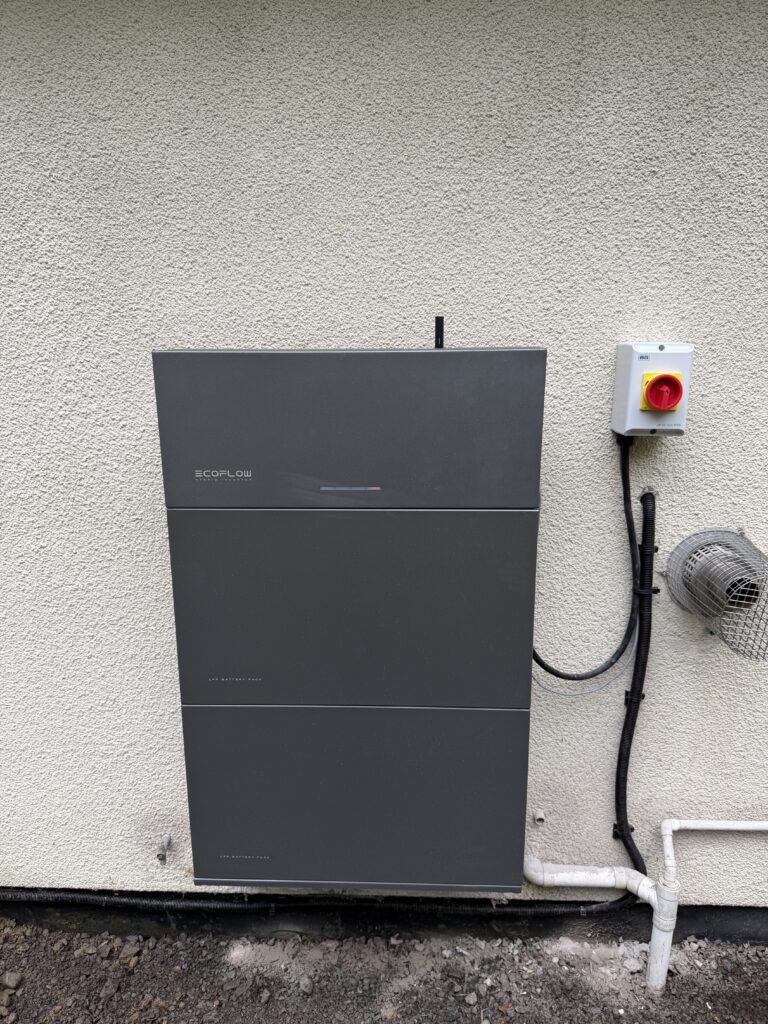
Some installations come with a particularly memorable journey. Our engineers recently headed to Ballachulish, near Glen Coe in the Scottish Highlands, to install a new EcoFlow home battery system. They enjoyed working with the technology almost as much as the scenery and the drive up.
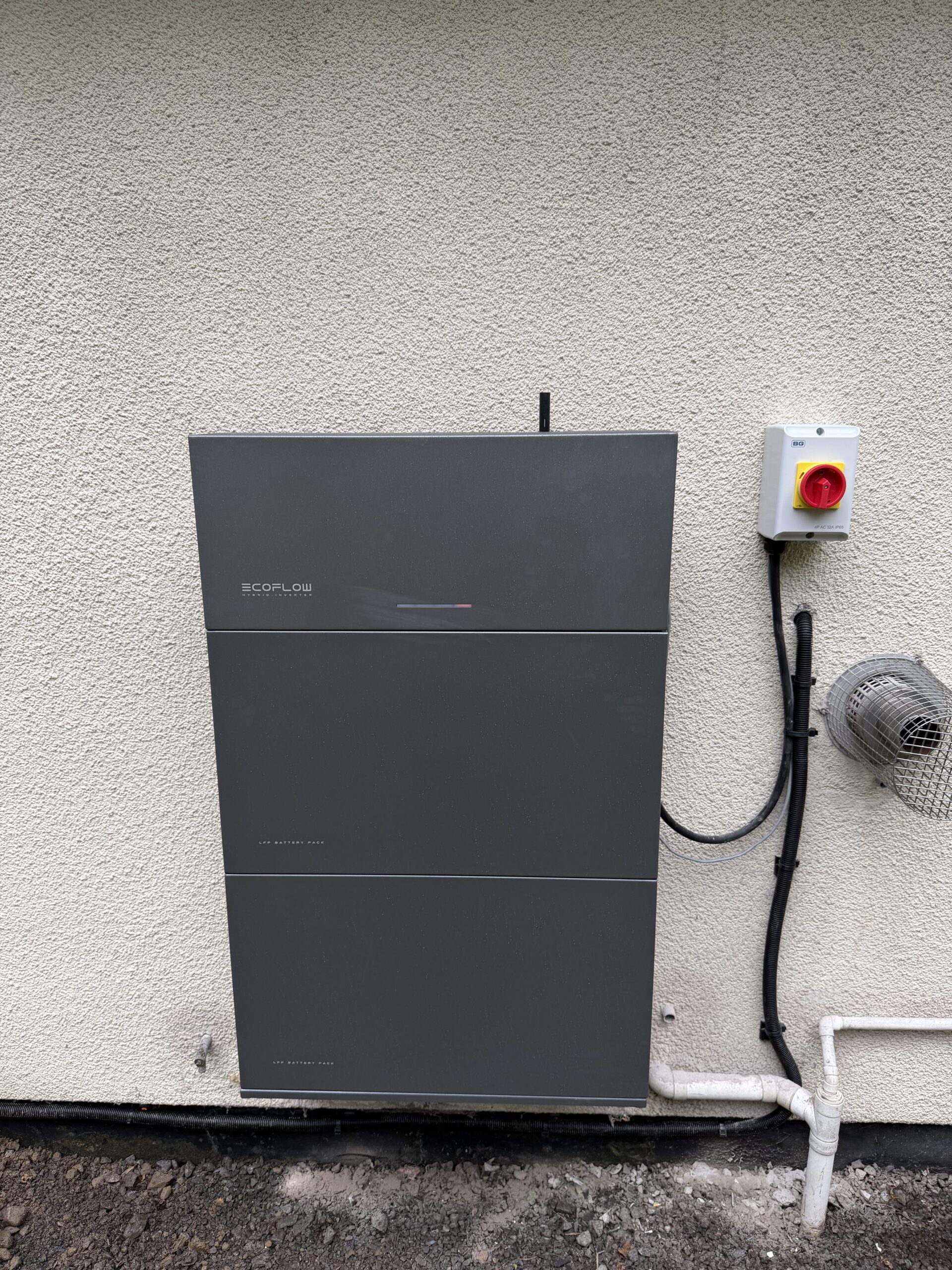
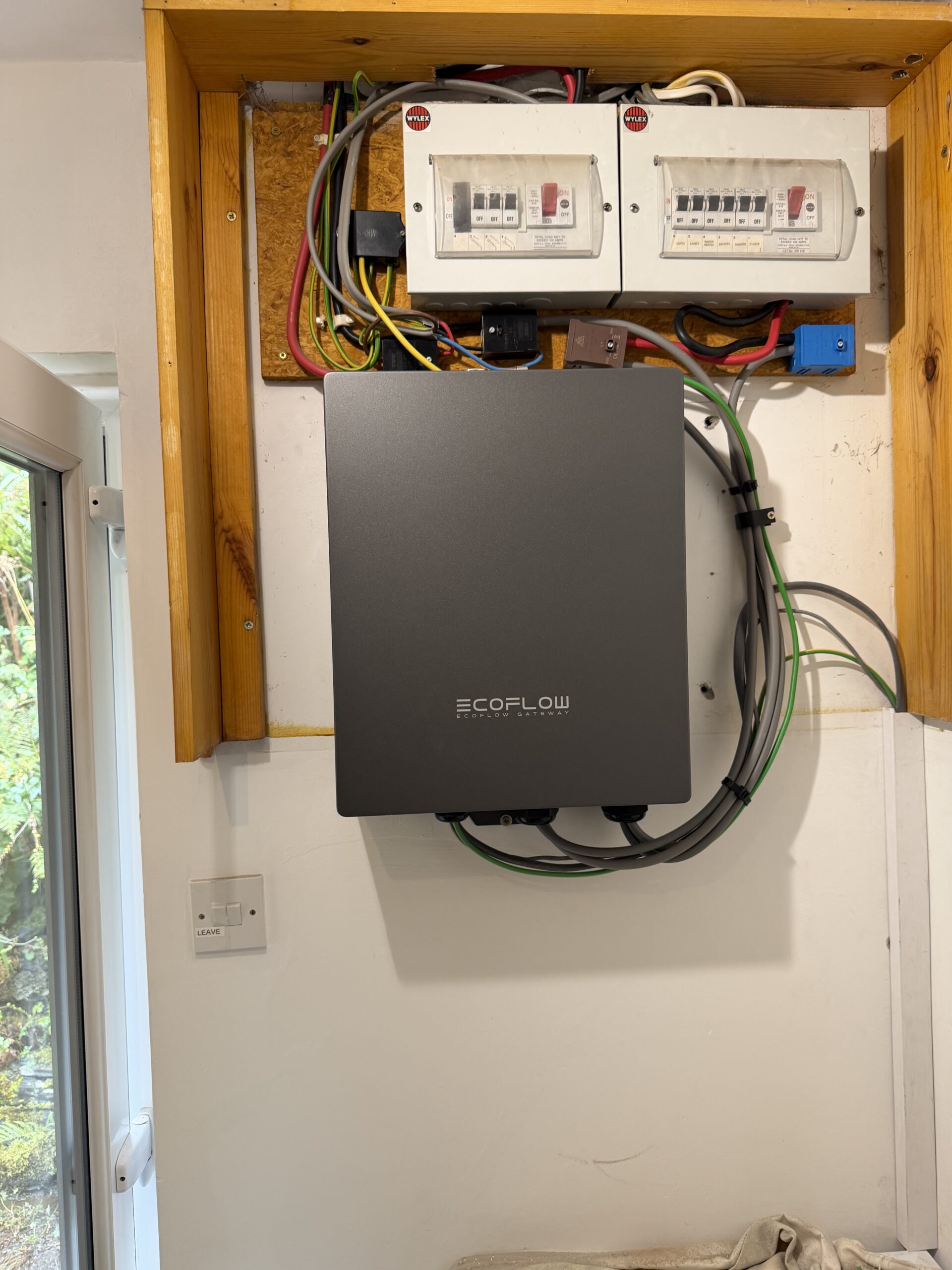
For the customer, the project has two practical goals: make better use of cheaper overnight electricity and add backup power for a grid outage. The installation combines an EcoFlow PowerOcean 2 5 kW hybrid inverter, two 5 kWh batteries and an EcoFlow backup UPS gateway, with a TT earthing arrangement using a ConduDisc electrode.
The customer is already on an EV electricity tariff and expects to save approximately £850 a year by charging the batteries overnight and using the stored electricity later. This is a forecast, not a measured result or guaranteed saving.
The Ballachulish installation at a glance
| Project detail | Installed system |
|---|---|
| Location | Ballachulish, near Glen Coe, Scottish Highlands |
| Hybrid inverter | EcoFlow PowerOcean 2, rated at 5 kW |
| Battery storage | 2 × 5 kWh battery modules: 10 kWh total rated capacity |
| Backup equipment | EcoFlow UPS backup gateway |
| Earthing | TT earthing system using a ConduDisc electrode |
| Charging strategy | Use the customer’s EV tariff overnight off-peak window |
| Expected annual saving | Approximately £850; dependent on actual usage, tariff rates and system operation |
Turning an EV tariff into a benefit for the home
An EV tariff can offer more than lower-cost motoring. Where the tariff provides a cheaper overnight rate for household electricity, a compatible home battery can charge during that period and supply the home when prices rise.
The principle is simple: buy electricity at the lower rate, store it, then use it during more expensive hours. The saving comes from avoiding some peak-rate imports, after allowing for the energy lost during charging, storage and discharge.
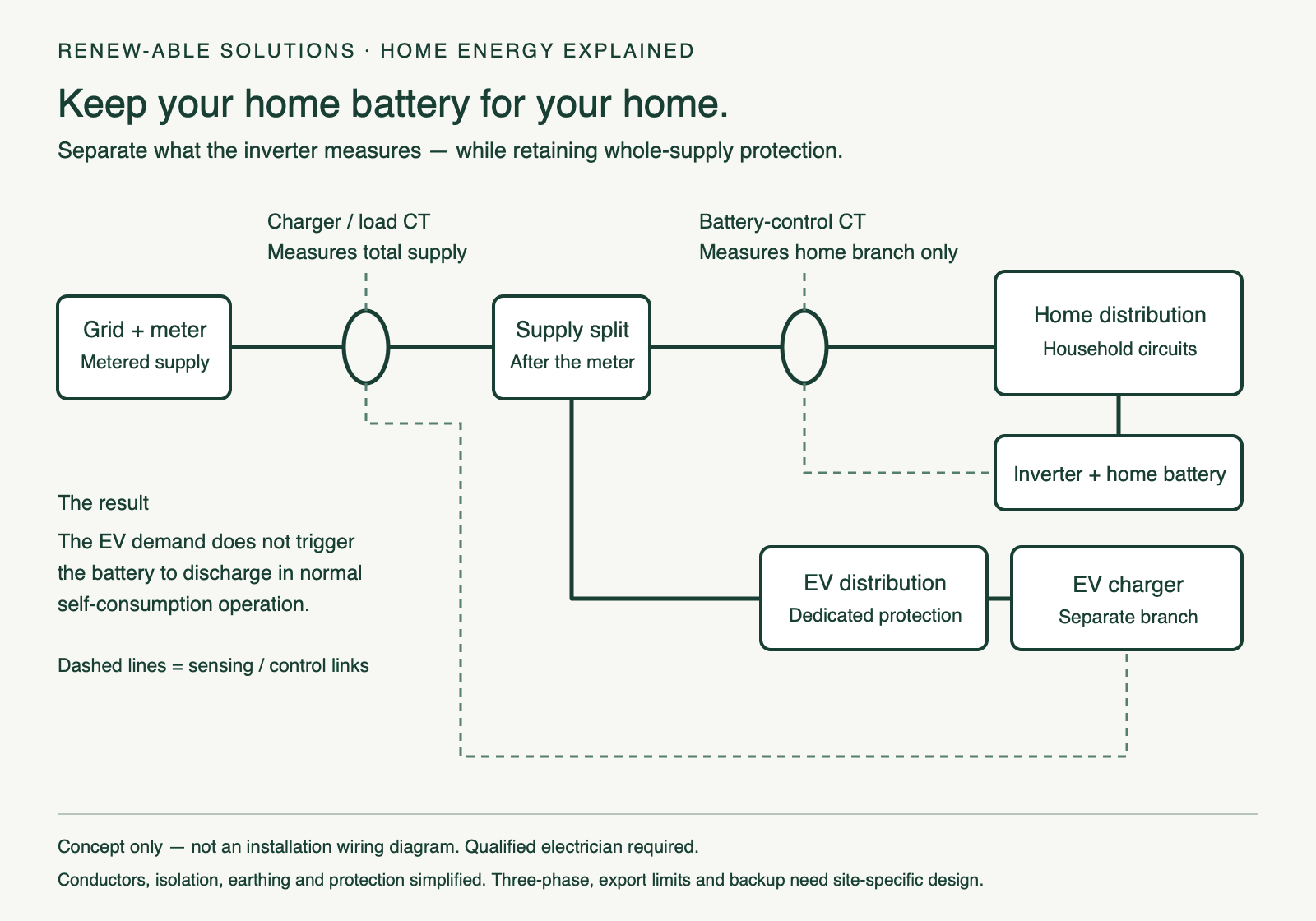
For this customer, the aim is to put their existing overnight tariff to work across more of their household electricity use. The battery schedule needs to match the actual tariff window, while EV charging and home battery settings should work together so the car does not unintentionally drain stored energy intended for the house.
Our guide to stopping an EV charger draining your home battery explains why those settings matter.
What the approximately £850 annual saving means
The customer’s expected saving is approximately £850 per year from overnight charging and later use of stored electricity. Spread across a year, that is roughly £71 a month on average, although actual monthly savings will vary.
The figure is a project expectation, not an independently verified bill comparison. Actual savings depend on the difference between the customer’s off-peak and daytime rates, how much electricity the home uses outside the cheap window, charging losses, battery reserve settings, seasonal demand and future tariff changes.
Keeping a larger reserve available for an outage can also reduce the energy available for everyday bill savings. The balance between lower bills and backup readiness should reflect the customer’s priorities.
The most useful next measure is the real operating data: overnight electricity bought, stored energy delivered to the home and the peak-rate imports avoided. Those figures, checked against bills over time, will show how the system performs in practice. No particular tariff provider or unit rate is assumed in this case study.
EcoFlow technology: storage capacity and power explained
The two battery modules provide 10 kWh of total rated storage capacity. The 5 kW inverter rating describes power output, rather than how much energy can be stored. These are different measures: storage capacity influences how much energy can be shifted through the day, while inverter and battery limits affect how many loads can be supplied at once.
The PowerOcean battery platform uses lithium iron phosphate, often shortened to LFP, with battery management that monitors conditions such as cell temperature. EcoFlow’s app provides a way to review household energy flows and battery operation. Manufacturer information on the EcoFlow home energy range explains the wider platform.
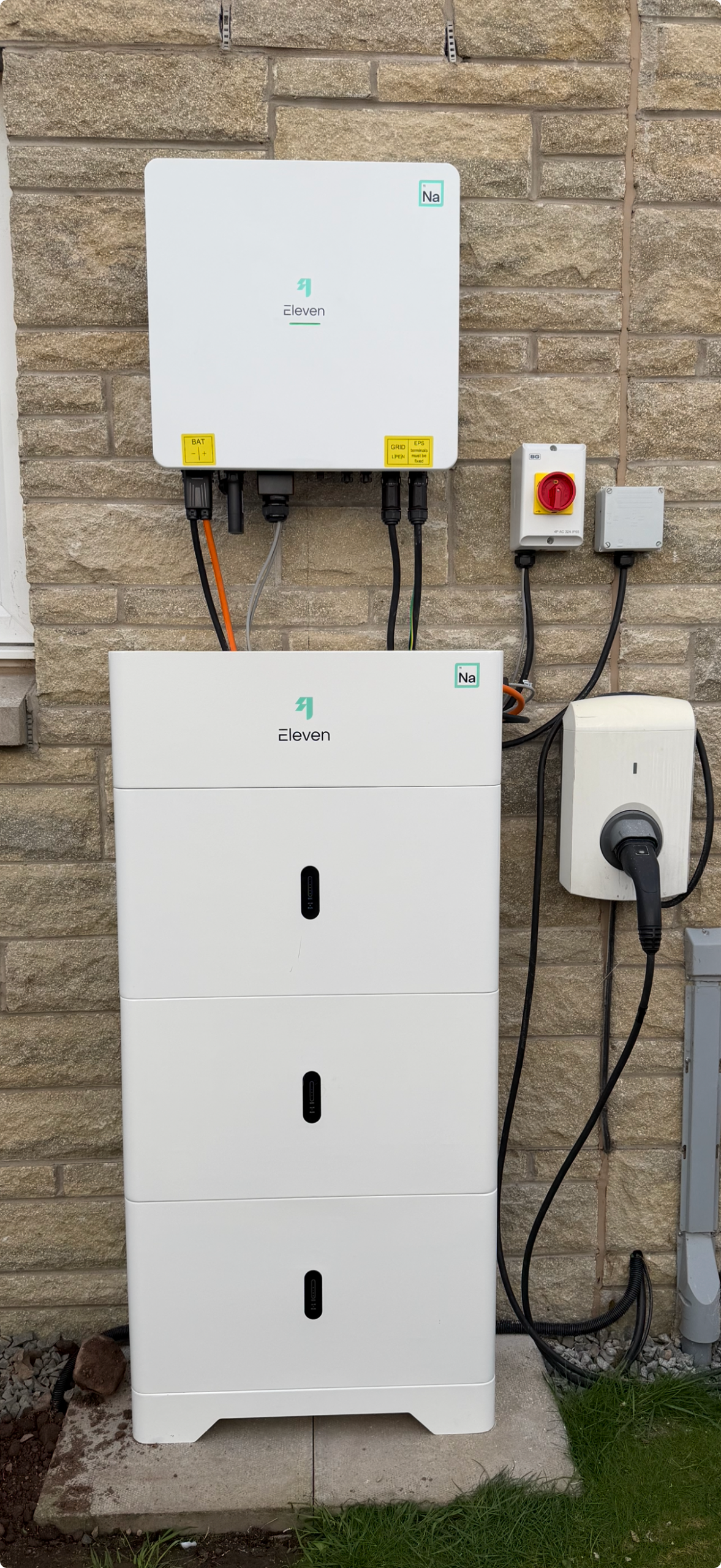
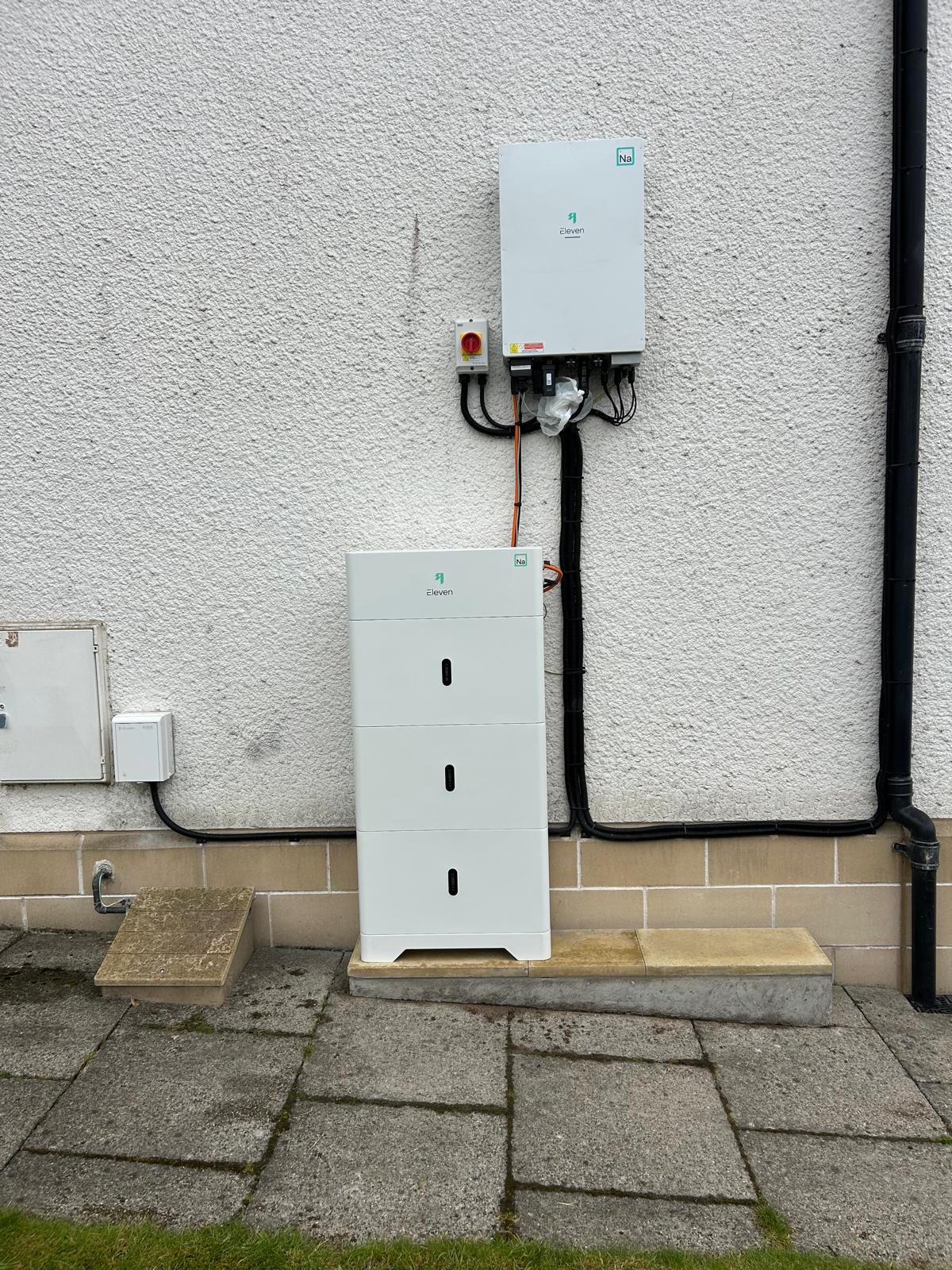
For this project, the external equipment is arranged in a compact vertical installation, while the separate gateway is positioned indoors near the existing distribution equipment. The two photographs show both parts of the installation.
Backup power with the EcoFlow UPS gateway
The gateway adds backup functionality to the battery installation. It manages the change between grid-connected operation and supplying the backed-up installation from stored energy when the mains supply fails.
The available backup power and running time depend on the installed equipment, the circuits included in the design, the connected loads and the battery’s remaining charge. A 10 kWh battery does not mean every appliance can run together without limits, and holding some energy in reserve is important if outage protection is a priority.
This case study does not claim a particular measured transfer time or guarantee uninterrupted operation of every sensitive device. Backup arrangements must be matched to the equipment the customer needs to keep running. Our home battery backup guide explains the design considerations.
TT earthing using a ConduDisc
The installation includes a TT earthing system using a ConduDisc earth electrode. Although less visible than the batteries and inverter, the earthing arrangement is an important part of the electrical design, particularly when a system can operate independently of the grid.
A ConduDisc is a manufactured earthing electrode; it does not replace the need for suitable protective devices, correct switching and electrical testing. Its suitability depends on the installation and ground conditions, not simply the product name. The manufacturer’s ConduDisc overview describes the electrode technology.
A Highland installation to remember
Working around Ballachulish and Glen Coe gave our engineers a spectacular backdrop to the job. It was one of those trips where the journey was a highlight in its own right, alongside installing equipment designed to make a practical difference at home.
The result brings together overnight energy storage and backup capability in one project. The customer’s aim is lower electricity costs, with the added reassurance of a system designed to provide power to the backed-up installation when the grid is unavailable.
Considering battery storage near Glen Coe?
If you live in Ballachulish, the Glen Coe area or elsewhere in Scotland and are considering a home battery, we can discuss your electricity use, existing tariff and backup requirements. The right capacity should be based on your household’s needs, rather than choosing a system on headline savings alone.
Explore our home battery storage service, or contact Renew-Able Solutions to discuss your property. You can also read our Milnathort battery installation case study for another example of overnight tariff charging with backup power.
Frequently asked questions
How much battery storage was installed?
Two 5 kWh EcoFlow battery modules were installed, giving 10 kWh of total rated capacity. The energy available for everyday use also depends on reserve settings and operating limits.
Can home batteries charge on an EV tariff?
Yes, where the tariff offers an eligible off-peak rate for household electricity and the system supports scheduled grid charging. The actual tariff terms and charging times must be checked.
Is the £850 saving guaranteed?
No. It is the customer’s expected annual saving. Actual results depend on consumption, tariff prices, charging losses, reserve settings and how the system is used.
Does the system provide backup during a power cut?
The installation includes an EcoFlow UPS backup gateway. What it can supply, and for how long, depends on the agreed circuit design, equipment limits, connected loads and battery charge.