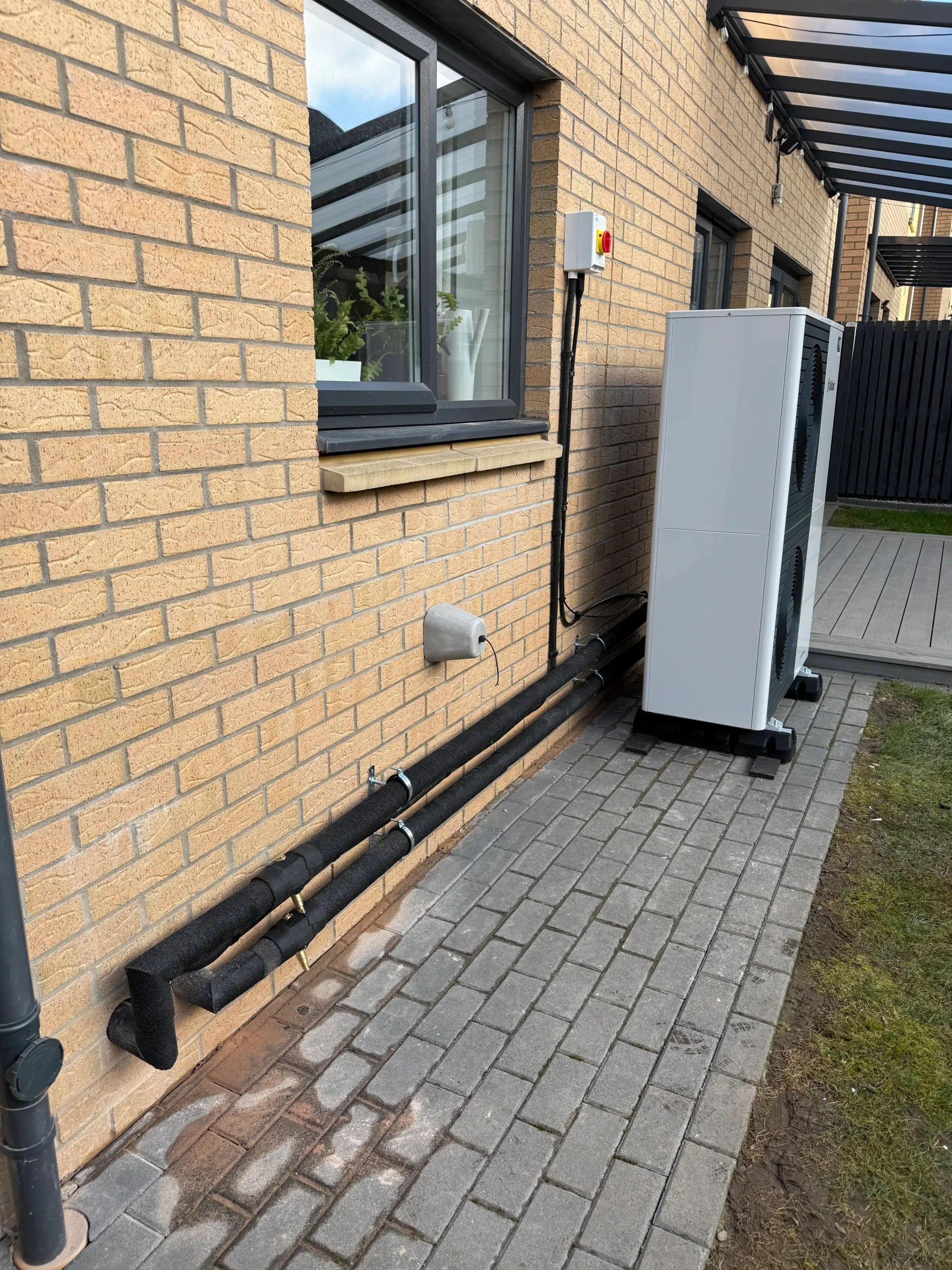
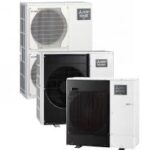
An air source heat pump is an electric heating system that moves heat from the outdoor air into a building. Unlike a boiler, it does not create heat by burning fuel. A well-designed system can provide space heating and, in an air-to-water installation, hot water for the property.
Comparing heating options? Our air-to-water versus air-to-air heat pump guide explains the differences in room heating, hot water, cooling and which system may suit your home.
This guide explains how air source heat pumps work, what they need from a property and what Scottish homeowners should check before requesting a quotation. If you are already considering a system, see our air source heat pump installation service in Edinburgh and East Lothian.
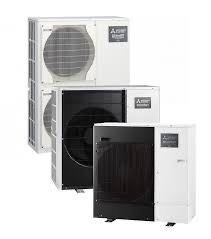
How does an air source heat pump work?
The outdoor unit draws air across a heat exchanger containing refrigerant. The refrigerant absorbs heat, even when the outdoor temperature is low. A compressor then raises its temperature so that the captured energy can be transferred into the building.
In an air-to-water system, heat is transferred to water for radiators, underfloor heating and a compatible hot-water cylinder. Air-to-air heat pumps instead deliver warm or cool air through indoor units and normally do not provide domestic hot water. Read our separate guide to air-to-air heat pumps if that is the type you are considering.
What makes a home suitable?
Suitability depends on the whole heating system, not simply whether there is space for an outdoor unit. A proper assessment should consider:
- the property’s room-by-room heat loss;
- insulation, draughts and current heat demand;
- radiator or underfloor-heating output at the proposed flow temperature;
- space for the outdoor unit with suitable airflow and service access;
- hot-water demand and space for an appropriate cylinder;
- the electrical supply, consumer unit and cable route;
- condensate drainage, sound and planning constraints; and
- how the occupants use and control their heating.
Renew-Able Solutions uses a detailed property survey and room-by-room heat-loss assessment before selecting equipment. Existing radiators may be suitable, but some properties need selected radiator, pipework, cylinder or electrical upgrades.
Do air source heat pumps work in Scottish winters?
Modern heat pumps are designed to operate in cold weather. Reliable winter performance depends on accurate sizing, suitable emitters, correct flow temperatures, controls and commissioning. Output and efficiency change with outdoor temperature, so manufacturer performance data must be considered at the property’s design conditions.
How efficient is a heat pump?
A heat pump can deliver more units of heat than the units of electricity it consumes because electricity powers the transfer process rather than creating all the heat directly. COP describes performance at one test condition; SCOP estimates performance over a season. Actual results depend on weather, flow temperature, hot-water use, controls, maintenance and the building’s heat demand.
Will it reduce energy bills?
It may, but no single saving applies to every home. Running costs depend on the system being replaced, electricity tariff, heat demand, seasonal efficiency and how the system is operated. Replacing direct electric heating, oil or LPG produces a different comparison from replacing a modern gas boiler. A quotation should therefore use property-specific assumptions rather than a generic saving or payback claim.
How much does installation cost?
The installed cost depends on heat-pump capacity, hot-water cylinder, radiator and pipework changes, controls, electrical work, access and any building work. Funding programmes and eligibility can change. We provide a detailed design and quotation after survey and explain which technical documents may be needed for a current Scottish funding application.
What happens during installation?
The agreed work can include the outdoor unit, indoor hydraulic equipment, cylinder, controls, electrical connection, pipework and emitter upgrades. The system is then filled, tested, commissioned and configured for the property. We explain the controls and provide the applicable electrical, manufacturer and MCS documentation at handover.
Maintenance and servicing
Regular servicing can support safe, efficient and reliable operation. The service interval and warranty conditions vary by manufacturer and model. Owners should follow the documentation for their equipment. Renew-Able Solutions provides air source heat pump servicing across Edinburgh, the Lothians and suitable locations in Central and East Scotland.
Choosing an installer
Look for a survey-led proposal that explains calculated heat loss, equipment selection, emitter requirements, expected performance, electrical work, permissions, warranties and exclusions. Renew-Able Solutions is an MCS-certified and RECC-approved installer serving Edinburgh, East Lothian and wider Scotland.
Arrange an air source heat pump assessment
Tell us about the property, existing heating, insulation, hot-water requirements and what you want the system to achieve. Contact Renew-Able Solutions to arrange the appropriate survey and receive a property-specific design and quotation.