Project summary: Renew-Able Solutions delivered an integrated renewable-energy system for a commercial site in Scotland, combining 143kWp of rooftop solar PV, 80kWh of battery storage and 24kW of wind generation. We designed the installation as one coordinated system around the building, electrical infrastructure and onsite electricity demand.
This case study records the installed equipment and the practical delivery stages visible in the project photographs and video. The customer’s identity and precise site address are not published. Financial results are not presented as a universal promise: generation, savings and payback depend on measured consumption, tariffs, export arrangements, finance and operating strategy.
Article credentials and review record
Written by: Alan Valente
Technically reviewed by: Dr Euan Patterson
Published: 1 September 2026
Last technically reviewed: 4 September 2026
Checks completed: Dr Euan Patterson checked the installed-capacity calculation (260 × 550 W = 143,000 W, or 143 kWp) and reviewed the article’s G99 and G100 grid-connection statements against the primary sources listed below. This article makes no project-specific tariff or funding claim, so no tariff or funding figure was used in the calculation.
Project facts
| Project type | Integrated commercial solar, battery and wind installation |
|---|---|
| Solar array | 260 × 550W modules |
| Installed solar capacity | 143kWp |
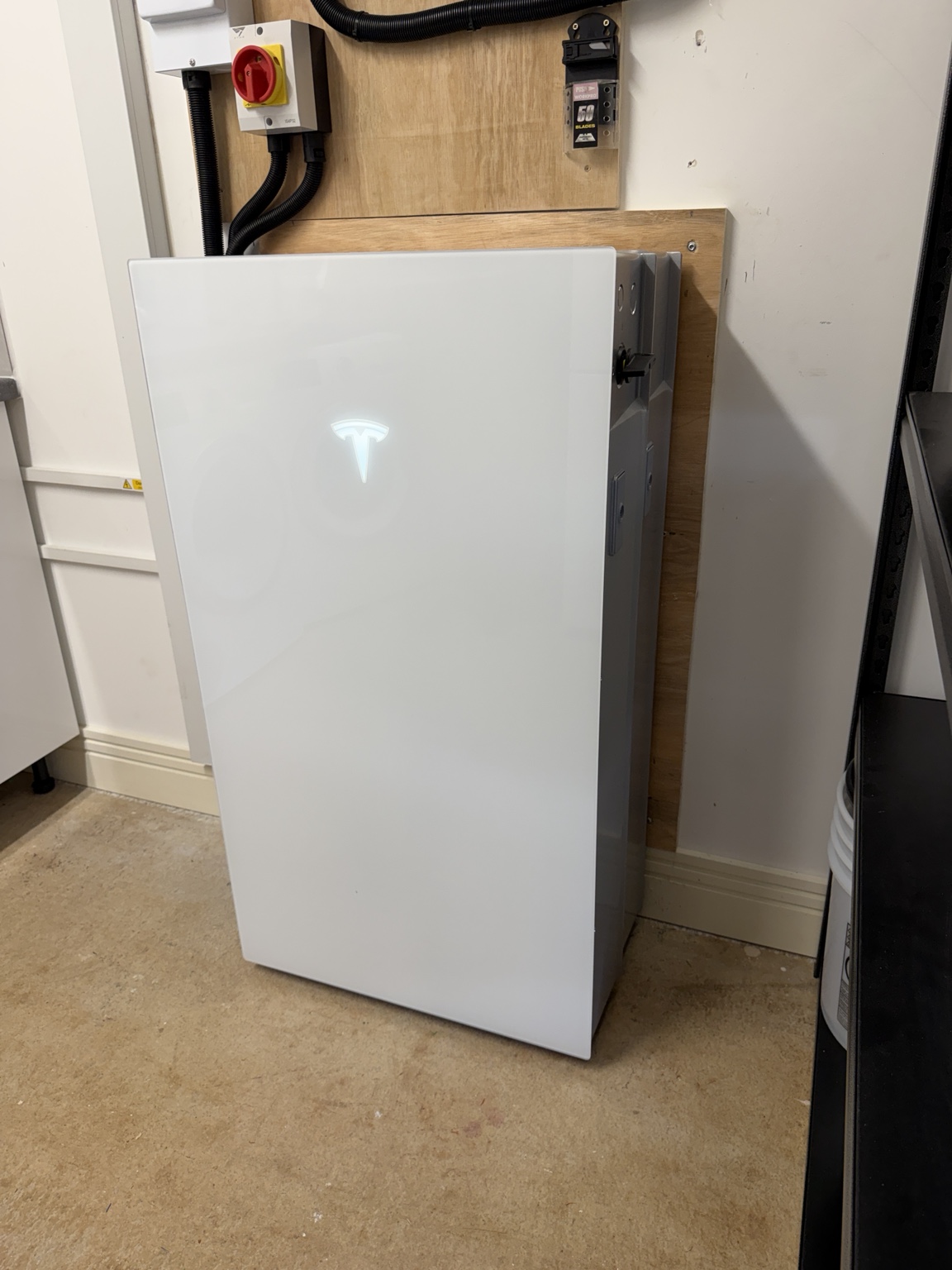
| Battery storage | 80kWh |
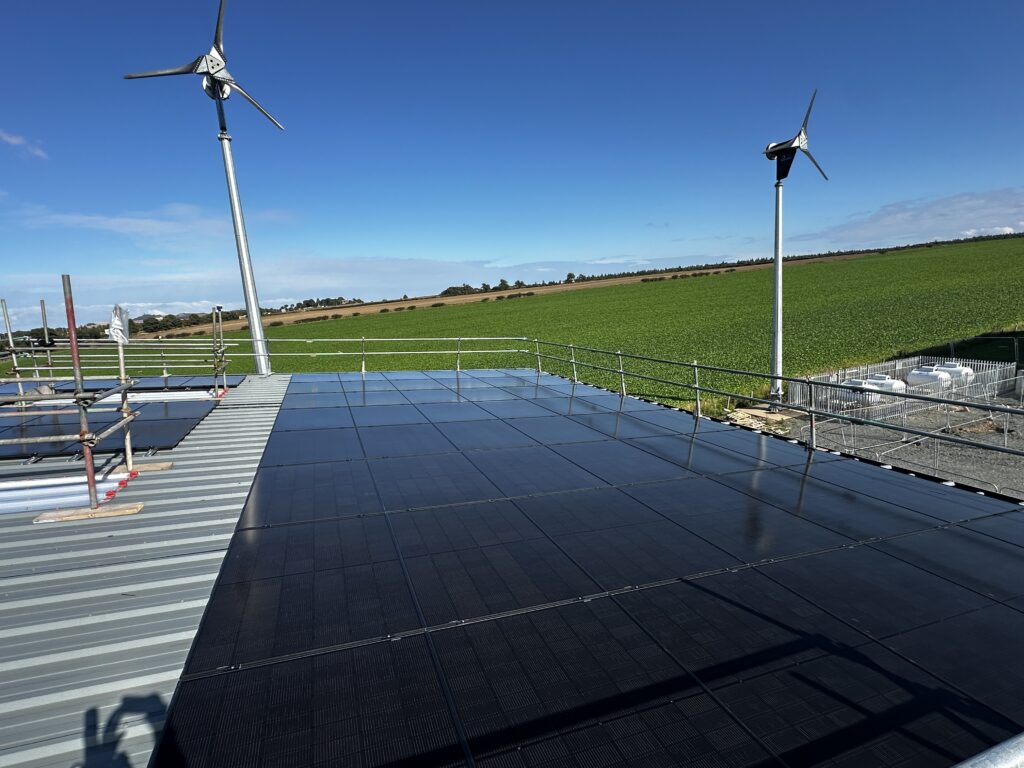
| Wind generation | Two 12kW turbines, 24kW total |
| Inverter platform | Sunsynk hybrid inverters |
| Site type | Commercial building with a large profiled-metal roof |
How the integrated system fits together
This explanatory diagram shows the documented energy paths. It is not a substitute for the approved single-line electrical diagram.
260 × 550W modules
2 × 12kW turbines
Conversion, control and energy routing
Stores and returns energy
Onsite demand
Grid import/export
Project delivery timeline
Exact calendar dates have not been supplied for publication. This sequence records the evidenced delivery stages.
- Site and energy assessment: roof, electrical infrastructure, access and onsite demand considered.
- Coordinated design: solar, storage and wind developed as one scheme.
- Network and delivery planning: DNO process, export arrangements, lifting, safety and sequencing addressed.
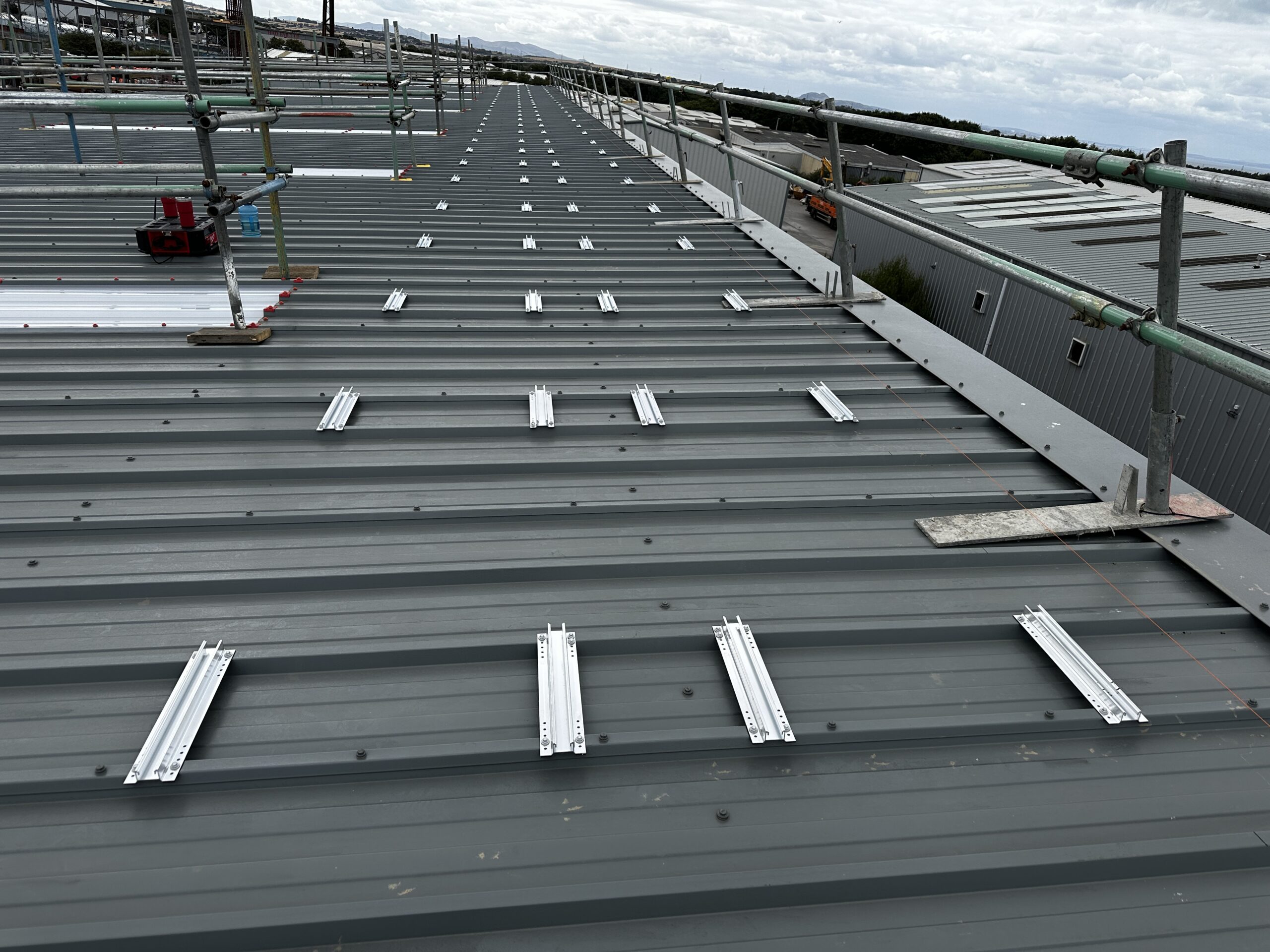
- Roof preparation and installation: mounting positions, edge protection, modules and cable routes installed.
- Electrical integration and commissioning: generation, storage, controls, protection and monitoring tested.
- Handover and monitoring: project records and monitoring retained for future results updates.
Component schedule
| Element | Documented specification | Disclosure status |
|---|---|---|
| PV modules | 260 × 550W = 143kWp | Make/model not supplied |
| Mounting | Profiled-metal-roof system | Make/fixing schedule not supplied |
| Hybrid inverters | Sunsynk platform | Model, quantity and rating not supplied |
| Battery | 80kWh stated capacity | Make/model and usable capacity not supplied |
| Wind turbines | 2 × 12kW = 24kW | Make/model not supplied |
| Monitoring/protection | Project-specific controls and grid protection | Schedule and settings not published |
The commercial energy challenge
Large commercial sites can use substantial electricity during working hours, making onsite generation attractive where the load profile and available roof area align. The design still has to account for more than panel capacity. Roof condition, structural loading, safe access, cable routes, electrical protection, existing supply arrangements, grid constraints and future energy plans all affect what can be installed.
For this project, we considered solar PV, storage and wind generation as parts of one energy system. The solar array contributes during daylight hours, the wind turbines can generate when local wind conditions permit, and the battery provides flexibility over when suitable onsite generation is used.
System design and documented scope
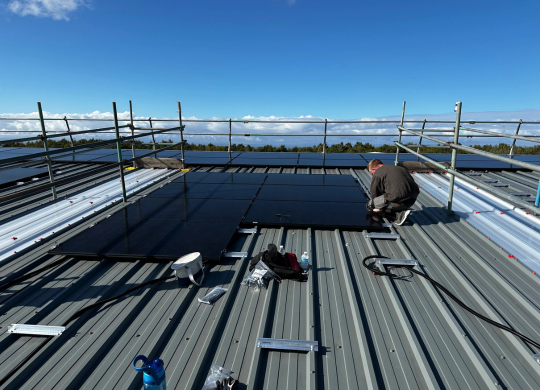
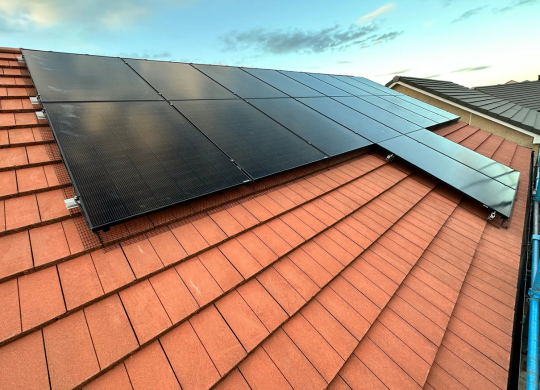
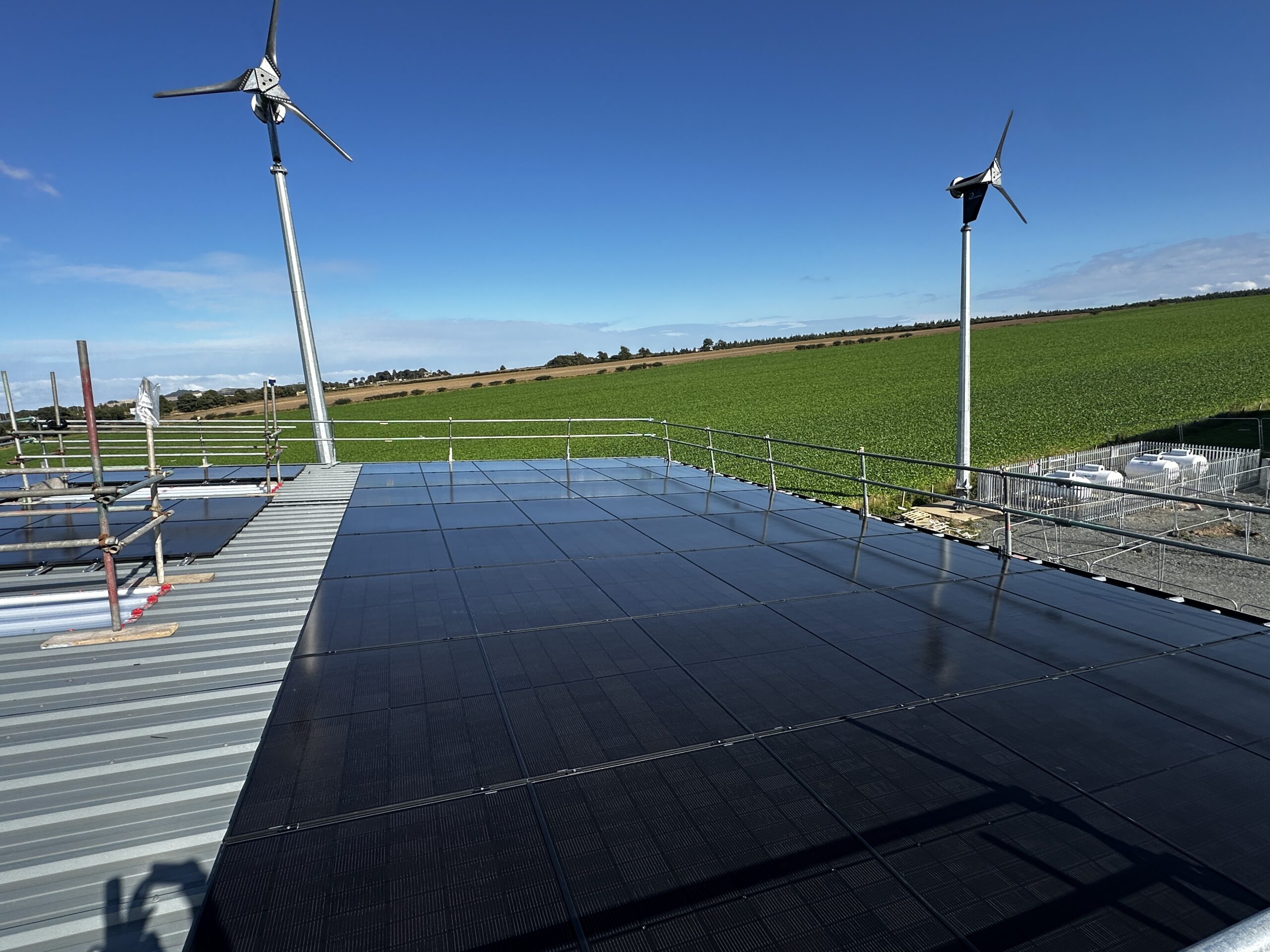
The rooftop layout comprises 260 modules rated at 550W each. Multiplying the module count by the module rating gives the documented installed capacity of 143kWp. We fixed the array to the profiled-metal roof. The mounting system matched the roof construction and agreed layout.
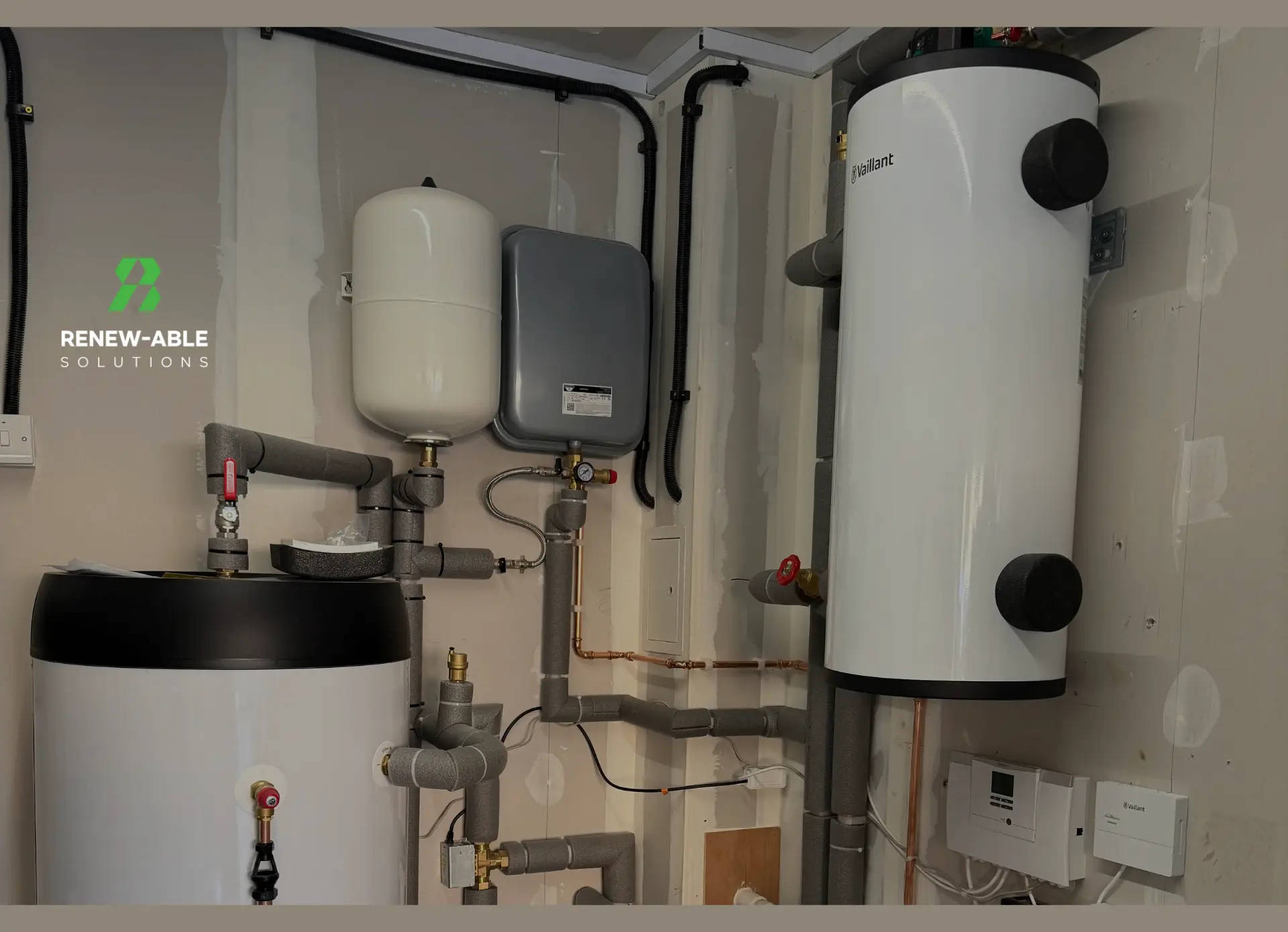
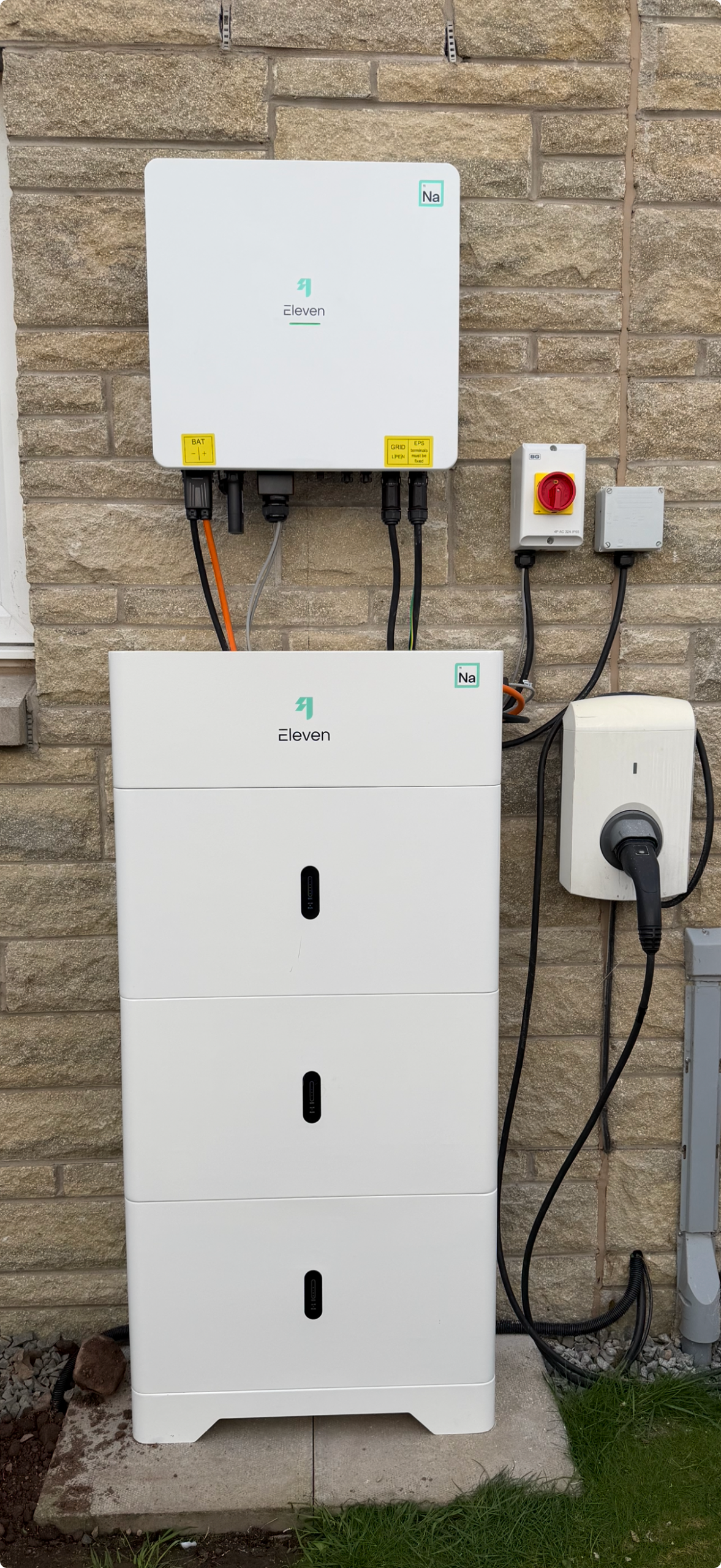
We paired the 80kWh battery with Sunsynk hybrid inverters. Battery capacity and inverter power are different measurements: capacity describes the amount of energy that may be stored, while inverter power affects the rate at which electricity can be converted and supplied. Both must be assessed against the site load, renewable generation and operating strategy.
Service update: Renew-Able Solutions no longer offers wind turbine installation. The wind equipment described here is part of this historical project.
Two 12kW wind turbines provide 24kW of additional installed generation capacity. Wind output is site-specific and depends on wind resource, turbine siting, turbulence and operating conditions; installed capacity is not the same as continuous output.
Project video showing the completed commercial renewable-energy installation.
Commercial rooftop installation
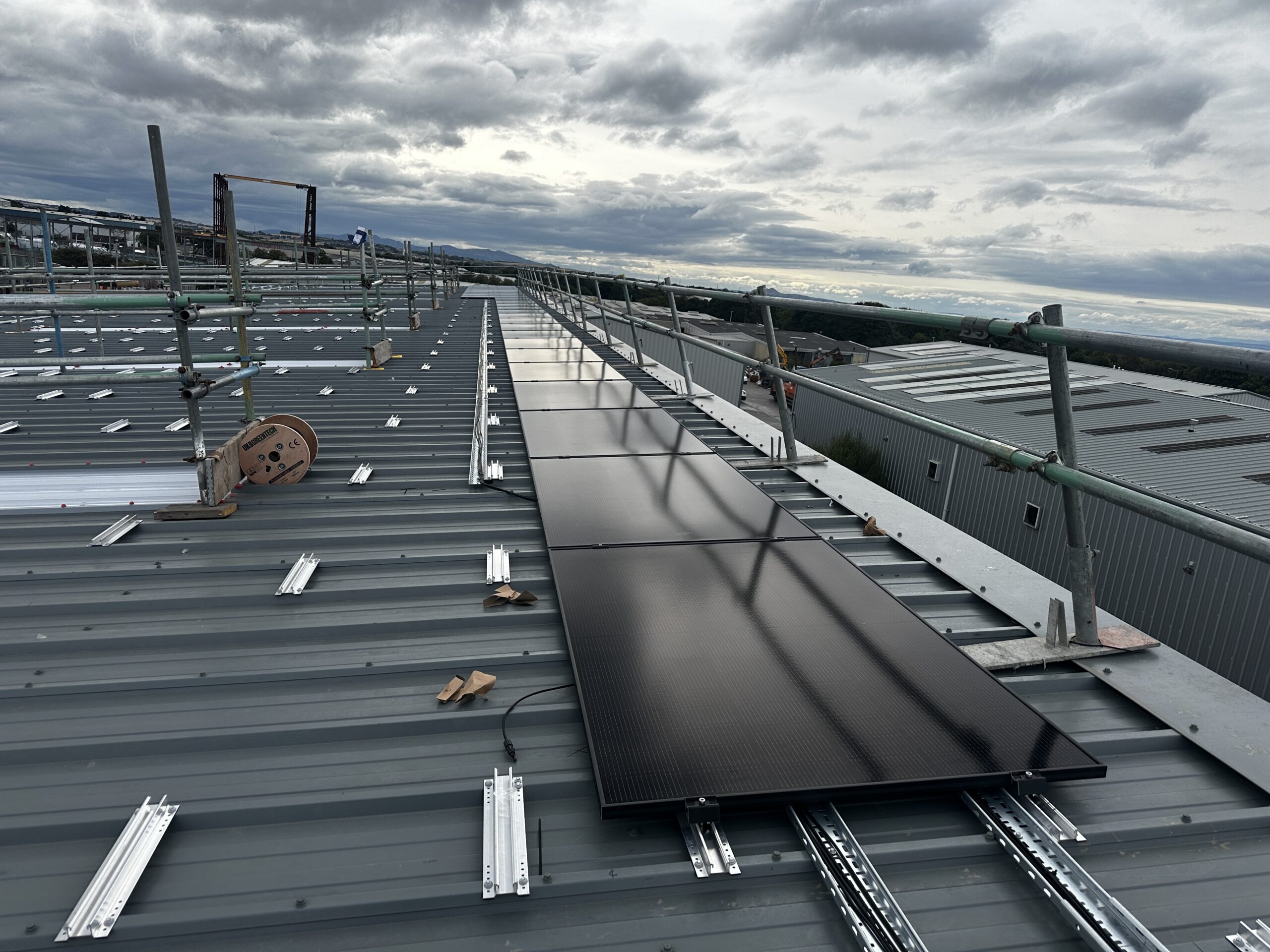
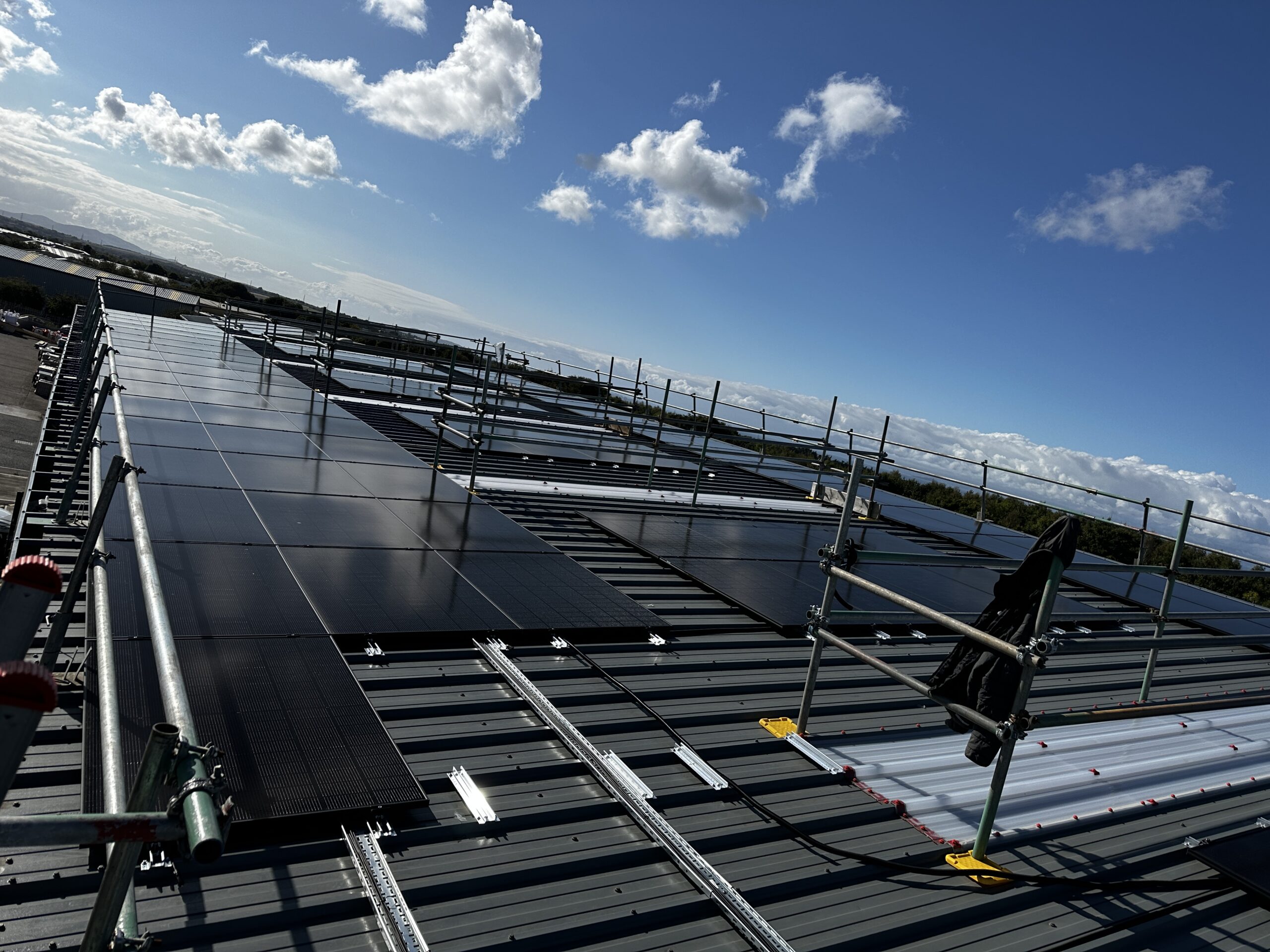
The photographs document the installation sequence on the large profiled-metal roof. Mounting positions were set out before modules were installed, with temporary edge protection and working areas used during construction. Module rows, cable containment and access routes were coordinated across the roof.
Why the load profile matters
A credible commercial solar design starts with electricity consumption. Half-hourly data shows when the site imports electricity, how weekday and weekend demand differ, and whether seasonal operating patterns align with solar generation. This helps estimate how much generated electricity could be used onsite, stored or exported.
More panels do not automatically create the best commercial result. The design should consider self-consumption, export value, battery cycling, inverter capacity, future EV or heating loads and any DNO export restriction. Our guide explains how half-hourly electricity data is used to size commercial solar.
Grid connection and export control
Commercial generation and storage must be assessed under the applicable Distribution Network Operator process. At this scale, the project would normally be considered under Engineering Recommendation G99. Where export capacity is restricted, an approved G100 export-limitation arrangement may form part of the accepted design.
The final connection requirements depend on the network, existing supply and proposed equipment. Read more about commercial solar planning and G99 and commercial export limits and G100.
What the battery contributes
The 80kWh battery gives the site more flexibility over the timing of renewable electricity use. Depending on the commissioned controls and operating requirements, storage may capture suitable surplus generation and supply energy later. It may also interact with time-of-use tariffs where the equipment and commercial strategy allow.
A battery should not be added automatically. The case depends on generation, load shape, available surplus, import and export tariffs, usable capacity, inverter power, warranty limits and expected cycling. See when commercial solar does—and does not—need battery storage.
Delivery and business continuity
Commercial projects require coordinated access, deliveries, lifting, roof safety, exclusion zones and electrical works. The programme should identify which activities can happen while the business operates and whether any planned shutdown is needed for final connection or testing.
Project-specific method statements, sequencing and communication help reduce disruption. Our practical guide covers installing commercial solar around business operations.
How financial performance should be evidenced
This page records installed capacity and equipment scope; it does not publish an unverified savings or payback claim. A financial model should state the annual generation estimate, expected self-consumption, import price, export rate, degradation, maintenance, finance and tax assumptions. Actual performance should later be checked against monitoring and meter data.
Businesses can compare outright purchase with suitable financed arrangements. Where capital expenditure is a barrier, an onsite Power Purchase Agreement may be considered, subject to site, credit, legal and commercial assessment.
What this project demonstrates
- A large commercial roof can accommodate a substantial solar array where structural, access and electrical requirements are satisfied.
- Solar, battery storage and wind generation can be designed as one coordinated system.
- Installed capacity must be distinguished from actual generation and financial return.
- Consumption data, grid requirements and delivery planning are central to the design.
- Photographs, equipment schedules, commissioning records and monitoring data provide the evidence base for an operational case study.
Generation model
A defensible forecast must separate installed capacity from energy generation. The model is defined below; numerical annual generation is withheld until the location, array geometry and loss inputs can be published or independently checked.
| Term | Method | Status |
|---|---|---|
| PV capacity | 260 × 550W ÷ 1,000 | Verified: 143kWp |
| PV generation | 143kWp × location/orientation-specific annual yield after stated losses | Pending location, pitch, azimuth and losses |
| Wind generation | Power curve applied to quality-assured hub-height wind data | Pending turbine model, hub height and wind data |
| Battery effect | Half-hourly simulation of generation, load, usable capacity, power limits and losses | Pending load data and operating parameters |
| Financial outcome | Interval energy flows × dated tariffs, less disclosed costs | No tariff, funding or finance inputs published |
The preferred independent PV baseline is the European Commission Joint Research Centre’s Photovoltaic Geographical Information System (PVGIS). A future model record should retain the tool version, dataset, run date, disclosed location, mounting configuration, horizon setting and loss assumption.
Methodology for measured results
- Freeze the forecast: retain the original model and assumptions.
- Define the period: use complete months and disclose start/end dates, downtime and missing intervals.
- Record provenance: identify the revenue meter, import/export meter, inverter portal, battery portal or calculation behind each figure.
- Reconcile flows: align generation, charge/discharge, consumption, import and export in consistent intervals and units.
- Normalise comparison: compare actual PV output with weather-adjusted expectation and the original typical-year forecast.
- Calculate value: apply the tariff operating during each interval and separate standing charges, export payments, tax, maintenance, finance and funding.
- Disclose exceptions: record curtailment, outages, estimated data, monitoring resets and site or system changes.
Dated results and update log
| Date | Result or evidence state | Review |
|---|---|---|
| 4 September 2026 | PV capacity confirmed: 260 × 550W = 143kWp. | Dr Euan Patterson |
| 4 September 2026 | Battery and wind specifications recorded as 80kWh and 24kW; these are ratings, not measured energy outcomes. | Dr Euan Patterson |
| 4 September 2026 | No meter-verified generation, self-consumption, import, export, savings or payback dataset supplied for publication. This table will be extended when attributable monitoring data and a reporting period are available. | Evidence-status review |
Model and evidence limitations
- The precise location is withheld, preventing an independently reproducible location-specific resource calculation.
- Array pitch, azimuth, horizon, shading, inverter sizing and detailed losses are not published.
- The turbine model, hub height, power curve and measured wind resource are not published.
- Battery usable capacity, power limits, efficiency, control strategy and cycling record are not published.
- No half-hourly load or operational monitoring dataset is available on this page.
- Installed kWp, kW and kWh ratings are not annual generation, savings or return on investment.
Evidence, sources and limitations
Project evidence: The photographs and video on this page show the real installation and are published with permission. The equipment quantities and installed capacities are taken from the project specification. Site-identifying details remain withheld for customer privacy.
Measured outcomes: This case study does not currently publish meter-verified generation, self-consumption, savings, export income or payback. Those outcomes should only be added when permission and a defined measurement period, data source and calculation method are available.
Technical sources checked on 4 September 2026:
- MCS MIS 3002:2025, Issue 2.0 — Solar PV installation requirements
- Energy Networks Association — Engineering Recommendation G99
- SP Energy Networks — generation application forms and G98/G99/G100 guides
- SP Energy Networks — G99 generator connections
- European Commission Joint Research Centre — PVGIS data sources and calculation methods
About the author and technical reviewer
Alan Valente — author
Alan Valente is a director of Renew-Able Solutions. He is MCS and 18th Edition qualified and has worked in solar for 14 years, specialising mainly in commercial solar PV. His work covers the technical and commercial decisions involved in system design, grid applications, installation and project delivery.
Dr Euan Patterson — technical reviewer
Dr Euan Patterson is a fully qualified solar engineer with a PhD in electrical design. He reviews electrical-design statements, system-capacity calculations and technical claims for accuracy and appropriate qualification.
Apply the lessons to your own site
For the investment questions to consider, read are commercial solar panels worth it for Scottish businesses? If your project involves agricultural buildings, our solar panels for farms guide covers the site-specific considerations.
Plan a commercial renewable-energy project
Renew-Able Solutions designs and installs commercial solar and integrated energy systems across Edinburgh, East Lothian and wider Central and East Scotland. Learn more about our commercial solar installation service, or contact us with your site address, electricity bills and half-hourly consumption data to arrange an initial assessment.