Home battery storage without solar can cut the cost of the electricity you use each day. You do not need a sunny roof to benefit. Instead, a suitable battery can charge from the grid at a cheaper rate, then power your home when electricity costs more.
Perhaps your roof faces the wrong way. Maybe shade makes solar a poor fit, or you live in a flat with no roof of your own. Those limits can rule out panels, but they do not automatically rule out storage.
The idea behind home battery storage without solar is simple: buy electricity when it costs less and use it when you need it. However, the right result depends on your tariff, your daily use and a safe place to install the system. Here is how to work out whether it could suit your home in Edinburgh, East Lothian or elsewhere in Scotland.
Tariff information checked on 3 October 2026. Prices and eligibility can change. The calculations below are examples, not a quote or a guaranteed saving.
How does home battery storage without solar work?
A battery does not make electricity. It stores energy bought from the grid, then supplies it to your home’s circuits through an inverter. This means you can move some of your electricity purchases out of expensive hours without moving your whole life into the night.
First, your installer sets the system to charge during your tariff’s cheaper window. Then, once the higher rate starts, the battery supplies available stored energy. When the battery reaches its reserve level, the grid supplies the rest.
For example, the energy bought overnight could run your fridge, lighting and home office the next day. It could also help cover cooking or heating demand, within the system’s power limit. You still have a grid connection and still pay the standing charge.
Solar can be a useful addition later. However, a well-designed battery-only system can start with grid charging from day one. Our home battery installation service explains the options we assess.
From nearly 30p to 6.75p per kWh: what does that really mean?
Suppose your daytime electricity costs 30p per kilowatt-hour (kWh), while your eligible overnight tariff costs 6.75p. That is a 77.5% difference between the two purchase rates. However, a battery loses some energy while charging and discharging, so the electricity it delivers costs more than 6.75p.
For a clear example, assume the system returns 90% of the electricity you put into it. This is an illustrative round-trip efficiency, not a performance claim for any of the three products below. To deliver 10kWh to your home, you would need to buy about 11.11kWh.
At 30p/kWh: buying those 10kWh directly during the day costs £3.00. At 6.75p/kWh: buying 11.11kWh overnight costs about £0.75. The difference is £2.25 for that day’s shifted energy, before other costs.
As a result, the effective stored-energy cost is 7.5p per delivered kWh in this example. That is 75% below 30p, after the assumed charging losses. It does not mean your total electricity bill falls by 75%.
Is 6.75p currently available on Intelligent Octopus Go?
Treat 6.75p as a worked example only if your own tariff offers that rate. At our check, Octopus’s public Intelligent Go page advertised 7.6p/kWh. Its standard overnight home window was 23:30–05:30. Check your postcode quote and contract before using any rate in a savings forecast.
Using 7.6p instead, the same 10kWh example costs about £0.84 to charge, with 90% efficiency. The saving against 30p is about £2.16 a day. Over 300 days with that same demand and tariff, this would be roughly £647 in electricity-cost savings. At 6.75p, the equivalent figure would be £675.
These figures exclude purchase and installation costs, finance, maintenance, standby use and future battery wear. They also assume you use all 10kWh each day to replace 30p electricity. Therefore, they are not annual savings forecasts. Your actual daytime rate may also be below 30p.
Octopus Go and Intelligent Go: who can use them?
Both are EV tariffs. Owning a home battery alone does not make you eligible. This matters especially if you live in a flat or do not charge a car at home.
Octopus Go requires an electric car that you charge at home and a smart meter Octopus can read. Its published cheap window is 00:30–05:30. It works with all EVs and chargers, but you still need to check the full tariff terms.
By comparison, Intelligent Octopus Go requires a compatible EV charging setup and half-hourly smart-meter data. Octopus manages the car’s charging. Your battery schedule should use the confirmed home off-peak window; do not base the design on getting extra cheap daytime slots.
Also compare the daytime rate, standing charge and any exit fee. A low night rate can lose its appeal if too much demand remains at a higher daytime price. Battery and EV controls must work together, too. See our guide to stopping an EV charger from draining your home battery.
What if you do not have an electric car?
You can still explore home battery storage without solar. However, you need a tariff that accepts your household and makes the numbers work. Ask suppliers about suitable time-of-use options rather than assuming an EV tariff is available.
For heat pump owners, Cosy Octopus is one option to compare. It offers three cheaper periods each day, alongside a higher evening peak rate. As a result, a battery may be able to top up more than once. Compare a heat-pump tariff on its own with the same tariff plus storage.
Can you install home battery storage in a flat?
Sometimes, yes. The lack of a private roof is not the main barrier. A safe location, access to your own electricity supply and the right permissions matter much more.
For example, a ground-floor flat with an appropriate private outdoor area may offer a workable route. Conversely, a flat with no suitable space or difficult cable routes may not. A shared cupboard, landing or stairwell is not simply spare installation space.
Before recommending a system, we would assess the proposed location, available space, cable route and electrical supply. We would also check the building’s fire strategy, access for maintenance, and any consent needed from a landlord, factor or other owners. Any relevant network approval forms part of the installation design.
Because flats differ so much, product dimensions alone cannot establish suitability. Electrical Safety First’s installation guidance highlights the importance of fire safety and escape routes. The survey must address these issues before equipment selection.
In other words, you do not need to own a roof. You do need an installation that suits both your home and the building around it.
Why home battery storage can help heat pumps in winter
Winter brings an awkward mismatch: heating demand rises while solar output falls. Shorter days leave less time to generate electricity, just when your air source heat pump may need to work harder. A battery that relies only on spare solar can therefore spend part of winter underused.
Grid charging changes that pattern. Instead of waiting for sunshine, the system can charge during cheaper tariff periods. It can then help supply the heat pump and other home loads during more expensive hours.
However, storage moves energy between hours, not seasons. As Energy Saving Trust explains, a home battery cannot save summer’s solar surplus for winter heating. It also cannot promise to cover an entire cold day.
Think about electricity input, not just heat output
A heat pump’s heating output is different from the electricity it draws. For example, assume a heat pump delivers three units of heat for each unit of electricity. With that assumed coefficient of performance (COP) of 3, 10kWh of electricity could supply 30kWh of heat.
At the illustrative stored-electricity cost of 7.5p/kWh, that heat would cost about 2.5p per kWh. At 30p/kWh electricity, it would cost 10p. These are energy-only examples at the same assumed COP, not a claim about your heat pump’s winter performance.
Actual efficiency varies with outdoor temperature, flow temperature, hot-water demand and system design. Also, lights, cooking and appliances share the stored energy. Therefore, a battery with 10kWh available will not necessarily leave 10kWh for heating.
Keep warmth and efficiency at the centre of the plan
Start with good heat-pump settings and a suitable tariff. Then assess whether a battery adds enough value. Steady, efficient heating can be more useful than aggressive on-off schedules. Octopus’s heat-pump scheduling guidance also explains how to shift some heating and hot-water demand into cheaper hours.
For existing solar owners, winter grid charging can complement daytime generation. Meanwhile, households without panels can use the same tariff-shifting principle. Our guide to air source and air-to-air heat pumps explains the different heating options.
Three home battery storage options to explore
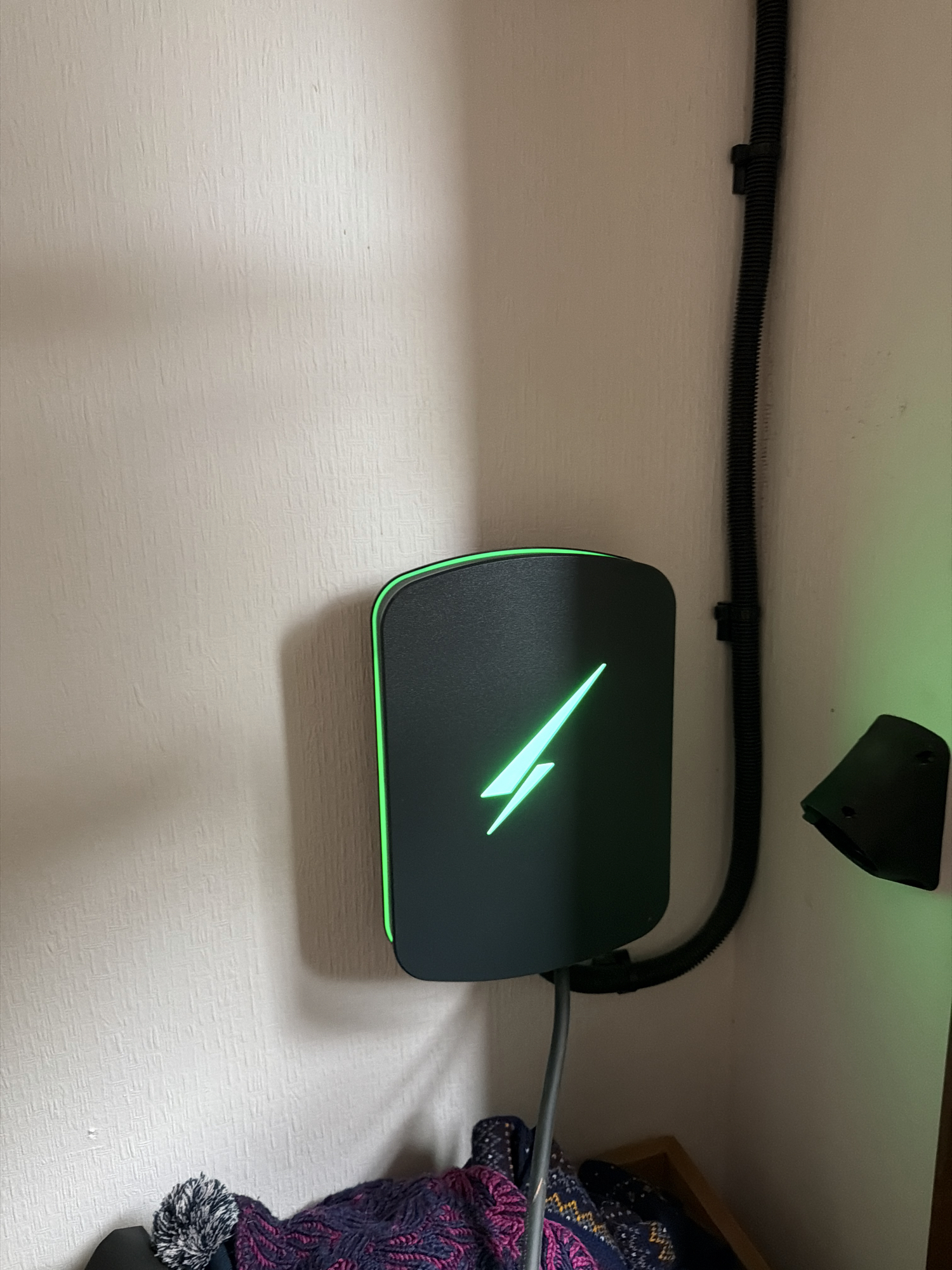
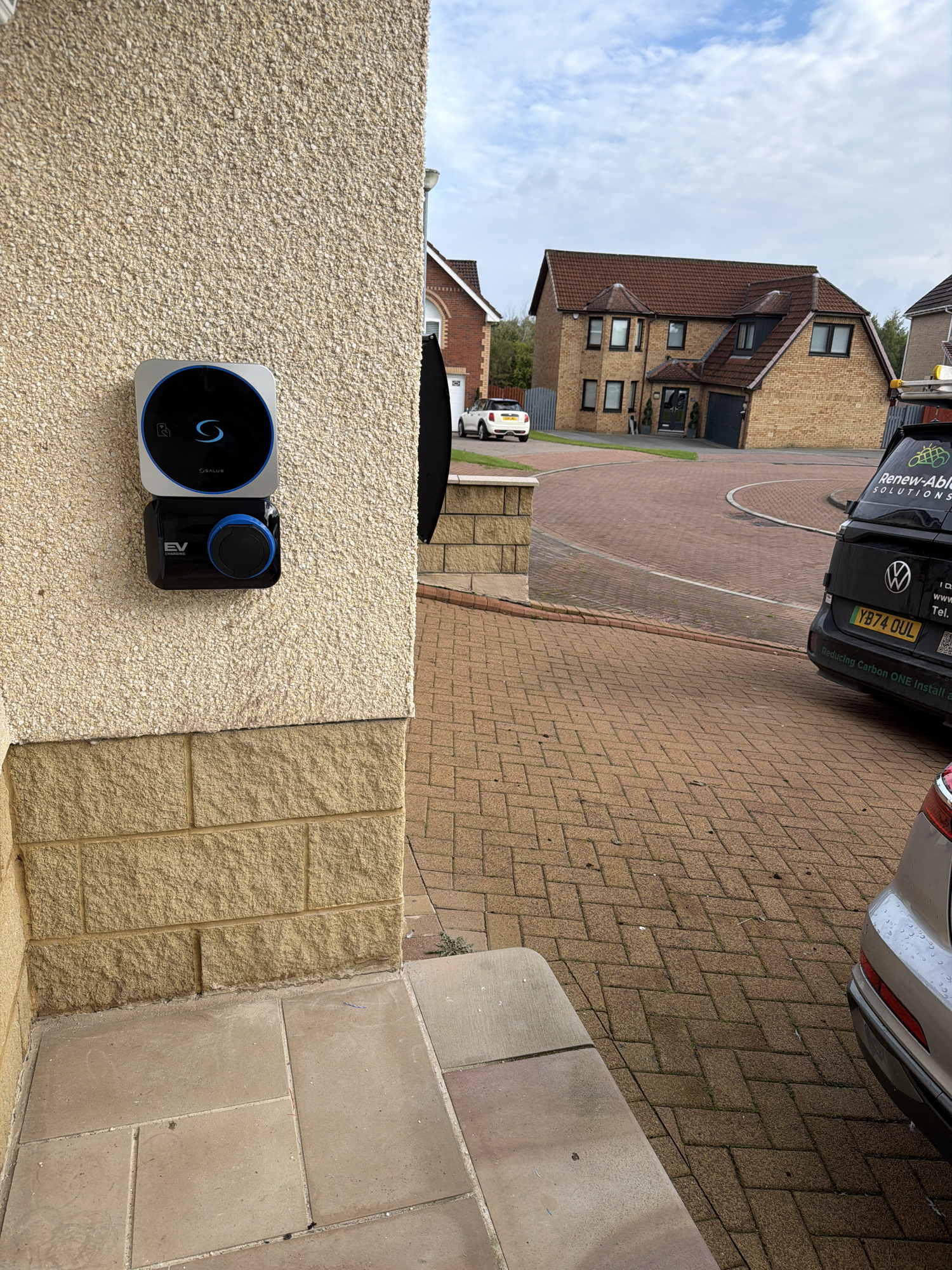
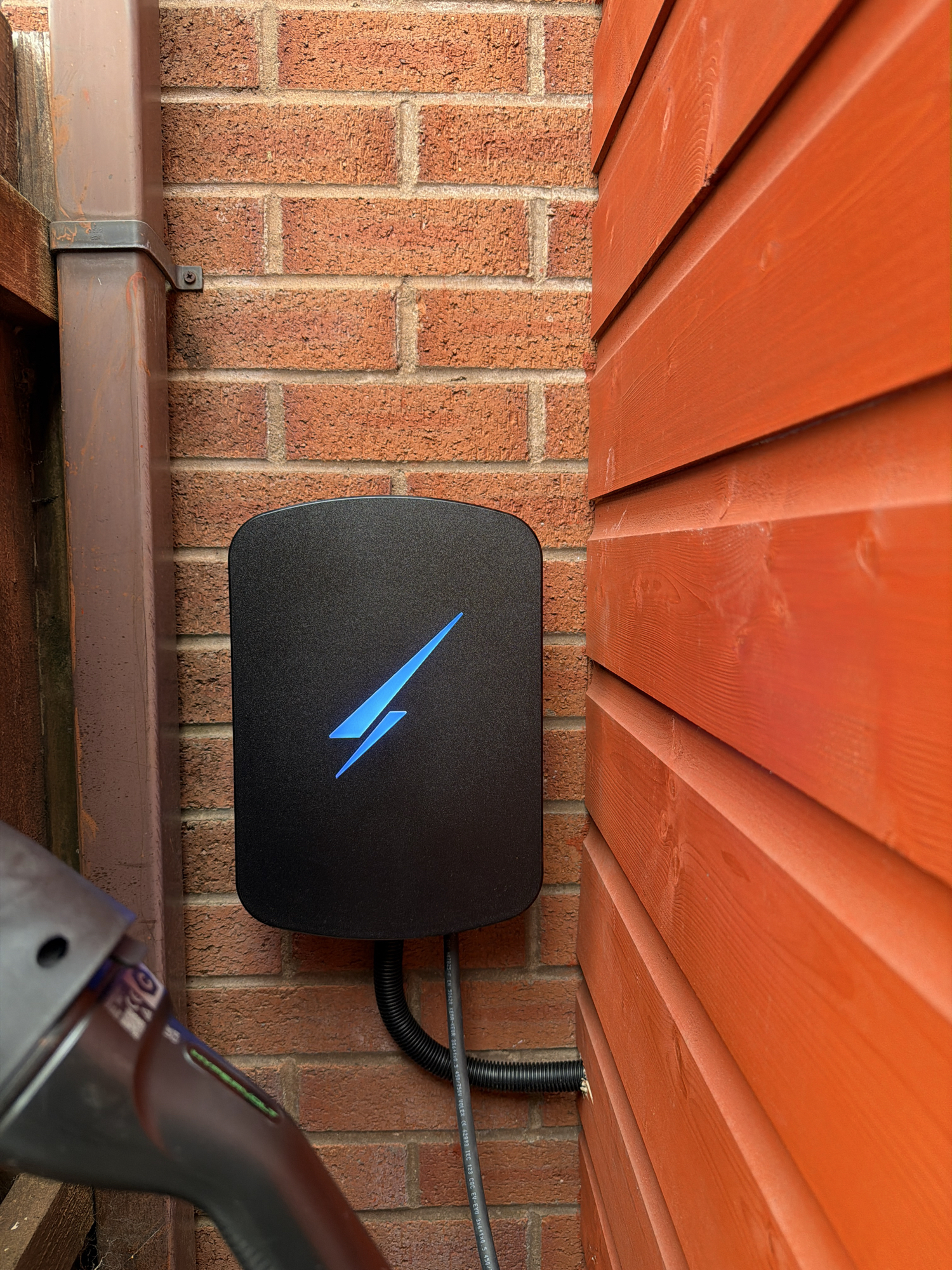
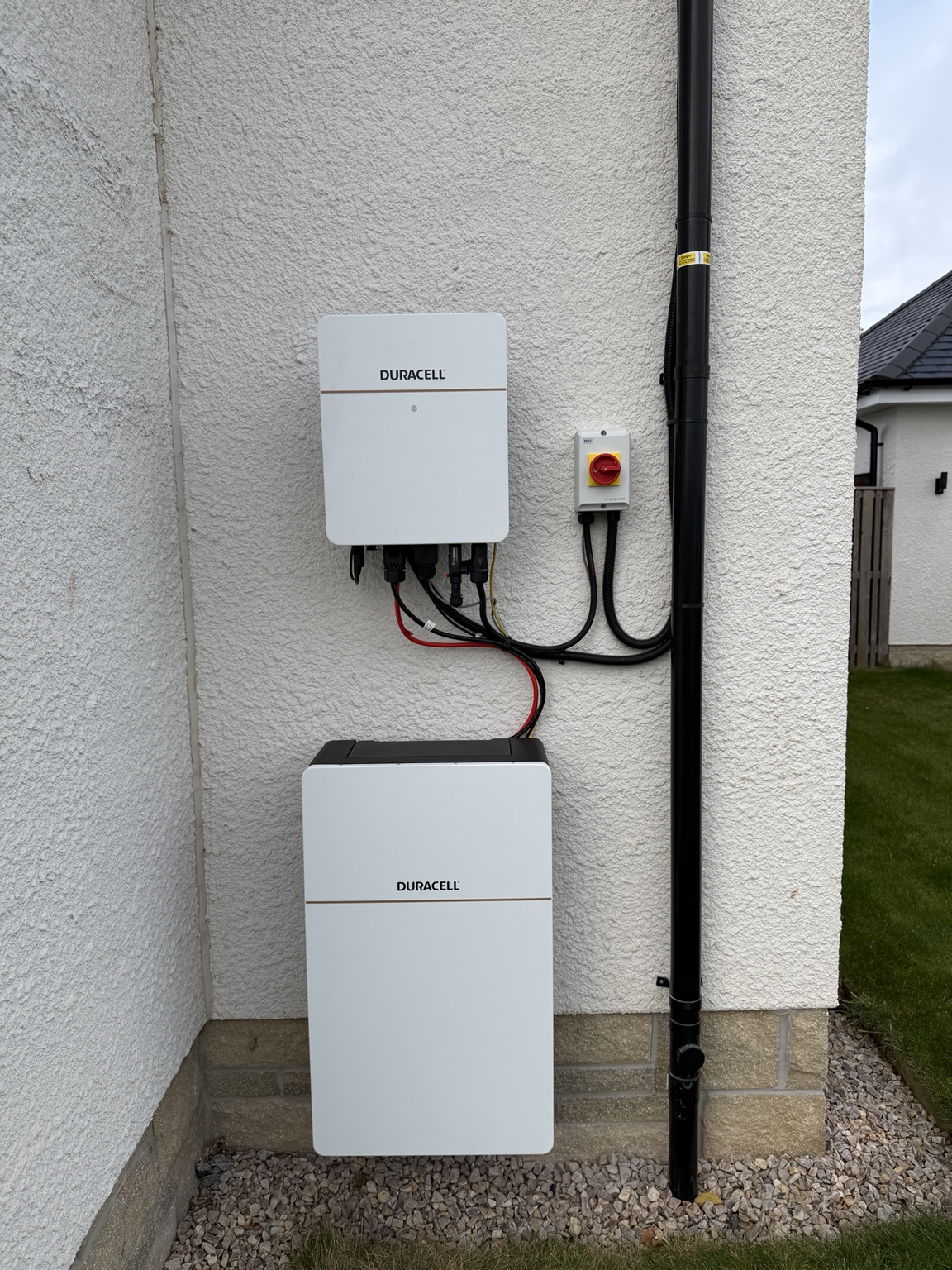
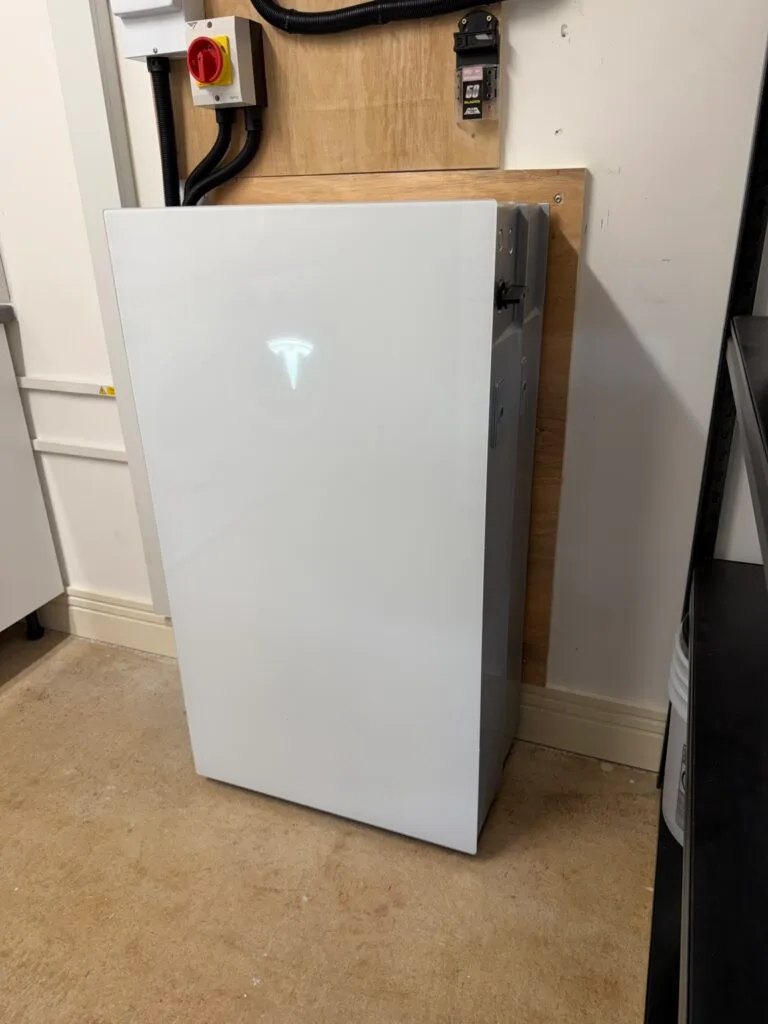
Tesla Powerwall 3, Sigenergy SigenStor and Eleven Energy Galvani show three approaches to home storage. The photos below come from our existing installation library. They illustrate the equipment, rather than a guarantee that each location or system suits every home.
Tesla Powerwall 3
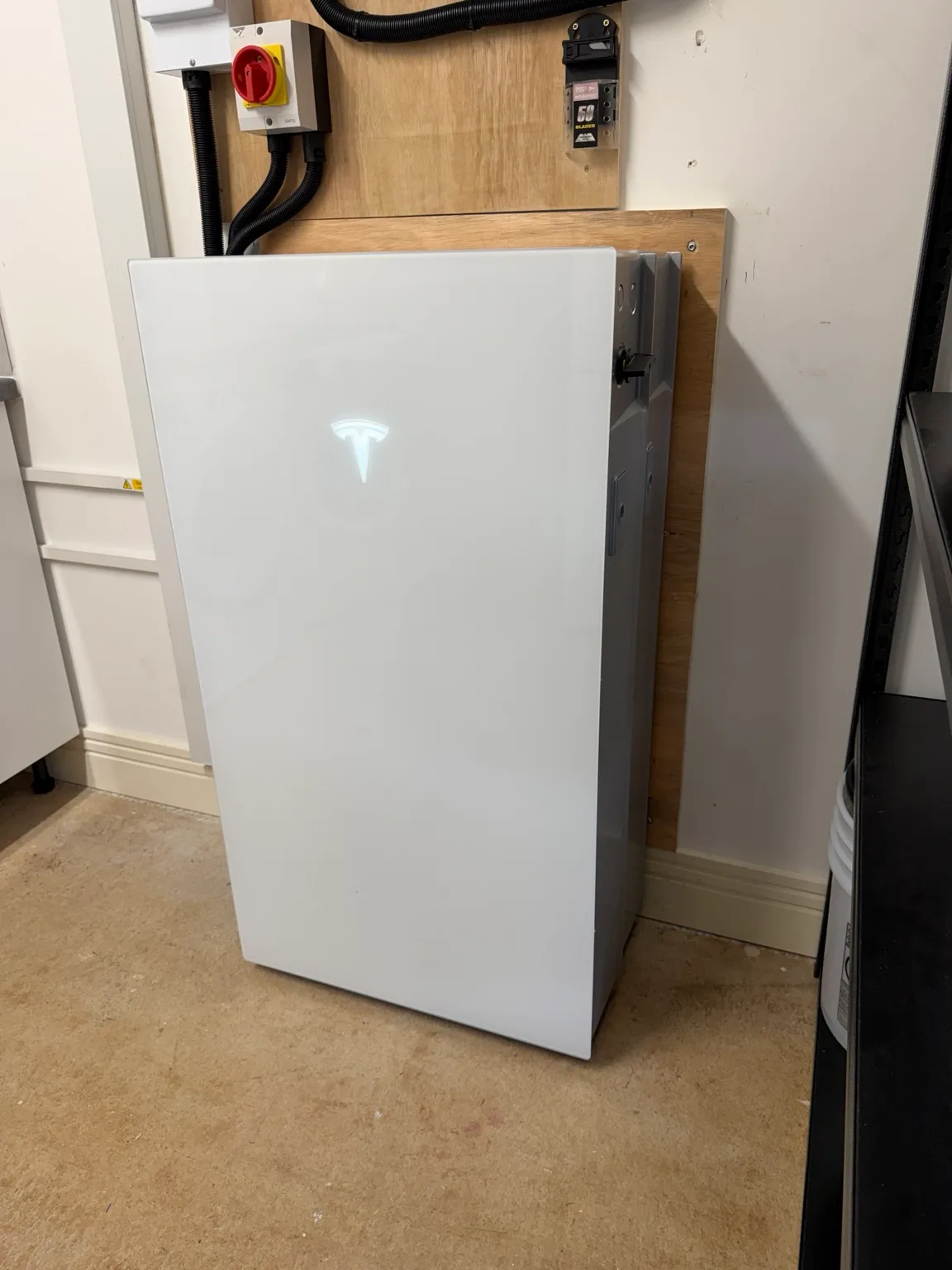
Powerwall 3 can work with or without solar. In a suitable setup, it charges from the grid when rates are low and supplies the home when they rise. Tesla also offers a non-backup configuration, so outage protection must be part of the specification if you want it.
For a local example, read about our Powerwall 3 replacement in North Berwick. The right design depends on your supply, load and installation space.
Sigenergy SigenStor stackable batteries
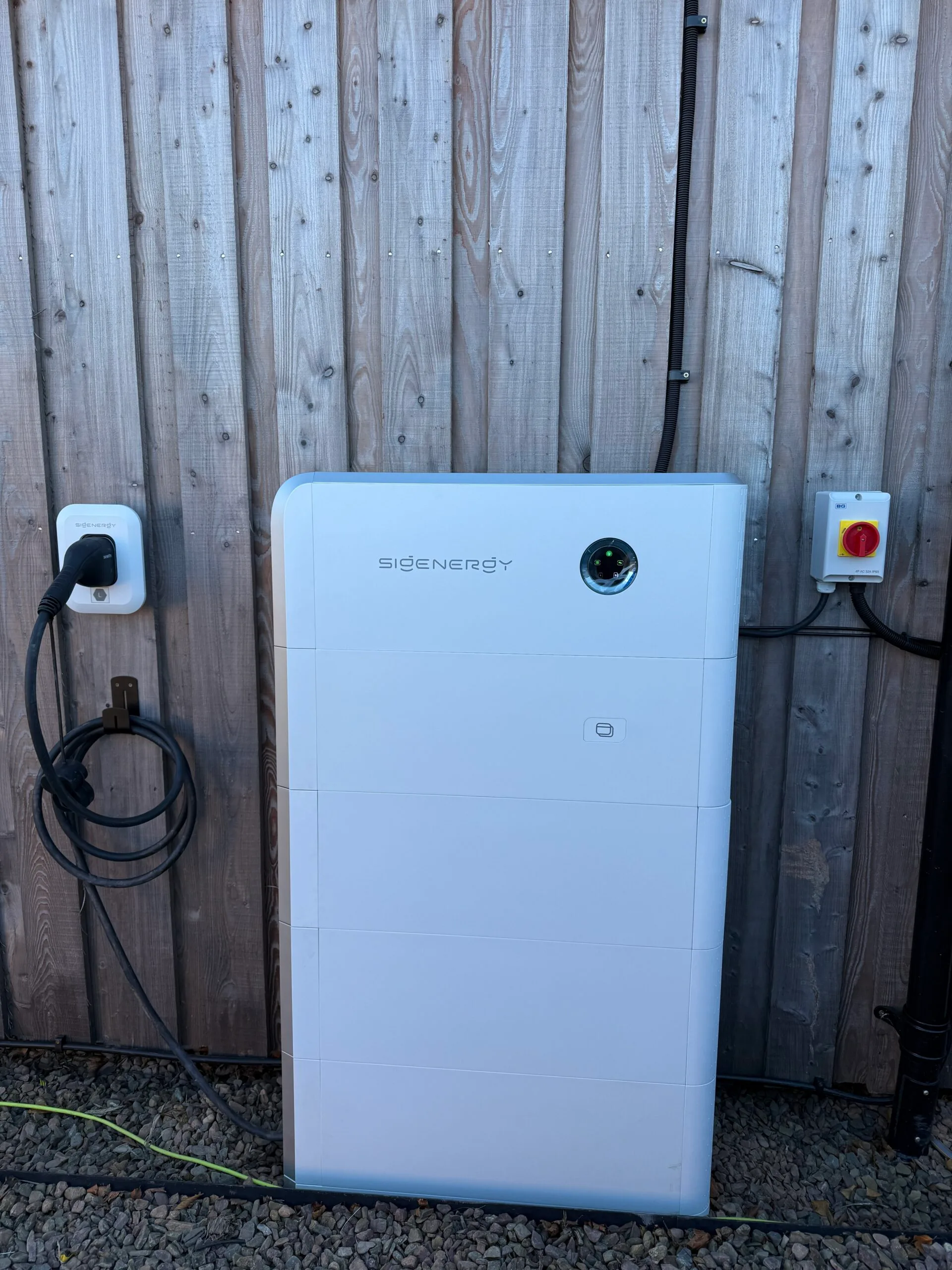
Sigenergy SigenStor uses a modular, stackable design. This gives scope to match the battery configuration to the home’s needs. An installer should confirm the appropriate controller, battery modules and grid-charging settings for a battery-only project.
Expansion can be useful if your plans include an EV or heat pump. However, check future module compatibility and system limits before relying on it. The residential product shown here is SigenStor; Sigenergy’s SigenStack is a separate commercial range.
Eleven Energy Galvani sodium-ion batteries
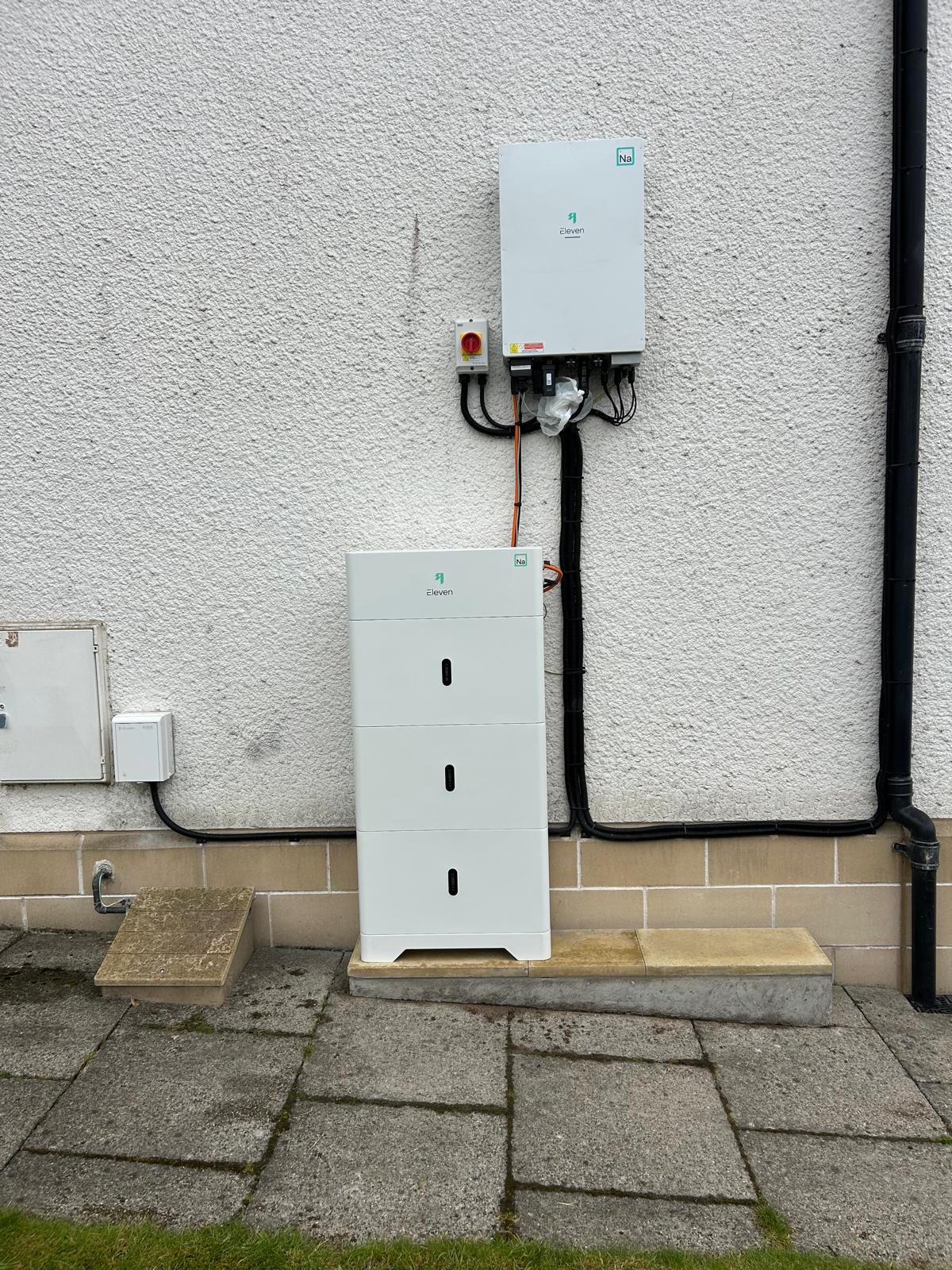
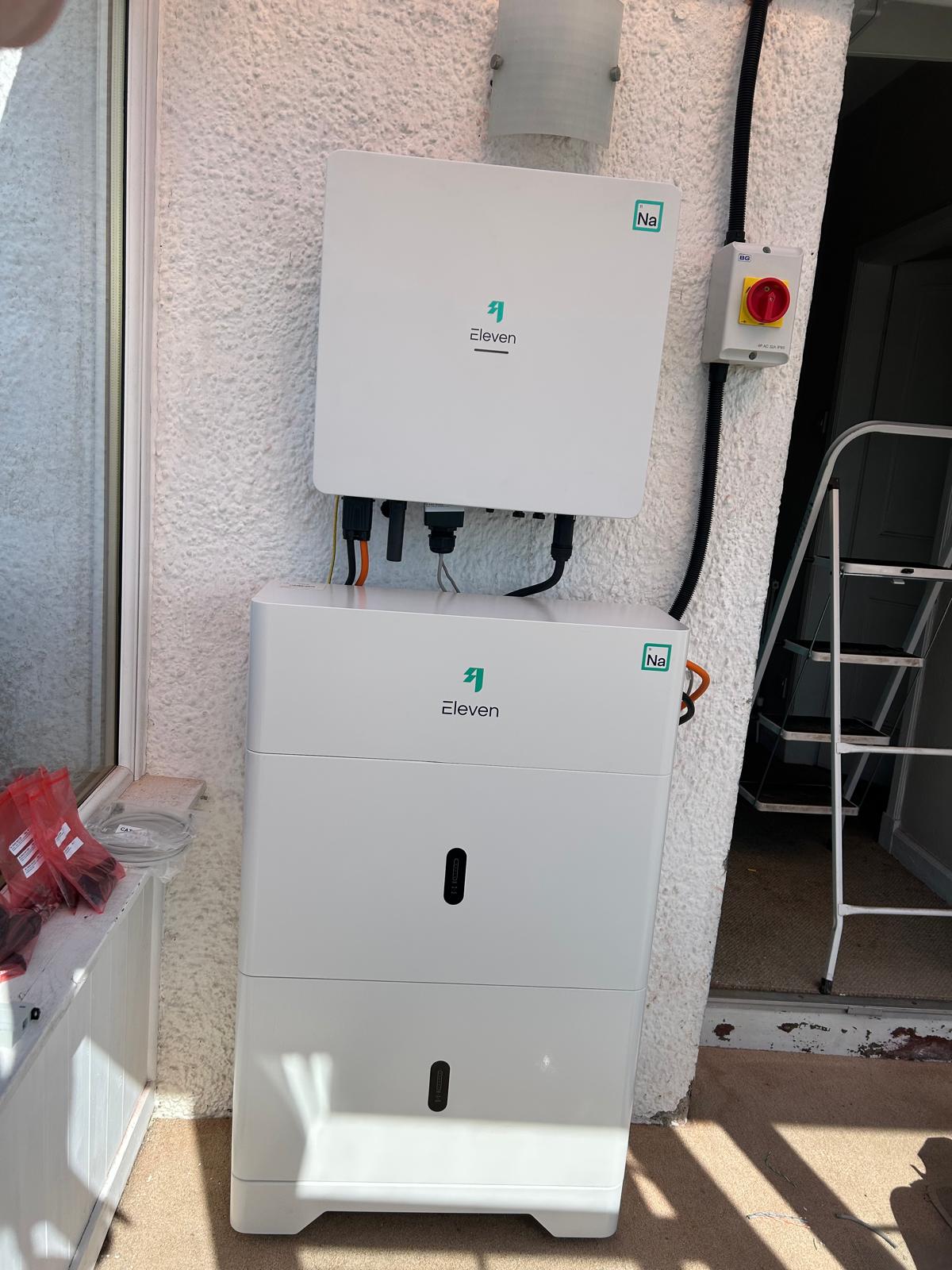
Eleven Energy’s Galvani range uses sodium-ion battery modules in a stackable system. As with any storage product, choose the inverter, usable capacity and controls around the home’s demand and tariff. Battery chemistry alone does not establish installation suitability.
Read our Eleven Energy and Galvani guide for Scottish homes. You can also see a completed Galvani installation in Milnathort, Fife.
How much battery storage do you actually need?
Start with the electricity you use outside cheaper tariff windows. Half-hourly smart-meter data is especially useful because it shows when demand occurs. For a heat-pump home, include cold-weather data as well as annual totals.
Next, compare usable capacity in kWh with power in kW. Capacity tells you how much energy the battery can supply. Power tells you how much it can supply at once. A large battery with a modest inverter may still need grid support when several appliances run together.
Also check how quickly the system can recharge. For example, importing 11.11kWh over a five-hour window requires about 2.22kW on average for charging alone. Heat-pump use and EV charging add to that demand, so the supply and controls need to cope.
Finally, include any backup reserve and cold-weather limits. A larger system is not automatically a better investment. If you rarely use the extra capacity, it adds cost without shifting much more electricity.
Is home battery storage without solar worth it?
It can be, especially when you use a meaningful amount of electricity at expensive times and can recharge cheaply. Yet the best answer comes from a whole-home comparison. Test your current tariff against a suitable smart tariff, both with and without a battery.
Ask for expected savings after losses, a full installed price and the relevant warranty terms. Then test what happens if the gap between cheap and peak rates narrows. A simple payback estimate divides the installed cost by realistic annual net savings, but future tariffs and replacement costs remain uncertain.
Our article on January energy prices, featuring Martin Lewis’s commentary explains why price forecasts need care. It is useful background when planning an upgrade. Neither Martin Lewis nor MoneySavingExpert endorses Renew-Able Solutions or the products in this guide.
The strongest case for home battery storage without solar comes from the way your home uses electricity today. A poor solar roof need not close the door on lower bills. With a suitable location, tariff and design, a battery can give you more control over when you buy energy.
Home battery storage without solar: common questions
Will a battery work during a power cut?
Only if the installation includes suitable backup equipment and circuits. Grid-charging capability does not automatically mean outage protection. Ask exactly which loads the proposed system can support.
Can a battery run my air source heat pump all day?
Possibly in some conditions, but do not assume it will in winter. It depends on heat demand, electrical consumption, usable battery capacity, inverter power and other loads. A design should show what remains to buy from the grid.
Can I add solar panels later?
Often, yes, with a suitable system design. If that is your plan, discuss inverter compatibility, capacity and connection arrangements before buying. This can help avoid paying twice for equipment.
Does living in a flat rule me out?
No, but suitability needs a survey. Safe siting, cable access and building permissions are essential. Also check tariff eligibility if you cannot charge an EV at home.
Explore battery storage for your Scottish home
Renew-Able Solutions helps households in Edinburgh, East Lothian and across Central and East Scotland assess their options. Whether you have solar, an unsuitable roof or a flat, the starting point is your home and its energy use.
Contact us about a home battery assessment. Share your postcode, current tariff, recent electricity usage and whether you have an EV or heat pump. We can then assess the location, compare suitable systems and explain what the savings could look like for you.