Solar export limits can sound like a reason to abandon a good roof. If the network will only accept a certain amount of power, surely extra panels are pointless?
Not necessarily. An export limit restricts power flowing to the grid; it does not automatically set the number of panels you may fit. A larger array may still supply the home and charge a battery. However, the design must account for any generation that controls will curtail.
For Edinburgh and East Lothian homeowners, the useful comparison is between two complete designs. Ask what each one costs, produces, uses and exports across the year.
Want advice for your home? Call 0131 210 0405 or send an enquiry to Renew-Able Solutions.
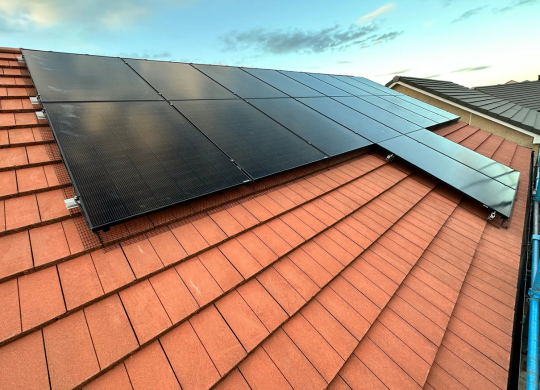
Solar export limits versus panel and inverter size
Panel capacity is usually expressed in kWp under standard test conditions. Inverter output is expressed in kW. The agreed export limit is another kW figure, measured at the grid connection.
Those figures can differ. Therefore, a quote that lists “a 5 kW system” without explaining which number it means leaves too much unclear.
Our G98, G99 and G100 guide explains the connection framework. Any proposed arrangement still needs to satisfy the relevant DNO requirements.
What happens on a sunny afternoon?
Consider an illustrative moment when solar could deliver 5 kW after conversion. The house uses 1 kW, the battery can accept 2 kW and the agreed export limit is 2 kW. All 5 kW has somewhere to go.
Later, the battery is full and household demand falls to 0.5 kW. If export remains limited to 2 kW, only 2.5 kW can be used or exported. The controller may curtail the remaining potential output.
These are power snapshots, not annual energy figures. The financial effect depends on how often that second situation happens and for how long.
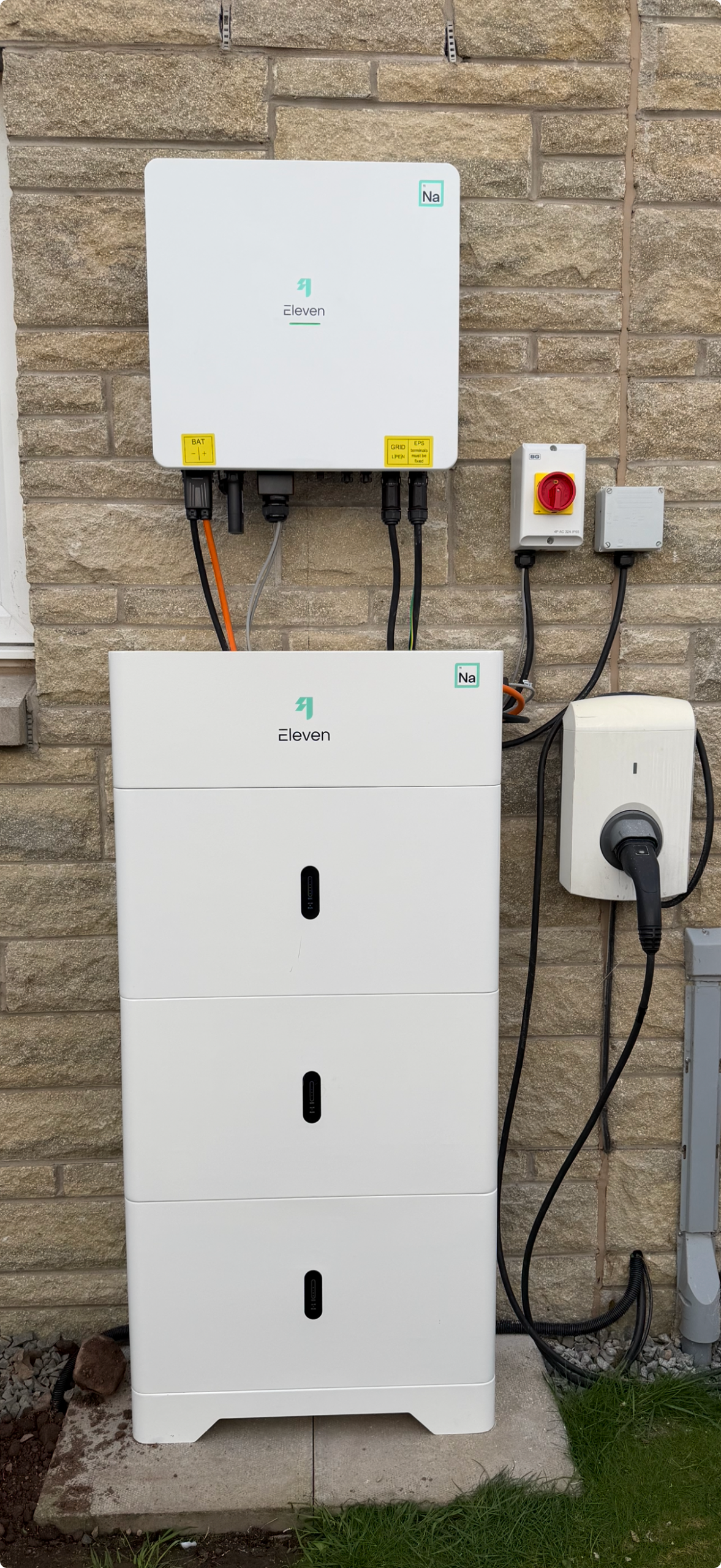
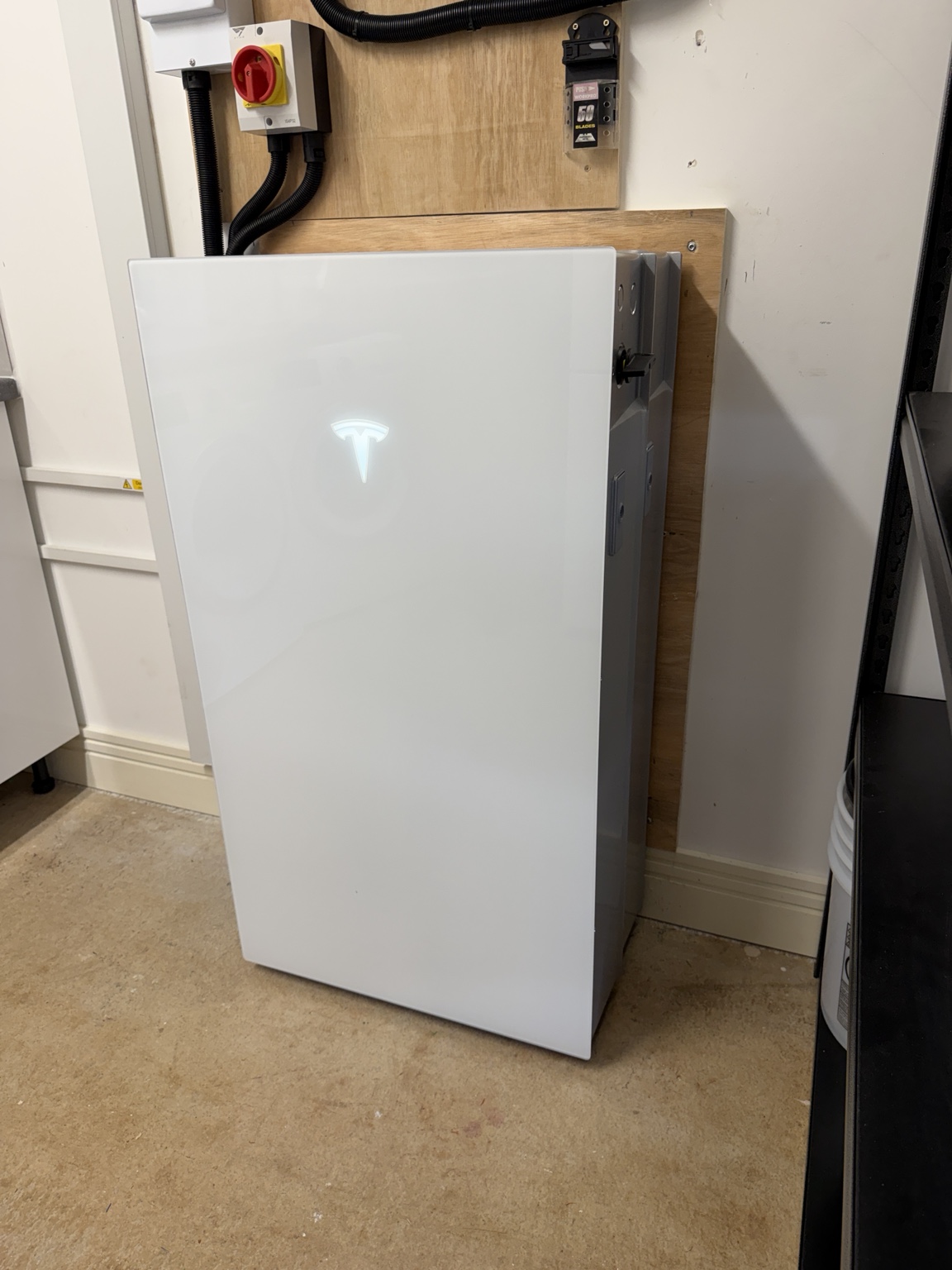
This is also why a battery helps only while it has room and sufficient charging power. A full battery cannot keep absorbing surplus simply because more panels are generating.
Compare designs under the same solar export limits
Request a side-by-side estimate using the same roof assumptions and tariff prices. It should account for shading, inverter limits and the proposed export control.
| Question | Why it changes the decision |
|---|---|
| How much extra generation is usable? | Gross generation alone can overstate the benefit of more panels. |
| How much output is curtailed? | Lost potential energy cannot earn export income. |
| What is the extra installed cost? | Scaffolding and other fixed costs may already be included. |
| Does household demand match production? | A daytime load may use energy that would otherwise be limited. |
| What changes if a battery is added? | Storage has its own price, losses and capacity limits. |
A larger array can also produce more during weaker sunlight, when it stays below the export cap. Consequently, judging it only by a clear June afternoon misses part of its value.
Use the marginal benefit, not the headline saving
Suppose the larger design costs £1,000 more. After allowing for curtailment, it adds 600 kWh of useful annual generation. Assume 200 kWh avoids imports at 30p and 400 kWh earns exports at 12p.
The extra annual value is £60 plus £48, or £108. Dividing the extra cost by that value gives roughly 9.3 years. This is a simplified comparison, not a quoted return or lifetime forecast.
Tariffs, equipment replacement, degradation and financing can change that result. So can different usage. Ask for a lower-value scenario before deciding that extra panels are an obvious bargain.
Would east-west panels or a battery solve the problem?
An east-west layout can spread output across more of the day. It may reduce a sharp midday peak, but suitability depends on the actual roof. See our roof orientation comparison for the wider trade-offs.
A battery can absorb surplus and deliver it later. Yet buying substantial storage solely to capture a small amount of otherwise curtailed summer energy may be poor value. Model its winter and overnight uses separately.
Likewise, a future EV only helps if it is present and able to charge at useful times. Build the main quote around confirmed demand, then show future additions as optional scenarios.
Confirm solar export limits in the connection conditions
SP Energy Networks publishes G99 connection guidance. Your installer should identify the applicable process and obtain any required agreement for the final design.
Do not assume that an app setting alone satisfies a network requirement. Ask what equipment enforces the limit and how the installer will test it. Our Edinburgh grid export guide provides further context.
When might fewer panels be the sensible choice?
A smaller array may suit a constrained budget, limited useful demand or a roof section with poor output and high installation cost. Conversely, a larger array may justify its extra cost even with some curtailment.
The best answer comes from a transparent comparison, not a rule that every roof must be filled. Ask for the expected benefit of the final few panels as clearly as the benefit of the first ones.
Talk through your next step
Share your proposed panel layout and any network export limit. We can discuss the generation, usage and cost trade-offs for your home.
Explore our solar service, call 0131 210 0405 or submit an enquiry. Renew-Able Solutions serves Edinburgh, East Lothian and surrounding areas; tell us your postcode so we can confirm suitability and coverage.
Technical sources and examples checked on 3 October 2026. Illustrative figures are not quotations or guaranteed savings.