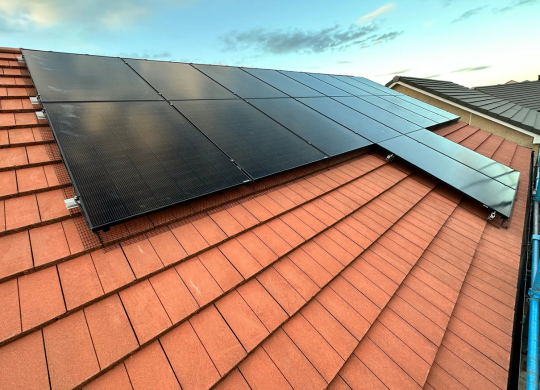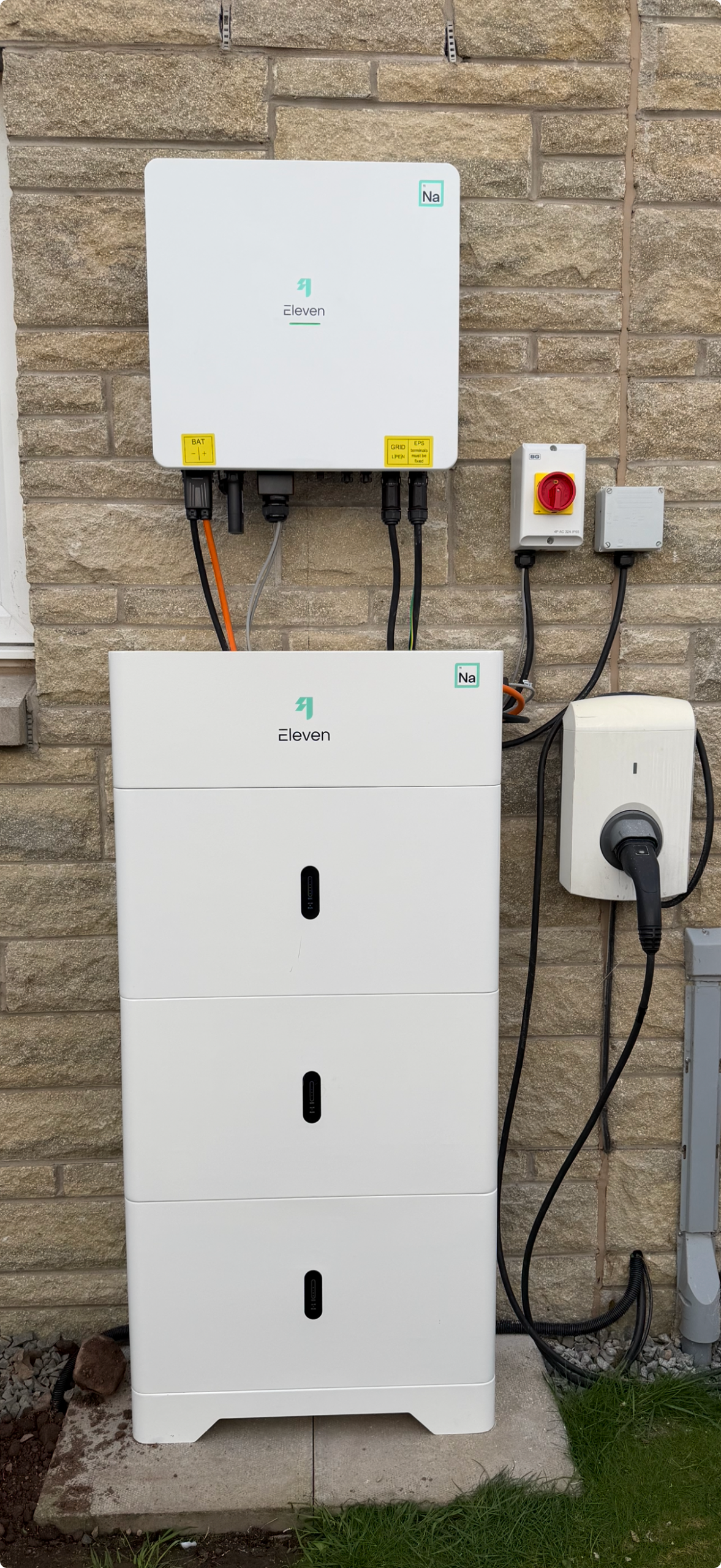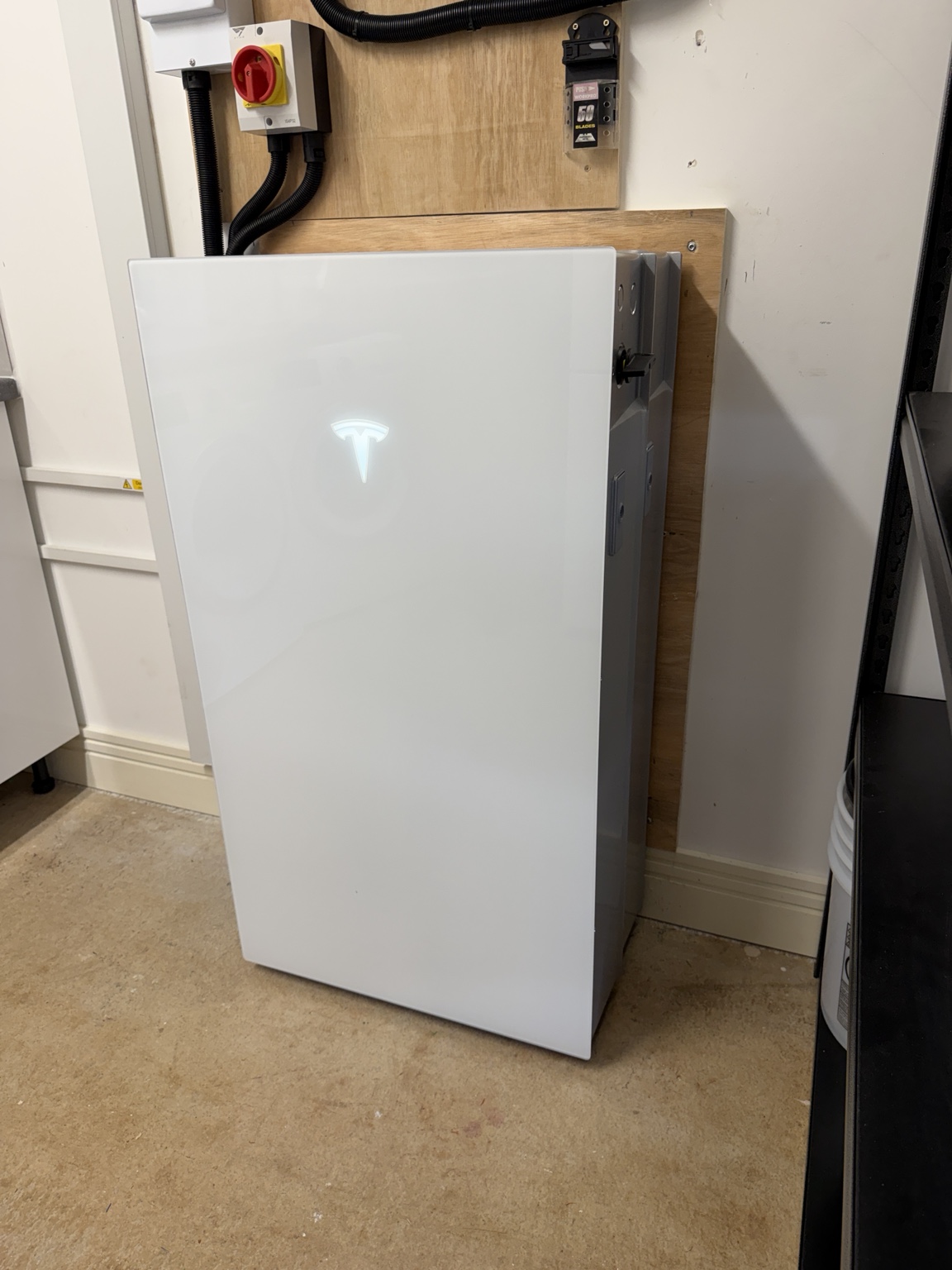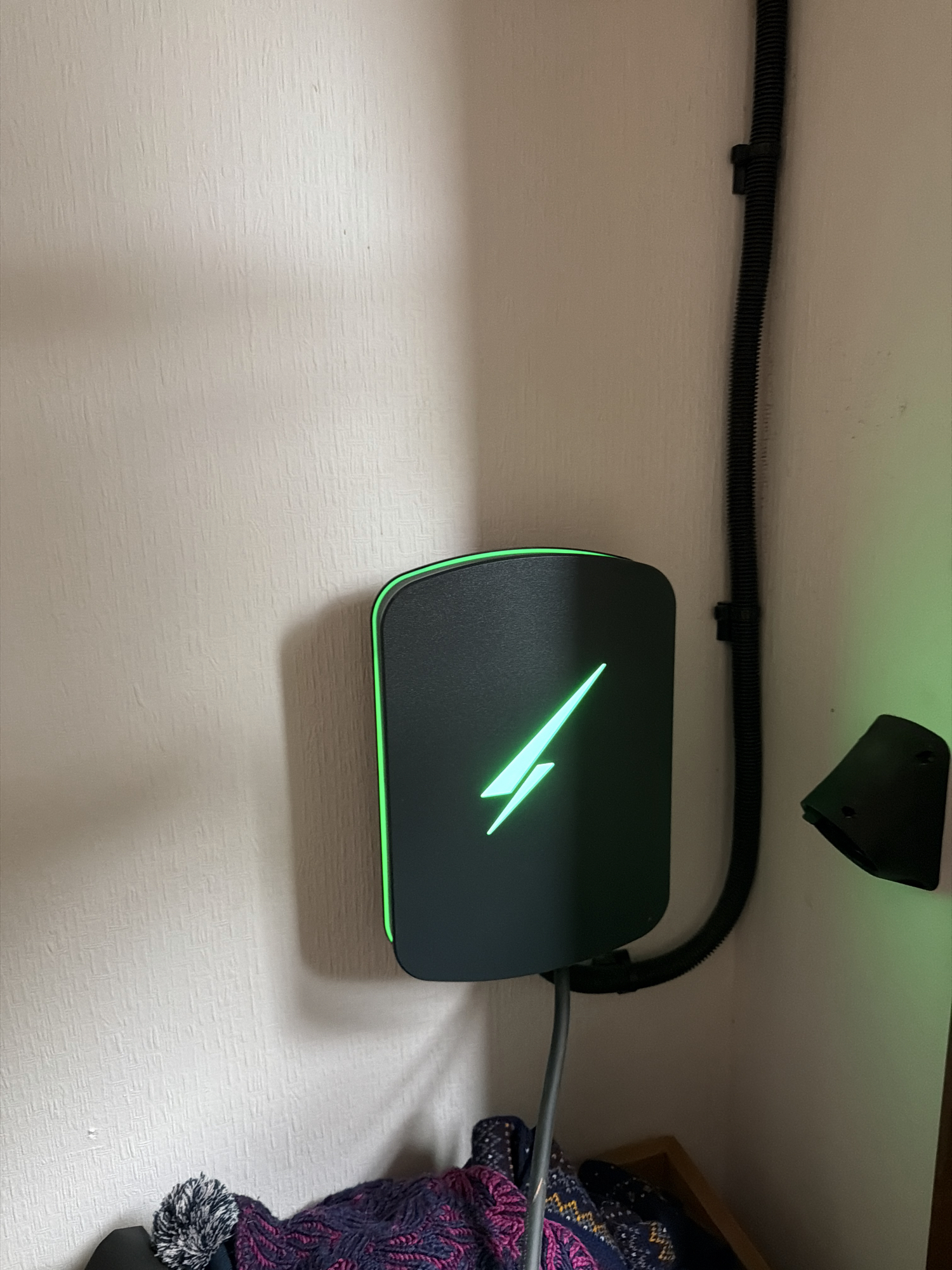
A sunny afternoon can produce more electricity than your home needs. A solar diverter can send that surplus to an immersion heater, while a battery can save electrical energy for later. Which option gives you more value?
Start with the cost of the energy you would otherwise buy and the export income you would give up. A hot-water diverter can be useful, but “free hot water” is not the whole calculation when exported electricity has a price.
This guide helps Edinburgh and East Lothian homeowners compare the options without assuming that one device suits every system.
Want advice for your home? Call 0131 210 0405 or send an enquiry to Renew-Able Solutions.
What does a solar diverter do?
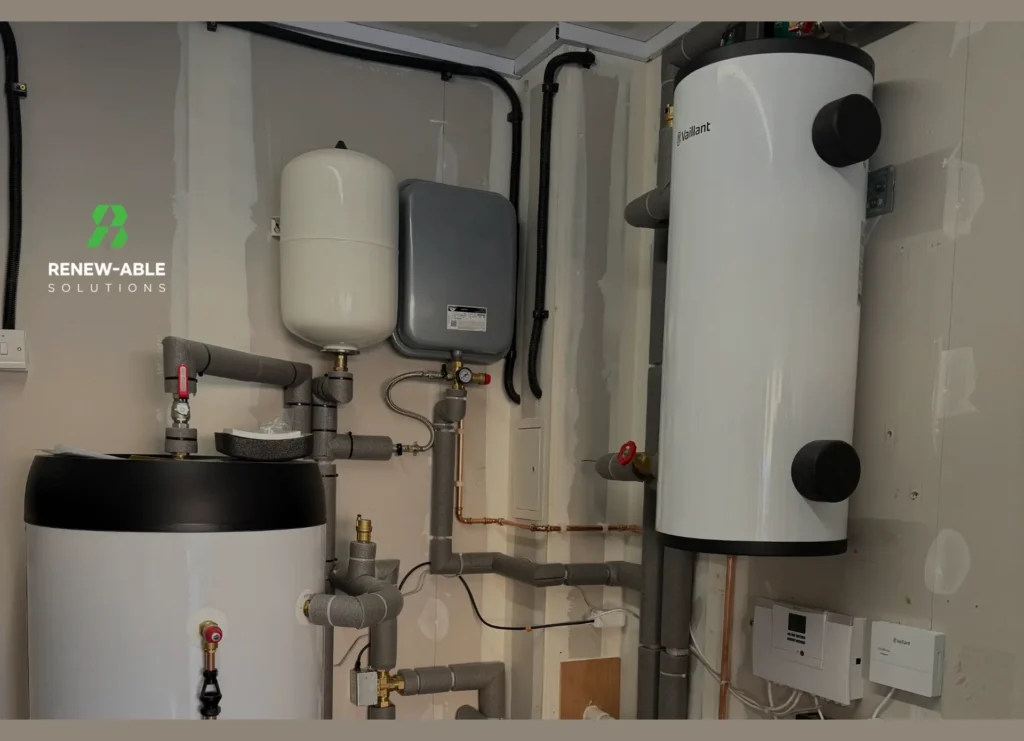
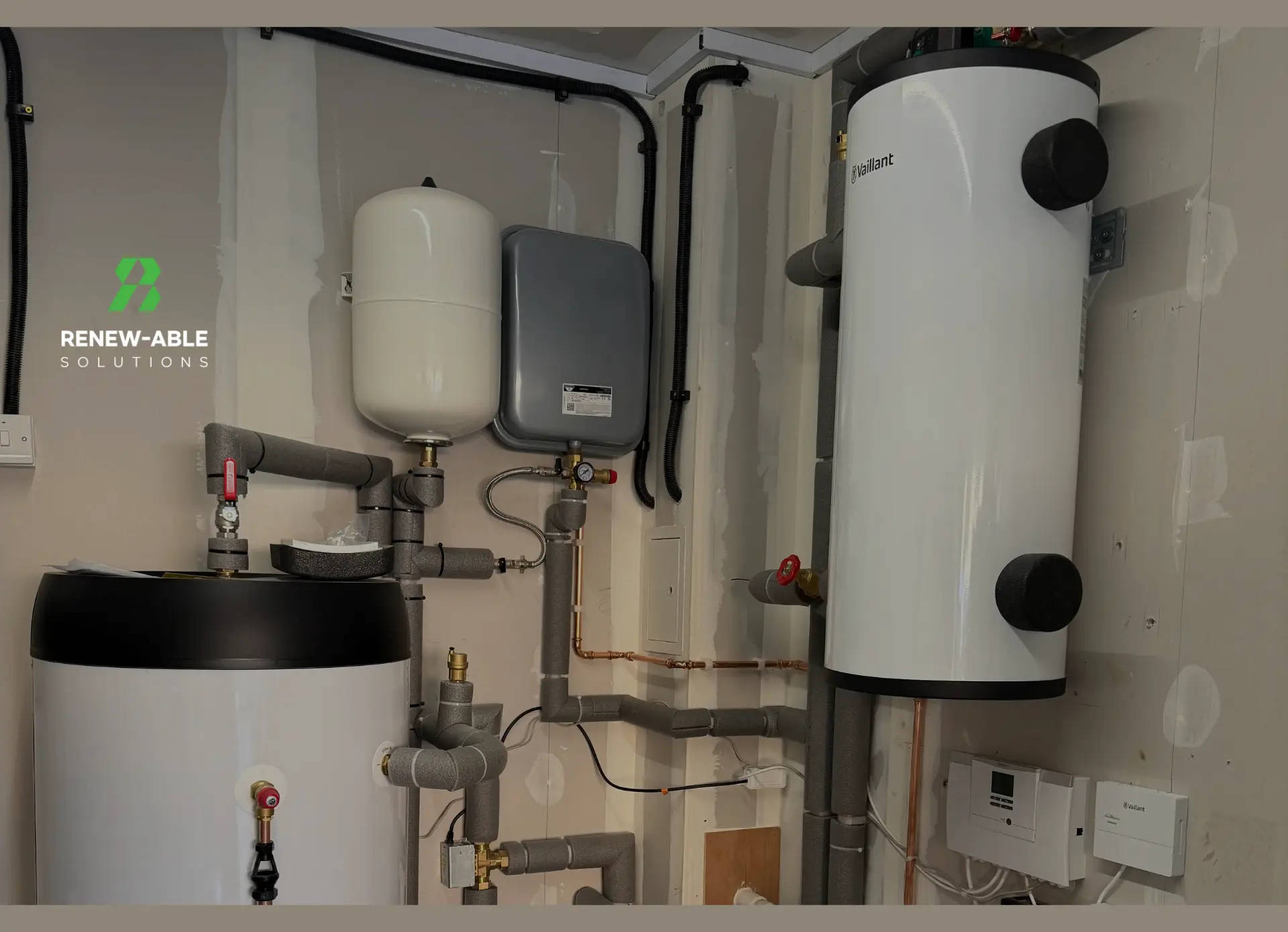
A typical diverter monitors surplus electricity and adjusts power to a compatible immersion heater. It stores the resulting heat in a hot-water cylinder for later use.
That differs from a battery, which returns electricity to household loads. Heat stored in a conventional hot-water cylinder cannot later run the television or charge a phone.
First, check that you have a suitable cylinder, immersion heater and controls. A combi boiler with no hot-water store presents a different starting point. Installing a cylinder solely to absorb occasional surplus needs a separate cost and space assessment.
Solar diverter or battery: compare each unit of surplus
Imagine you have one extra kilowatt-hour of solar electricity. You could export it, use it directly, store it in a battery or turn it into hot water. Each route has a different value.
| Route | Main benefit | What reduces that benefit? |
|---|---|---|
| Export | Payment under your export tariff | Eligibility, rates and any export limit |
| Hot-water diversion | Less purchased energy for hot water | Lost export income and cylinder heat losses |
| Battery storage | Less electricity bought later | Lost exports, conversion losses and battery cost |
| Direct household use | Immediate avoided import | Whether the demand can sensibly move |
The Energy Saving Trust’s energy-storage guidance describes electrical and thermal storage options. Your own tariff and heating arrangement then determine the financial comparison.
A clear example of the opportunity cost
Assume your export rate is 12p per kWh. Diverting one kWh to an immersion heater gives up 12p of export income. If it replaces one kWh of immersion heating bought at 30p, the gross benefit is 18p before stored heat losses.
Now change the displaced heat source. If a boiler would deliver that useful heat for 9p, giving up 12p of export income may cost more than it saves. The boiler figure here is an assumption, including its efficiency, not a current gas tariff.
These examples deliberately use simple numbers. The lesson is to compare the heat actually displaced, rather than multiplying all diverted electricity by the standard electricity price.
What changes when you have a heat pump?
A heat pump can deliver several units of heat per unit of electricity. An immersion heater does not offer that same multiplication. Therefore, diverting electricity to immersion heating is not automatically the cheapest way to make hot water.
For illustration, if a heat pump provides hot water at a coefficient of performance of 2.5, 1 kWh of electricity delivers 2.5 kWh of heat. Making that much heat with an immersion requires about 2.5 kWh of electricity before storage losses.
Actual hot-water performance varies with temperatures and the system. Ask whether scheduling the heat pump’s water-heating cycle during solar production gives better value. Keep required hygiene cycles and manufacturer settings intact.
Can a battery and solar diverter work together?
Yes, with a compatible design and clear priorities. For example, controls might supply normal household demand first, then charge the battery, then divert remaining surplus. Another home may benefit from a different order.
The important point is coordination. Two independent devices can react to the same power measurement in unhelpful ways. A diverter may also consume energy that the battery was intended to save for evening demand.
Ask the installer to explain how the controls behave when clouds pass, the battery fills or hot water reaches its set temperature. Our battery coupling guide explains another part of the system design.
Summer surplus does not prove year-round savings
Hot-water demand continues in winter, while solar output generally falls. A device that captures substantial summer surplus may have little to use during darker weeks.
Accordingly, ask for monthly estimates and annual diverted energy, not just the maximum immersion rating. Distinguish power in kW from energy over time in kWh.
Also review export tariff options. A higher export price can change which destination gives the best value, even when the physical system stays the same.
Solar diverter questions to settle before buying
- What heats the cylinder now, and what does that useful heat cost?
- How much surplus remains after normal demand and battery charging?
- What export income would diversion replace?
- Are the cylinder, immersion and electrical controls suitable?
- How will the system coordinate with any heat pump or battery?
For a wider starting point, our questions to ask before installing solar will help you prepare. The aim is a comfortable home with sensible running costs, not simply a dashboard showing zero export.
Talk through your next step
Tell us how you heat your water, your export tariff and whether you already have a battery. We can help compare the options for your home.
Explore our solar service, call 0131 210 0405 or submit an enquiry. Renew-Able Solutions serves Edinburgh, East Lothian and surrounding areas; tell us your postcode so we can confirm suitability and coverage.
Technical sources and examples checked on 3 October 2026. Illustrative figures are not quotations or guaranteed savings.