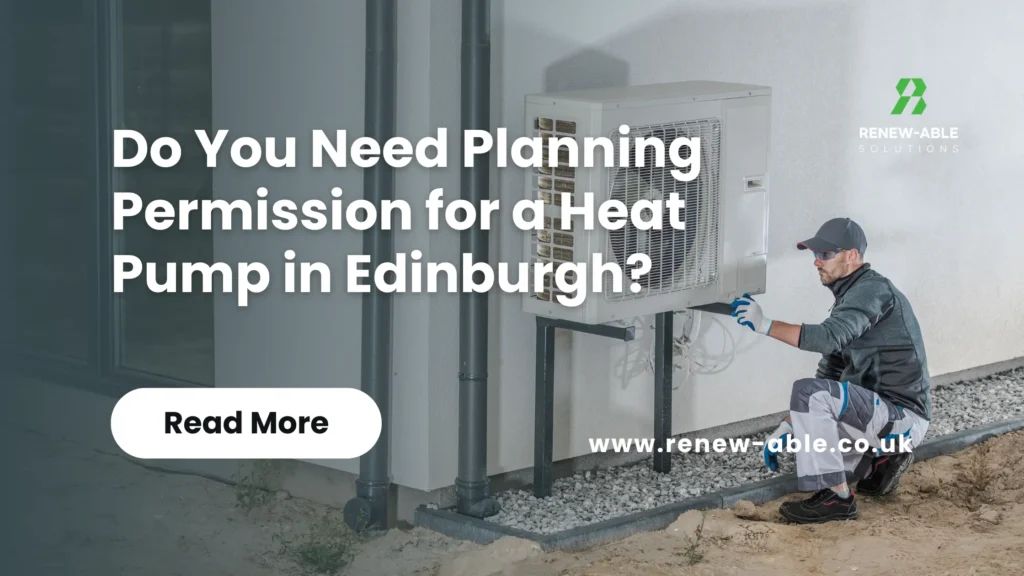
Reviewed: 1 September 2026. Planning permission for heat pumps in Edinburgh depends on the property and the proposed installation. In Scotland, an air source heat pump can often use permitted development rights if the property, unit position and all Class 6H conditions qualify. Listed buildings, World Heritage Sites and some conservation-area installations require particular care. Always check planning permission, building warrants and other consent requirements separately.
Planning permission for heat pumps: permitted development
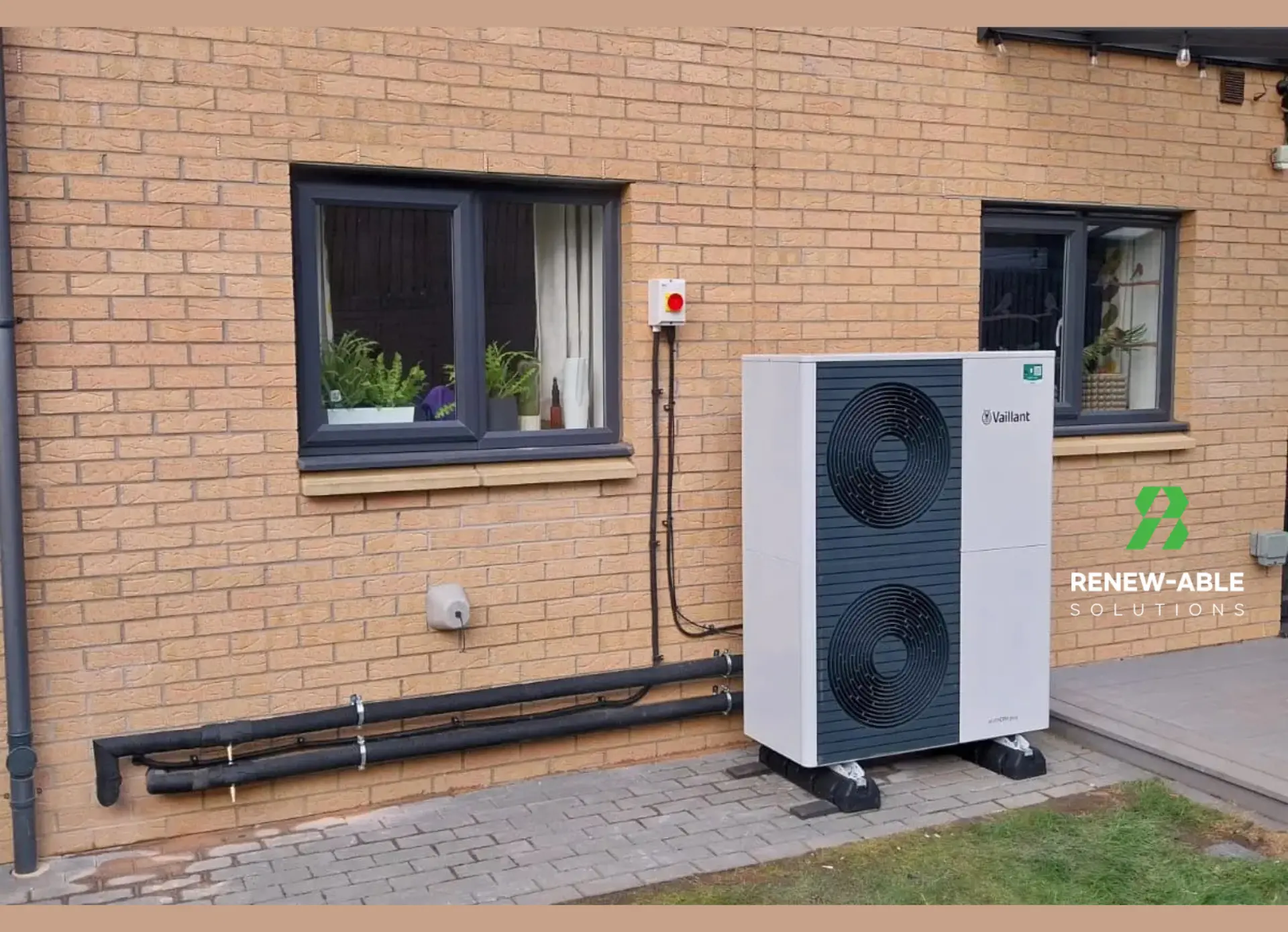
Permitted development rights allow specified work to proceed without a full planning application when the work meets every relevant limitation and condition. For Scottish homes, Class 6H covers the installation, alteration or replacement of an air source heat pump on a dwelling or within its curtilage.
Permitted development is not automatic approval for every heat-pump installation. Property type, location, visibility, the number of units and compliance with the applicable planning standard all matter.
Current Scottish conditions for air source heat pumps
- Number of units: the work is not permitted development if it would result in more than one air source heat pump on the same building or within its curtilage.
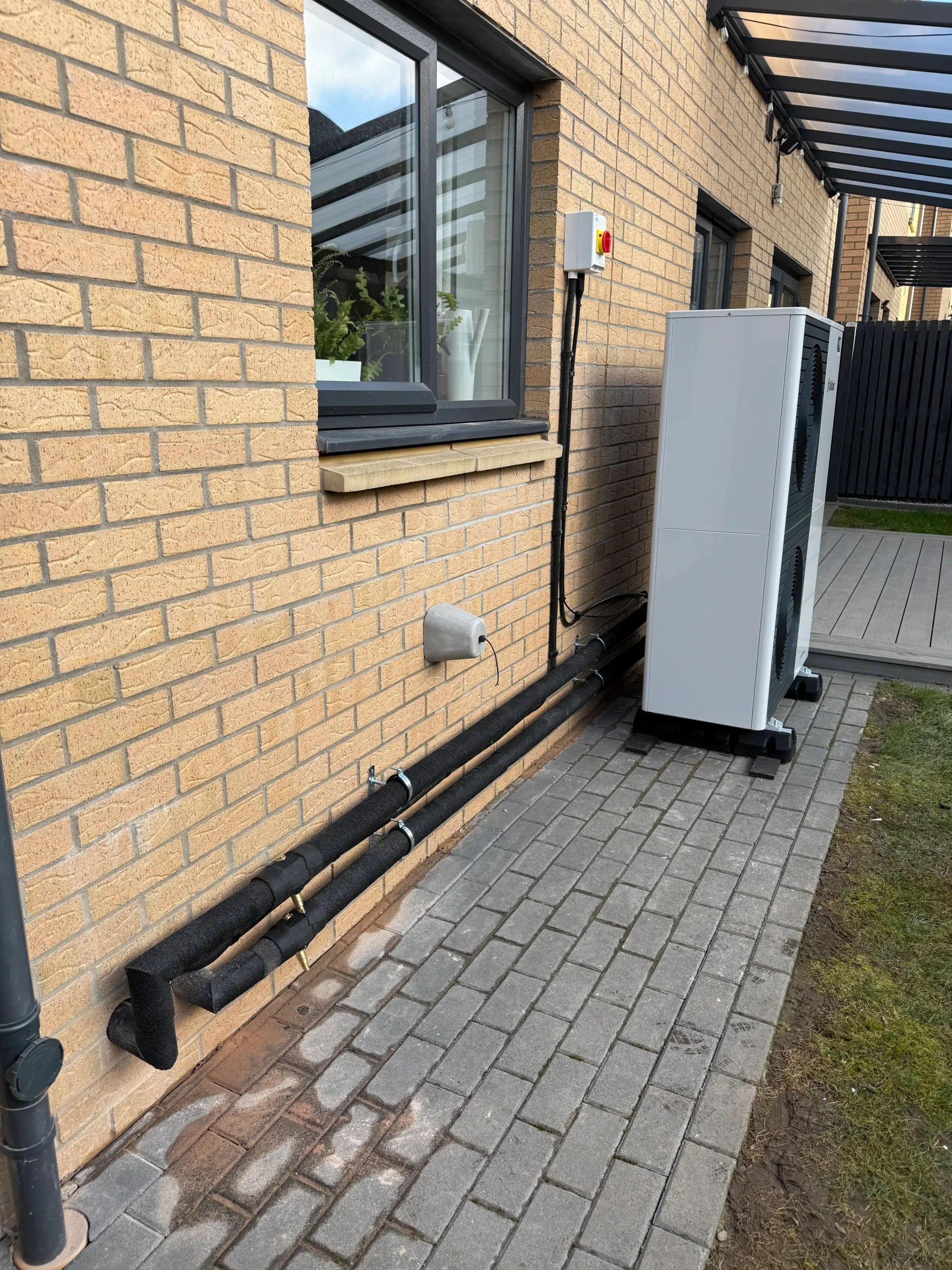
- Projection: a unit installed on a dwelling must not protrude more than one metre from the outer surface of an external wall, roof plane, roof ridge or chimney.
- Conservation areas: an air source heat pump on a dwelling in a conservation area must be at ground-floor level and on the rear elevation to qualify under Class 6H.
- Units within the curtilage: the installation must not be forward of a principal elevation, or a side elevation where that elevation fronts a road. Any resulting structure must not exceed three metres in height.
- Protected sites: Class 6H does not apply within a World Heritage Site or within the curtilage of a listed building.
- Purpose and standards: the equipment must be used for domestic heating or hot water and must comply with the applicable MCS planning standard for air source heat pumps, or an equivalent standard.
These points summarise the current Scottish Government guidance; they are not a substitute for a site-specific planning decision.
Planning permission for heat pumps: when to contact the council
Seek confirmation from the planning authority for listed properties, World Heritage Sites, conservation areas and buildings containing flats. Also contact the authority if the property already has an air source heat pump. Seek advice if the proposed position may fall outside the Class 6H limitations. Lease conditions, title restrictions, landlord consent and common ownership can also matter even if the work does not need planning permission.
For an Edinburgh property, consult the City of Edinburgh Council planning and building standards service. The local authority makes the final decision on whether a proposal requires planning permission.
Noise and unit positioning
Noise assessment is part of choosing a compliant and practical position. The result depends on the selected equipment, sound-power information, nearby windows and boundaries, reflective surfaces and the calculation method in the applicable MCS planning standard. Do not use a generic distance or noise figure as a substitute for a proper assessment.
The unit also needs adequate airflow and service access. Keep bins, fencing and planting clear of the unit so they do not obstruct airflow or maintenance.
What about ground and water source heat pumps?
Scottish permitted development rights also cover ground and water source heat pumps and associated pipework within the curtilage of a dwellinghouse or building containing a flat. Groundworks, boreholes, drainage, environmental restrictions, shared land and listed-building considerations can still require separate investigation.
Heat pump planning permission and building standards
A proposal that benefits from permitted development rights may still need to satisfy building standards, electrical requirements, manufacturer instructions and other legal or contractual obligations. Ask the council whether the work needs a building warrant. Planning status does not answer every compliance question.
How Renew-Able Solutions can help
Renew-Able Solutions assesses the property, proposed unit position, heat loss, existing heating system and installation requirements before confirming a design. If the project may need planning permission or another consent, we identify the information to provide. We also explain which decisions the relevant authority or property owner must confirm.
Discuss an air source heat pump installation in Edinburgh or East Lothian.
Primary source
See the Scottish Government’s guidance on installing domestic microgeneration equipment. Regulations and guidance can change, so check the current position before work begins.