If you are adding battery storage to a solar PV system, one of the first design choices is whether the battery should be AC coupled or DC coupled. The names describe where the battery connects within the electrical system—not the quality of the battery itself.
Quick answer: AC-coupled batteries are often a practical way to add storage to an existing solar installation. DC-coupled systems are often a strong choice when solar panels and a battery are being installed together. Neither arrangement is automatically better: the right answer depends on your existing equipment, energy use, backup requirements, available space and Distribution Network Operator (DNO) limits.
What do AC and DC coupling mean?
Solar panels generate direct current (DC), while homes and the electricity network use alternating current (AC). A battery also stores energy as DC. Inverters manage the conversion between the two.
In an AC-coupled system, the solar PV inverter and battery inverter connect independently on the AC side of the property. In a typical DC-coupled system, the panels and battery connect through a shared hybrid inverter on the DC side.
AC-coupled vs DC-coupled batteries at a glance
| Design point | AC coupled | DC coupled |
|---|---|---|
| Typical inverter arrangement | Separate solar and battery inverters | One compatible hybrid inverter for solar and battery |
| Common use | Adding a battery to existing solar PV | Installing solar PV and a battery together |
| Solar-to-battery energy path | Solar DC is converted to AC, then back to DC for storage | Solar energy can charge the battery on the DC side |
| Retrofit flexibility | Often keeps the existing solar inverter | May require an inverter change or compatible equipment |
| System independence | Solar and battery can operate as separate subsystems | Solar and battery operation is more closely integrated |
| Grid charging | Available on many modern systems | Available on many modern hybrid systems |
| Backup power | Only when the equipment and electrical design specifically provide EPS or backup | |
How does an AC-coupled battery work?
Your solar inverter converts electricity from the panels into AC for the home. When surplus solar is sent to an AC-coupled battery, the battery inverter converts that AC back to DC for storage. When the battery discharges, its inverter converts the stored DC into AC for the property.
Advantages of AC coupling
- Well suited to many retrofits: a battery can often be added without replacing a serviceable solar inverter.
- Independent equipment: a fault or maintenance issue affecting the battery inverter does not necessarily stop the existing solar inverter generating.
- Flexible system choice: the battery does not always have to use the same inverter platform as the solar array.
- Standalone storage: an AC-coupled battery can be installed without solar and charged using an appropriate time-of-use electricity tariff.
Points to consider
- Storing solar energy involves additional AC/DC conversion stages, so there are conversion losses.
- The separate battery inverter adds equipment, wiring and another power rating that must be considered in the DNO assessment.
- Monitoring may involve more than one platform unless the equipment has been designed to work together.
How does a DC-coupled battery work?
In a DC-coupled system, the solar panels and battery connect through a compatible hybrid inverter. Surplus solar can charge the battery on the DC side, and the hybrid inverter converts electricity to AC when it is needed by the home or exported to the grid.
Advantages of DC coupling
- A direct solar charging path: solar energy can reach the battery without first being converted to AC, which can reduce conversion losses.
- Integrated design: one hybrid inverter can manage the panels, battery and grid connection.
- Strong option for a new installation: designing the solar array and battery together can reduce duplication and simplify monitoring.
- PV oversizing options: some hybrid inverters allow the panel capacity to exceed the inverter’s AC rating, subject to the manufacturer’s design limits.
Points to consider
- The battery, inverter and solar design must be electrically and digitally compatible.
- Adding DC-coupled storage to an older installation may require replacement of the existing solar inverter.
- A shared inverter can create a common point of failure for solar generation and battery operation.
- Expansion options are governed by the selected manufacturer’s voltage, capacity and configuration limits.
Can both types charge from the grid?
Yes, many current AC-coupled batteries and DC-coupled hybrid systems can charge from the grid. This can allow a battery to charge during a cheaper tariff period and discharge when electricity is more expensive. The available modes depend on the product, installer settings, electricity tariff and any import or export restrictions.
The Energy Saving Trust’s battery guidance confirms that home batteries can store excess solar electricity or charge when a time-of-use tariff is cheaper. Any savings still depend on the installed cost, battery losses, usable capacity, warranty and the way energy is consumed.
Which system is best for an existing solar installation?
If the existing panels and inverter are performing well, AC coupling is often the least disruptive retrofit. It allows the original PV system to remain in place while the battery operates through its own inverter.
That is not an absolute rule. A DC-coupled retrofit may make sense when the existing inverter is due for replacement, when a compatible hybrid inverter is already installed, or when the proposed battery platform offers a suitable integrated design. The age of the solar installation, warranty position, meter arrangement and DNO approval all need to be checked first.
Which system is best for new solar and battery storage?
For a new solar PV installation with battery storage, DC coupling through a hybrid inverter is frequently an efficient and tidy solution. However, an AC-coupled design may still be preferable where a particular backup function, inverter arrangement, future expansion plan or three-phase requirement makes it the better engineering choice.
Does either type provide backup during a power cut?
Not automatically. A normal grid-connected solar or battery inverter must disconnect from the network during a power cut. To keep selected circuits—or in some cases the whole property—running, the system needs equipment specifically designed for Emergency Power Supply (EPS) or backup operation.
The design may require a gateway or changeover arrangement, suitable earthing, dedicated backup circuits and appropriate protection. The inverter’s backup output in kilowatts also needs to support the intended loads; battery capacity in kilowatt-hours only describes how much energy is stored. We assess backup requirements separately rather than assuming that every battery can power an entire property.
DNO approval and export limits
Battery inverters are generation equipment for grid-connection purposes, even when the intention is primarily to store electricity. The combined inverter capability of the solar and battery installation must therefore be assessed under the relevant G98 or G99 process. Where the network restricts export, a compliant G100 export-limitation scheme may be required.
Renew-Able Solutions checks the proposed equipment, existing generation, supply phase and local network requirements before finalising the design. We then manage the relevant DNO notification or application. The MCS guidance on notifying DNOs explains why this forms an important part of a compliant installation.
How we choose the right battery arrangement
The correct decision starts with the property rather than a preferred coupling type. We consider:
- current and future electricity consumption
- existing solar panels, inverter, warranties and monitoring
- half-hourly usage data and electricity tariff
- planned loads such as an EV charger or heat pump
- battery capacity, charge and discharge power, and expansion options
- single-phase or three-phase supply
- cable routes, equipment location and fire-safety requirements
- EPS or whole-home backup objectives
- DNO connection and export limits
Our surveys can include a 3D internal LiDAR scan and drone survey where appropriate, helping us plan equipment locations, cable routes and the solar array before installation.
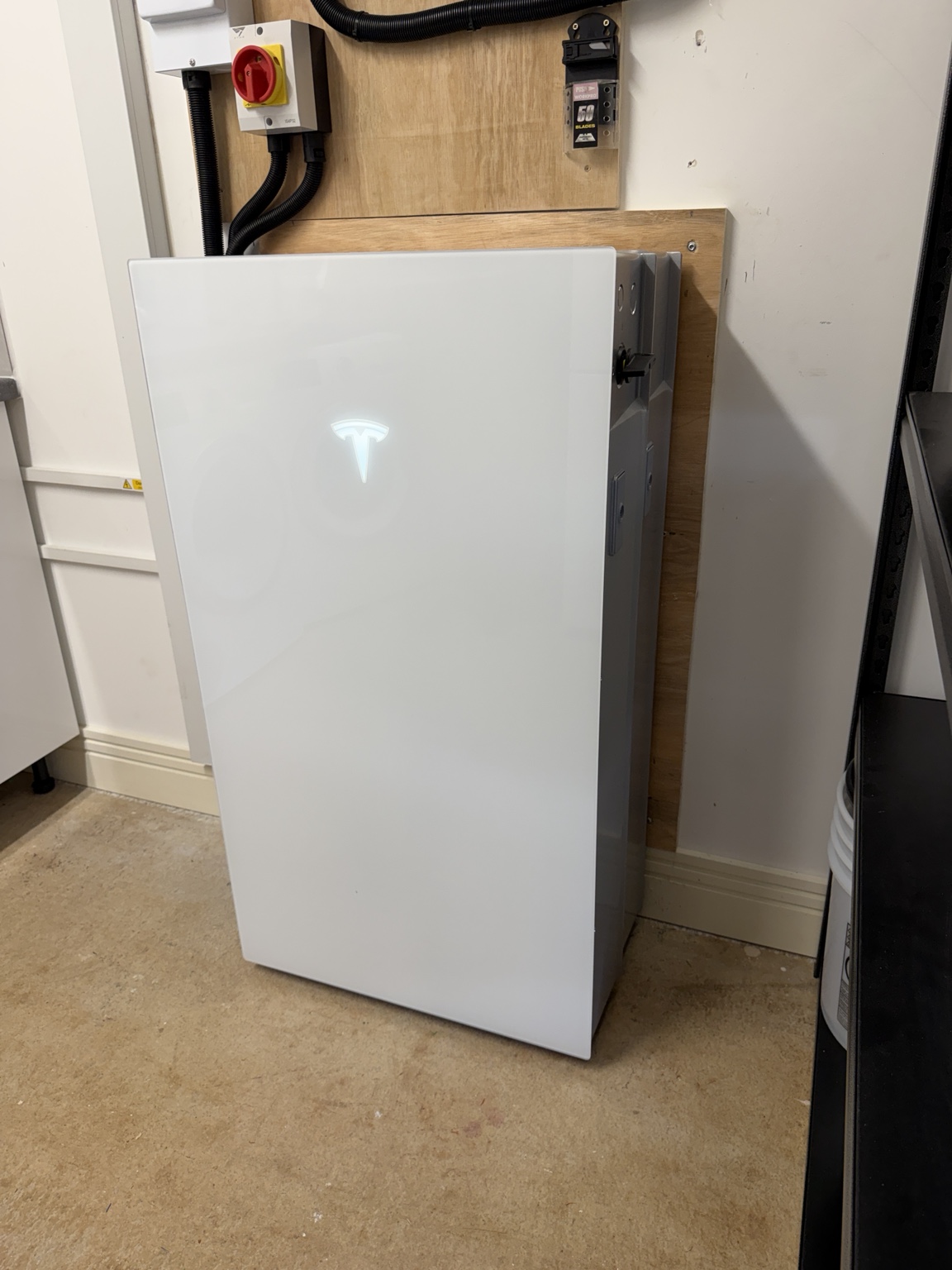
We design and install battery storage systems from Sigenergy, Tesla, Fox ESS and Eleven Energy. The suitable product and configuration depend on the property, existing equipment and the customer’s objectives—not simply whether one technology is labelled AC or DC coupled.
Frequently asked questions
Is DC coupling always more efficient?
DC coupling usually provides a more direct path when solar electricity charges the battery. Actual system efficiency depends on the inverter, battery, operating power, temperature and how often energy is converted. Efficiency should be compared using current manufacturer data for the complete proposed system.
Can I add a battery without changing my solar inverter?
Often, yes. An AC-coupled battery is commonly installed alongside an existing solar inverter. Some newer products and hybrid systems offer other retrofit options, so compatibility and warranty checks are essential.
Can a battery work without solar panels?
Yes. A suitable battery can charge from the grid, commonly during a cheaper tariff period, and supply the home later. The financial result depends on tariff differences, conversion losses, usage pattern and installed cost.
Will a battery power my home during a blackout?
Only if the system includes properly designed backup or EPS capability. The backed-up circuits, maximum power and expected running time should be agreed before installation.
Does Scotland’s climate change the choice?
The electrical differences between AC and DC coupling are the same, but seasonal generation matters. Scottish homes usually produce much less solar energy in winter, so battery sizing should reflect real consumption, expected solar yield and any planned grid charging rather than summer generation alone.
Get a battery storage assessment
If you are planning a new solar and battery system or want to add storage to an existing installation, Renew-Able Solutions can assess both AC- and DC-coupled options. We serve Edinburgh, East Lothian and wider Central and East Scotland.
Contact us to arrange a battery storage survey, or learn more about our solar PV and battery servicing.