For most homes in Edinburgh and central Scotland, a grid-tied solar system is the most practical and cost-effective choice. It can reduce electricity imports, store surplus energy in a battery and export excess generation, while the grid remains available when solar production is low. A true off-grid solar system can work, but it must be designed around winter conditions, peak electrical loads and the number of days the property must operate without useful solar generation.
The important distinction is not simply whether a system has a battery. Grid-tied solar with battery backup can provide a high degree of energy independence while retaining the reliability of the electricity network. A genuinely off-grid property has no parallel electrical connection to the distribution network and must generate, store and manage all of its own electricity.
Grid-tied vs off-grid solar at a glance
| Feature | Grid-tied solar | True off-grid solar |
|---|---|---|
| Grid connection | Connected to the local distribution network | No parallel connection to the network |
| Supply when solar is low | Grid, battery or both | Battery, generator or another on-site source |
| Battery storage | Optional, but often beneficial | Normally essential |
| Export payments | Potentially eligible for a Smart Export Guarantee tariff | No grid export |
| DNO process | G98 notification or G99 application, depending on the equipment | Not normally applicable only when fully electrically isolated |
| Winter resilience | Grid covers seasonal shortfalls | Requires careful worst-month design and contingency |
| Typical suitability | Most homes and businesses | Remote homes, cabins, farms and sites with costly or unavailable connections |
What is a grid-tied solar system?
A grid-tied system connects solar panels and an approved inverter to the building’s electrical installation and the local distribution network. The property uses solar electricity when it is available. If generation is lower than demand, the grid supplies the difference. Surplus electricity can charge a battery or be exported.
A battery can increase self-consumption by storing daytime solar electricity for the evening. It can also charge during a lower-cost tariff period where the equipment and tariff allow. If exported electricity is accurately metered and the eligibility requirements are met, the property owner may apply for a Smart Export Guarantee tariff.
Advantages of grid-tied solar
- The grid provides reliable support during winter and periods of high demand.
- The solar and battery system can be sized for value and self-consumption rather than complete seasonal independence.
- Surplus generation can be exported instead of being curtailed or wasted.
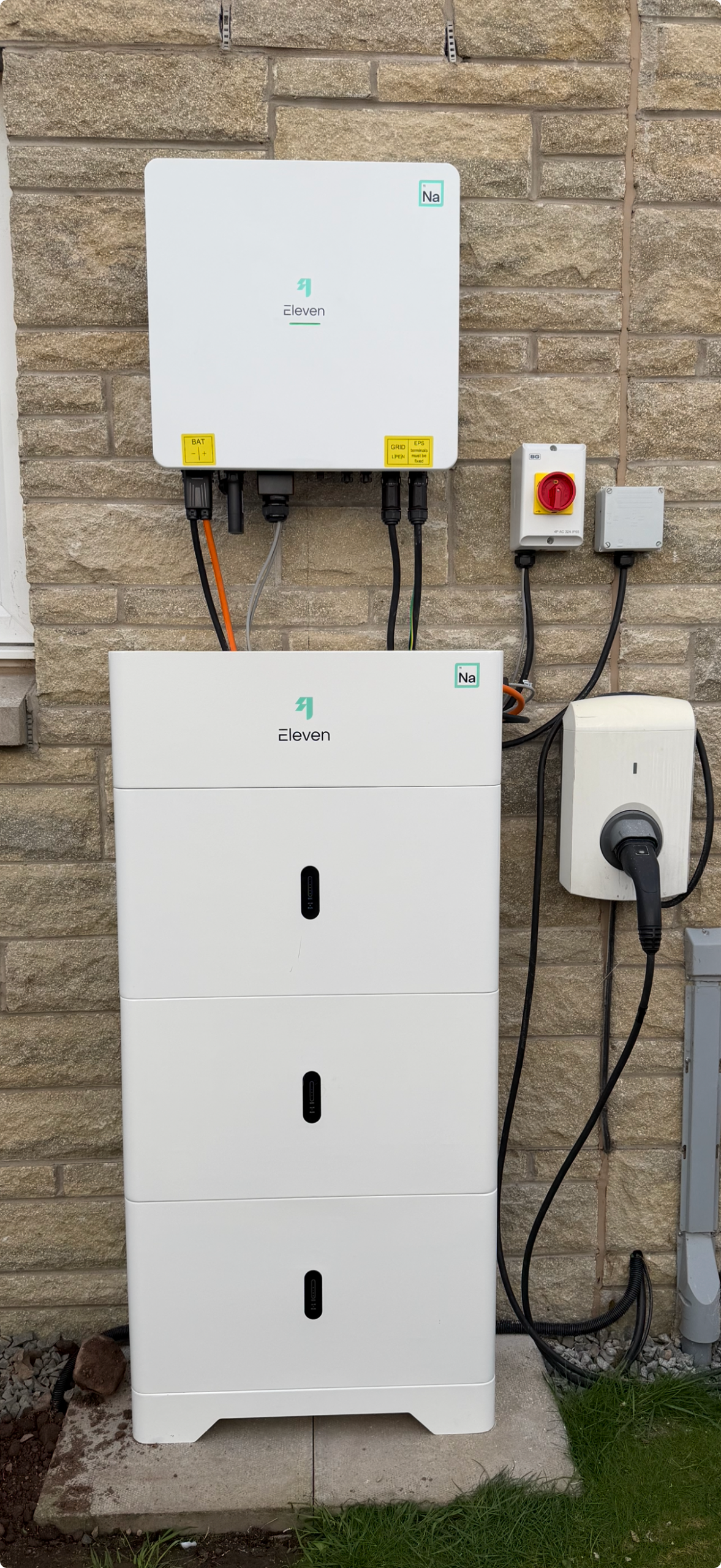
- A compatible battery and correctly designed backup arrangement can support selected circuits—or, in some systems, the whole property—during a power cut.
- Equipment requirements and future expansion are usually more manageable than for a true off-grid installation.
Limitations of grid-tied solar
- A standard grid-tied inverter must shut down during a power cut for network safety.
- Backup operation requires compatible equipment, electrical separation from the grid and a properly designed EPS or backup supply.
- G98 or G99 requirements apply to generation and storage connected in parallel with the network.
- The property will normally continue to import electricity during low-generation periods.
What is a true off-grid solar system?
A true off-grid system is a stand-alone electrical supply. The property does not rely on the distribution network, so the installation must safely meet both energy demand, measured in kilowatt-hours, and instantaneous power demand, measured in kilowatts. It also needs enough stored energy and backup capacity to cope with poor weather, maintenance and equipment faults.
Off-grid does not automatically mean that every unit of electricity is renewable or that the property has no running costs. Some systems use a fuelled generator during prolonged low-generation periods. Batteries and inverters have conversion losses, finite service lives and maintenance requirements. Excess summer generation may also be curtailed once the batteries are full because there is no grid export route.
Why off-grid design is challenging in Scotland
Solar panels generate throughout the year, including on bright overcast days, but output varies greatly by season. Scottish homes generally have their highest electricity and heating demand during the darker winter months, when solar generation is at its lowest. A battery can move solar electricity from daytime into the evening or across several days; it cannot economically carry a large summer surplus forward for use months later.
This seasonal mismatch is why annual generation figures alone are not enough. An off-grid design must be tested against expected production and demand in the worst part of the year. Electric heating, a heat pump, hot-water immersion, EV charging, cooking and workshop machinery can all have a major effect on the required inverter capacity, battery size and backup strategy.
What equipment does an off-grid system need?
- Solar PV array: sized using the site’s orientation, shading, available area and expected monthly yield.
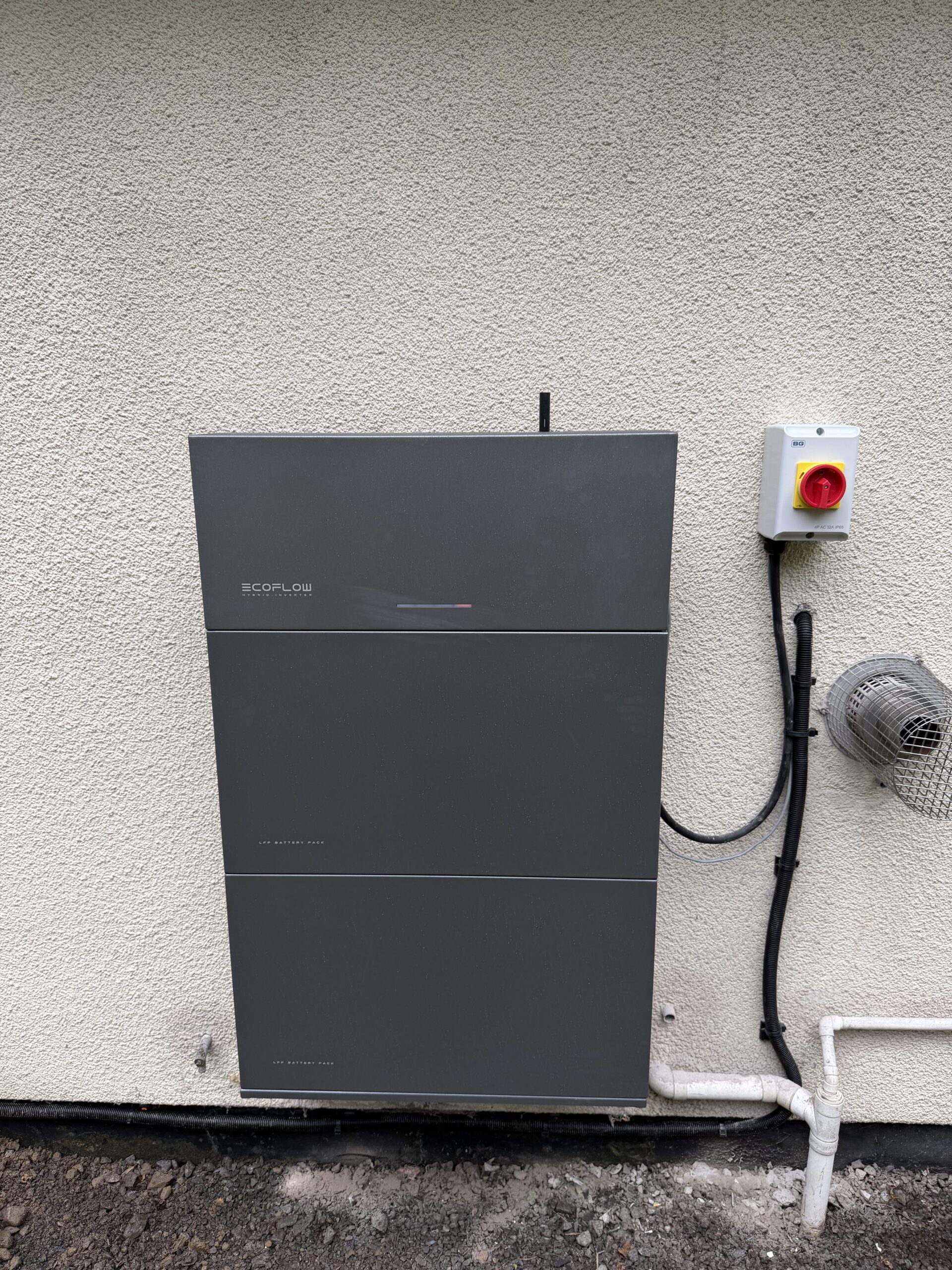
- Off-grid or hybrid inverter-charger: capable of supporting the property’s continuous and short-duration peak loads.
- Battery storage: sized by usable capacity, allowed depth of discharge, efficiency, temperature and required autonomy—not only the headline capacity.
- Energy management: monitoring, load prioritisation and, where appropriate, automatic control of flexible loads.
- Backup generation: often a suitably integrated generator, wind turbine, hydro system or another dependable source for extended winter shortfalls.
- Electrical protection and earthing: designed for all normal, fault and islanded operating modes.
- Safe battery location: selected in accordance with the equipment instructions, fire-safety considerations and the current installation standard.
Solar PV and electrical energy storage should be designed and installed to current requirements, including the MCS Solar PV Installation Standard and the MCS Battery Installation Standard where applicable.
Off-grid solar is not the same as EPS or backup power
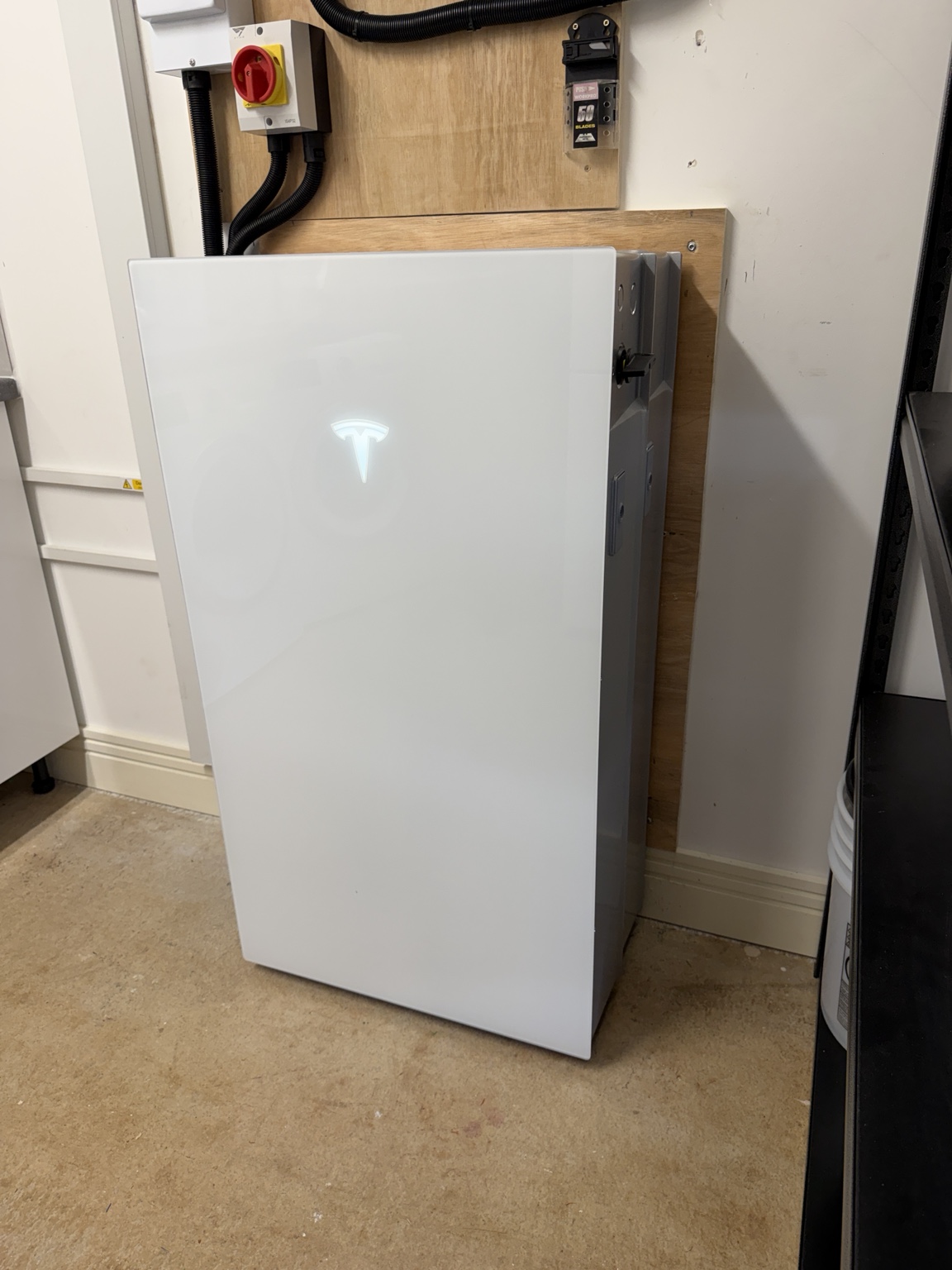
A grid-connected battery with Emergency Power Supply functionality remains a grid-tied installation during normal operation. When a power cut is detected, approved changeover equipment separates the backed-up installation from the network before the inverter supplies the designated circuits. This controlled separation is often called islanding.
Backup may cover a dedicated socket, selected essential circuits or a larger part of the building, depending on the system. Its practical capability is limited by battery state of charge, usable capacity, inverter output and the loads connected at the time. Read our guide to solar battery backup and EPS for more detail.
Do off-grid systems need a DNO application?
DNO means Distribution Network Operator. A completely stand-alone system with no electrical connection or parallel operating capability with the public network will not normally follow the same G98 or G99 connection process.
However, if the property retains a grid connection, or if generation or battery equipment can operate in parallel with that network, the relevant notification or application requirements still apply. Government guidance says significant additions such as solar PV, battery storage, heat pumps and EV chargepoints must be registered with the local DNO. The applicable route depends on the equipment and connection arrangement; SSEN’s microgeneration guidance explains the G98 and G99 processes for its network area.
How Renew-Able Solutions assesses an off-grid project
Off-grid design begins with evidence, not a standard package. We review interval consumption data where available, identify essential and deferrable loads, record starting currents and peak demand, and model likely monthly solar generation. We then agree the required autonomy period and what should happen during an extended energy shortfall.
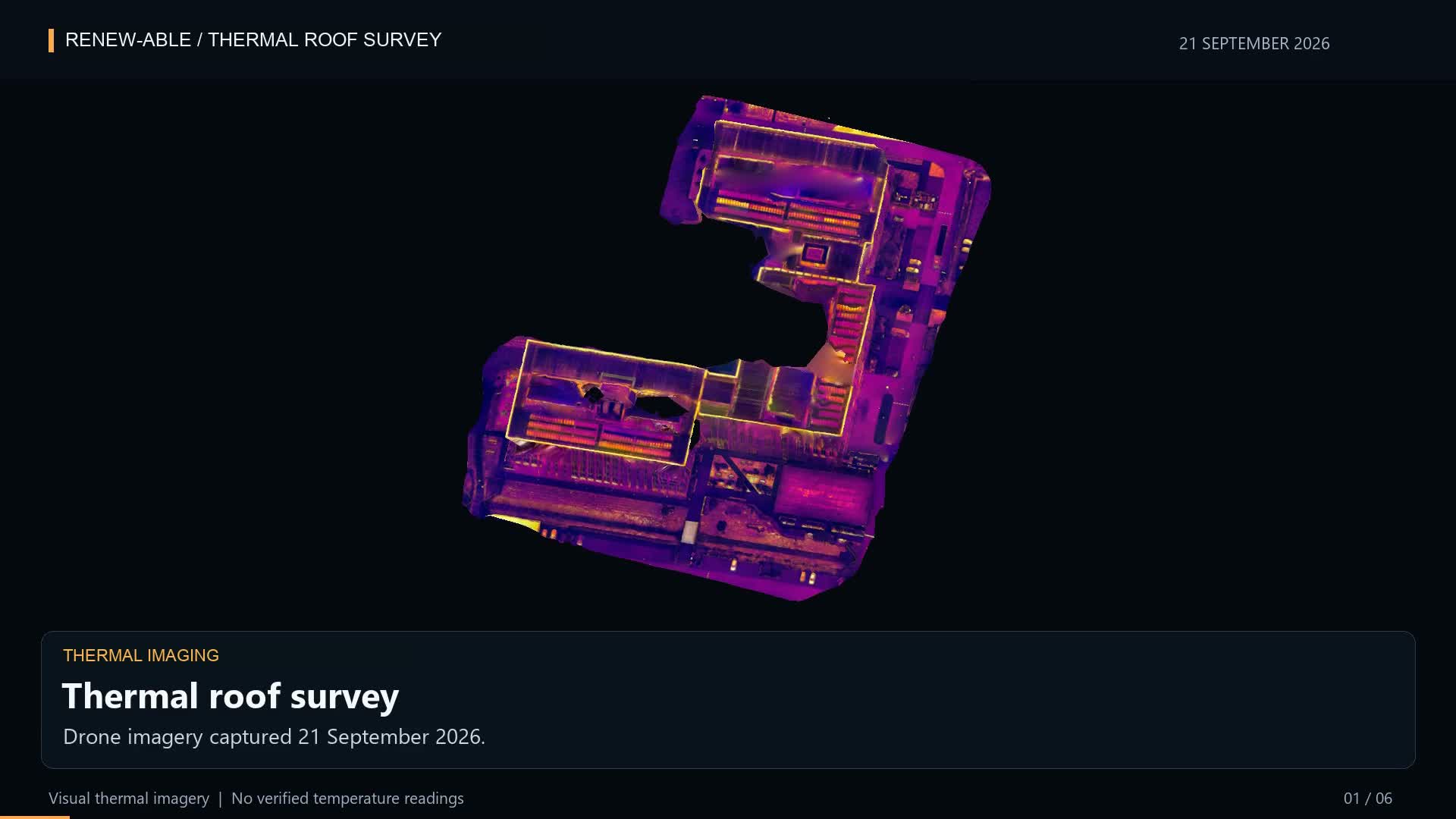
Our site survey can include a 3D drone survey of roofs and land, together with an internal LiDAR scan to record equipment locations, cable routes, plant spaces and the relationship between electrical loads. We also assess shading, roof condition, structural suitability, ground-mount options, generator positioning, access, ventilation and future maintenance.
When does off-grid solar make sense?
A stand-alone system may be appropriate where a new grid connection is unavailable or unusually expensive, or where a remote site has modest and controllable electrical demand. Examples can include cabins, bothies, agricultural buildings, monitoring stations, remote workshops and some rural homes.
For an existing home with a reliable grid connection, disconnecting completely is rarely the best financial or practical answer. A well-designed grid-tied solar PV system, combined with battery storage and an appropriate backup arrangement, can deliver most of the useful benefits without designing the entire property around the darkest winter period.
Planning considerations in Scotland
Many domestic rooftop solar installations fall within permitted development rights, but restrictions apply. Listed buildings, World Heritage Sites, conservation areas, ground-mounted arrays and equipment on some elevations may require additional checks or consent. The current Scottish Government householder guidance sets out the relevant limits for solar equipment. Off-grid status does not remove planning, building-standard, environmental or electrical-safety obligations.
Frequently asked questions
Can solar panels and a battery run my home overnight?
Yes, if the battery has sufficient usable energy and the inverter can supply the connected loads. The result depends on evening consumption, battery state of charge and high-power appliances—not simply the number of panels.
Will a larger battery make my home off-grid?
Not by itself. A larger battery extends the period for which stored energy can support the property, but it still needs a source of energy to recharge it. Several dark winter days may require much more PV capacity, controlled demand or dependable backup generation.
Can an off-grid solar system power a heat pump?
It can, but winter heat demand and solar production move in opposite directions. The design must use the property’s heat-loss calculation, expected heat-pump electricity consumption, peak loads and a credible winter backup strategy.
Does a normal solar system work during a power cut?
Normally, no. Standard grid-connected inverters shut down when the network fails. Power-cut operation requires compatible battery/inverter equipment and a correctly designed separation and backup arrangement.
Can I receive export payments if I am off-grid?
No. Smart Export Guarantee payments relate to eligible electricity exported to the grid. A true off-grid installation has no export connection.
How much does an off-grid solar system cost?
There is no reliable standard price because the system is determined by the site’s worst-month generation, demand profile, required autonomy, electrical infrastructure and backup source. A remote cabin and an electrically heated family home require very different designs. A site-specific survey and energy model are essential before providing a meaningful quotation.
Get a site-specific solar and battery design
Renew-Able Solutions designs grid-connected, backup and stand-alone renewable energy systems across Edinburgh, the Lothians and central Scotland. We will explain what level of independence is realistic, identify the critical winter constraints and compare the options without presenting a standard battery package as an off-grid solution.
Contact Renew-Able Solutions to arrange an initial discussion and site survey. Existing systems can also be supported through our solar PV and battery servicing service.