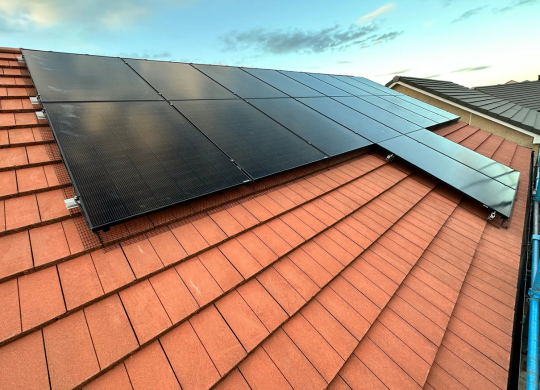
For early budgeting in 2026, allow roughly £6,000–£9,000 for a straightforward 4–5 kWp home solar installation, or around £10,000–£15,000 with a 5–10 kWh battery. These are broad planning allowances, not a Renew-Able Solutions quotation. Roof access, equipment and electrical work can move a project outside these ranges.
Cost guidance researched 27 September 2026. Figures assume a conventional domestic roof installation and eligibility for zero-rated installation VAT. A survey and written quotation establish the actual price.
What might a complete solar system cost?
| Example system | Indicative installed budget | What the example covers |
|---|---|---|
| Around 3 kWp solar | £5,000–£7,000 | Panels, inverter and a straightforward roof installation |
| Around 4–5 kWp solar | £6,000–£9,000 | A mid-sized domestic array without storage |
| Around 6 kWp solar | £8,000–£11,000 | A larger array; roof and grid suitability matter |
| Around 4–5 kWp solar plus 5–10 kWh storage | £10,000–£15,000 | Combined solar and battery installation |
These are editorial budgeting ranges, not fixed packages or guaranteed market averages. As an independent reference, Energy Saving Trust currently gives around £7,600 for a typical 4.5 kWp domestic solar system. Its battery guide gives around £4,600 for a 5 kWh battery system, with a much wider range across battery types and sizes. Installing both together can reduce duplicated work.
The table assumes ordinary mounting, inverter, cabling, installation and commissioning, with straightforward access. Major roof repairs, unusually complex scaffolding, trenching, network reinforcement, significant supply upgrades and whole-home backup are outside these example allowances. Ask for every inclusion and exclusion in writing.
Why do two similar homes receive different quotes?
Roof shape and condition. A simple roof plane is easier to design around than multiple small roofs, dormers or chimneys. Slate, fragile coverings and work needed before installation can change the scope. Edinburgh tenements and shared roofs may also involve ownership consent and different access arrangements.
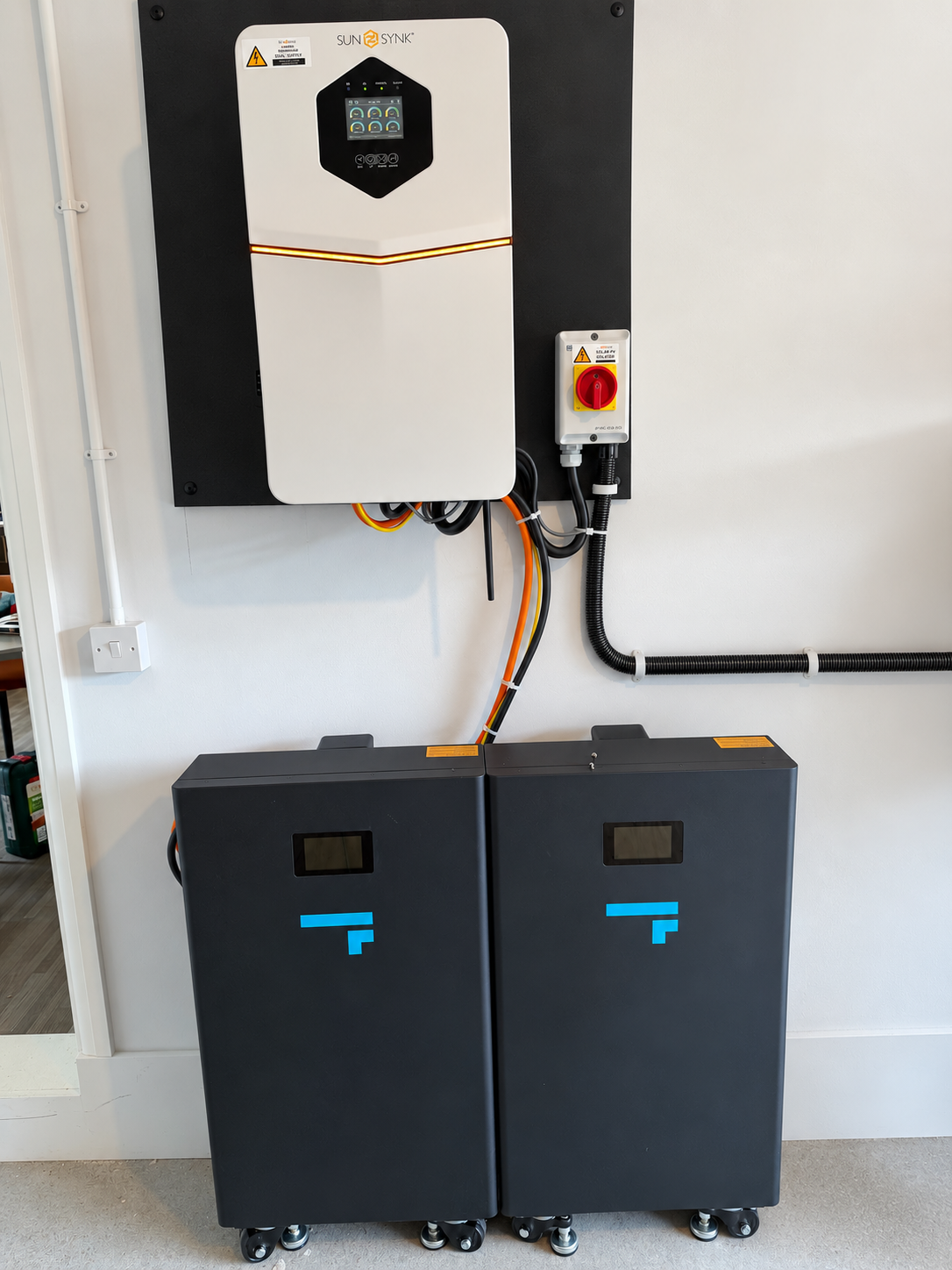
Panel layout and inverter design. Count the total installed capacity and estimated annual generation, not just the number of panels. A 485 W panel has a different rating from a 400 W panel. Inverter capacity, shade management and available electrical connections all affect the design.
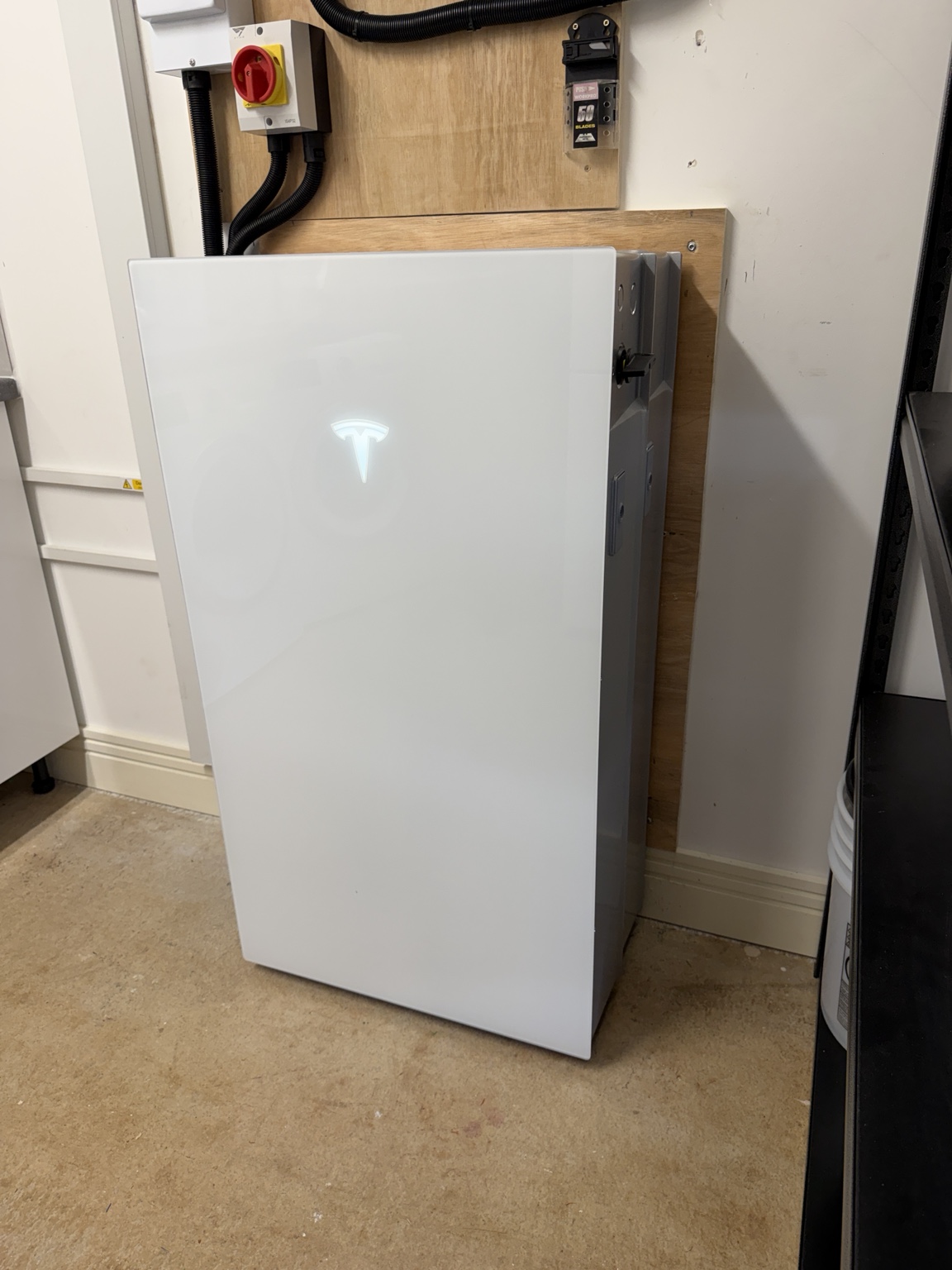
Battery and backup requirements. A battery’s advertised capacity is not always its usable capacity. Its charge/discharge power matters too. Keeping selected circuits running during a power cut requires an explicitly designed backup arrangement; it is not included simply because a battery is fitted.
What do kWp and kWh mean?
kWp describes the array’s rated peak power under test conditions. kWh measures energy generated, stored or used. Ten 485 W panels form a 4.85 kWp array. They do not generate 4.85 kWh every hour throughout the day, and a 10 kWh battery does not necessarily deliver 10 kW of power.
A transparent example of annual savings
Here is an illustration, not a forecast for your roof. Assume an array generates 4,000 kWh a year, you use 40% directly at home, bought-in electricity costs 27p/kWh and eligible exports earn 12p/kWh. These tariff figures are assumptions, not an offer currently available to every customer.
| Calculation | Illustrative annual value |
|---|---|
| 1,600 kWh used at home × 27p | £432 avoided electricity purchases |
| 2,400 kWh exported × 12p | £288 export income |
| Total before maintenance and other costs | £720 |
At an assumed £7,600 installation cost, £720 a year gives a simple payback of about 10.6 years. That arithmetic excludes financing, maintenance, inverter replacement, degradation and future tariff changes. A shaded roof, lower export rate or different daytime usage could substantially change it. A battery requires a separate calculation including losses and the export income you give up.
Solar costs and VAT in Scotland
Under HMRC’s published guidance, qualifying residential solar and battery installations benefit from zero-rated VAT until 31 March 2027, with a 5% rate scheduled thereafter. Eligibility and the treatment of associated works matter; supply-only purchases are not automatically covered. Confirm the VAT treatment on your quotation.
How we help you compare the options
Our solar PV assessment looks at the property, electricity use, roof constraints and relevant permissions. We can compare solar alone with battery storage and explain the assumptions behind each estimate. Existing owners can discuss servicing and performance checks.
Frequently asked questions
Does solar work in East Lothian’s winter? Solar can generate in daylight, including cloudy conditions, but winter output is much lower than summer. Annual savings should use a site-specific generation estimate.
Is the biggest system always the best? No. Roof suitability, demand, export arrangements, budget and grid limits should determine the design.
What should I send for an initial estimate? Your postcode, annual electricity consumption, roof photographs, details of existing equipment and any plans for an EV or heat pump are a useful starting point.
Planning an energy upgrade in Edinburgh, East Lothian or Central and East Scotland? Tell Renew-Able Solutions about your property and we can assess the options around your energy use, equipment and budget.