Solar panel output is not a single fixed number. It depends on the size of the system, the property’s location, roof direction and pitch, shading, equipment selection and local weather. A properly designed proposal should therefore include a generation estimate for the actual property rather than a generic national figure.
Renew-Able Solutions designs and installs MCS-certified solar PV systems across Edinburgh, East Lothian and wider Scotland. This guide explains the measurements used in solar proposals, what affects generation and how we estimate the likely annual output of a system.
The quick answer
The maximum rated power of a solar PV system is stated in kilowatt peak (kWp), while the electricity it generates over time is measured in kilowatt-hours (kWh). A system’s kWp rating does not tell you exactly how many kWh it will produce each year. That requires a property-specific calculation.
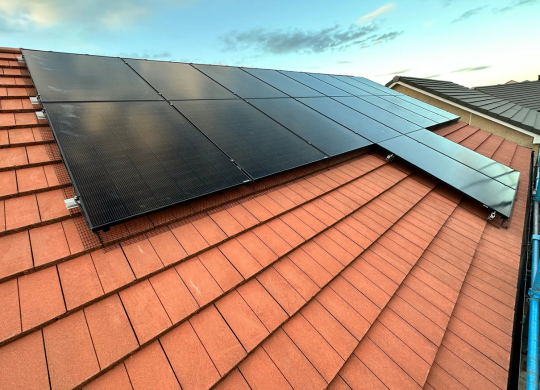
For example, ten 450-watt panels have a combined rated capacity of 4,500 watts, or 4.5kWp. Their annual generation will vary according to the roof, location, shading and system losses. It should not be estimated simply by multiplying 4.5kWp by the number of hours in a year.
kW, kWp and kWh explained
- Watt (W) and kilowatt (kW): units of power. One kilowatt equals 1,000 watts.
- Kilowatt peak (kWp): the rated capacity of a solar PV system under standard test conditions.
- Kilowatt-hour (kWh): a unit of energy. Electricity bills, solar generation and battery capacity are commonly discussed in kWh.
A higher-wattage panel can provide more rated capacity in the same number of roof positions, but panel wattage alone does not determine which system is best. Panel dimensions, roof layout, shading, inverter design, warranty and long-term suitability all matter.
What affects solar panel generation in Scotland?
Location and available sunlight
Solar panels generate electricity from daylight and continue working in cloudy conditions, although output is lower when solar irradiance is reduced. Generation also changes throughout the year: longer summer days normally produce much more electricity than short winter days. Location-specific solar data is therefore essential.
Roof direction and pitch
A well-positioned south-facing roof can deliver strong annual generation, but east- and west-facing roofs can also be very effective. An east-west layout may spread production across more of the day, which can suit homes that use electricity in the morning and evening. Read our guide to south-facing and east-west solar panels for a fuller comparison.
Shading
Trees, chimneys, dormers, neighbouring buildings and roof features can reduce generation at different times of the day or year. We assess shading during the survey and account for it in the design. Optimisers or alternative string layouts can help in the right circumstances, but they do not create extra sunlight and are not automatically required on every roof.
Panel and inverter design
The panels, inverter, electrical layout and cable routes must work as a complete system. Inverter sizing, string design, module compatibility and any export limit agreed with the Distribution Network Operator can all affect how the system operates. A larger panel array may sometimes be paired with a lower AC inverter rating where the design and expected generation profile support it.
Temperature, dirt and system availability
Solar PV modules can become less efficient as their temperature rises, even on bright days. Dirt, bird fouling, leaves, snow, equipment faults and periods when the system is switched off can also reduce generation. Panels should be inspected safely from ground level or by a competent professional; homeowners should not climb onto a roof or pressure-wash an array.
How Renew-Able Solutions estimates annual generation
We begin with the property and the customer’s objectives, not a standard panel package. Our survey and design process considers:
- available roof or ground area and the proposed panel layout;
- orientation, pitch and location;
- shading from nearby objects and roof features;
- panel, inverter and electrical-system characteristics;
- expected system losses and any grid export constraint;
- the customer’s annual and seasonal electricity use;
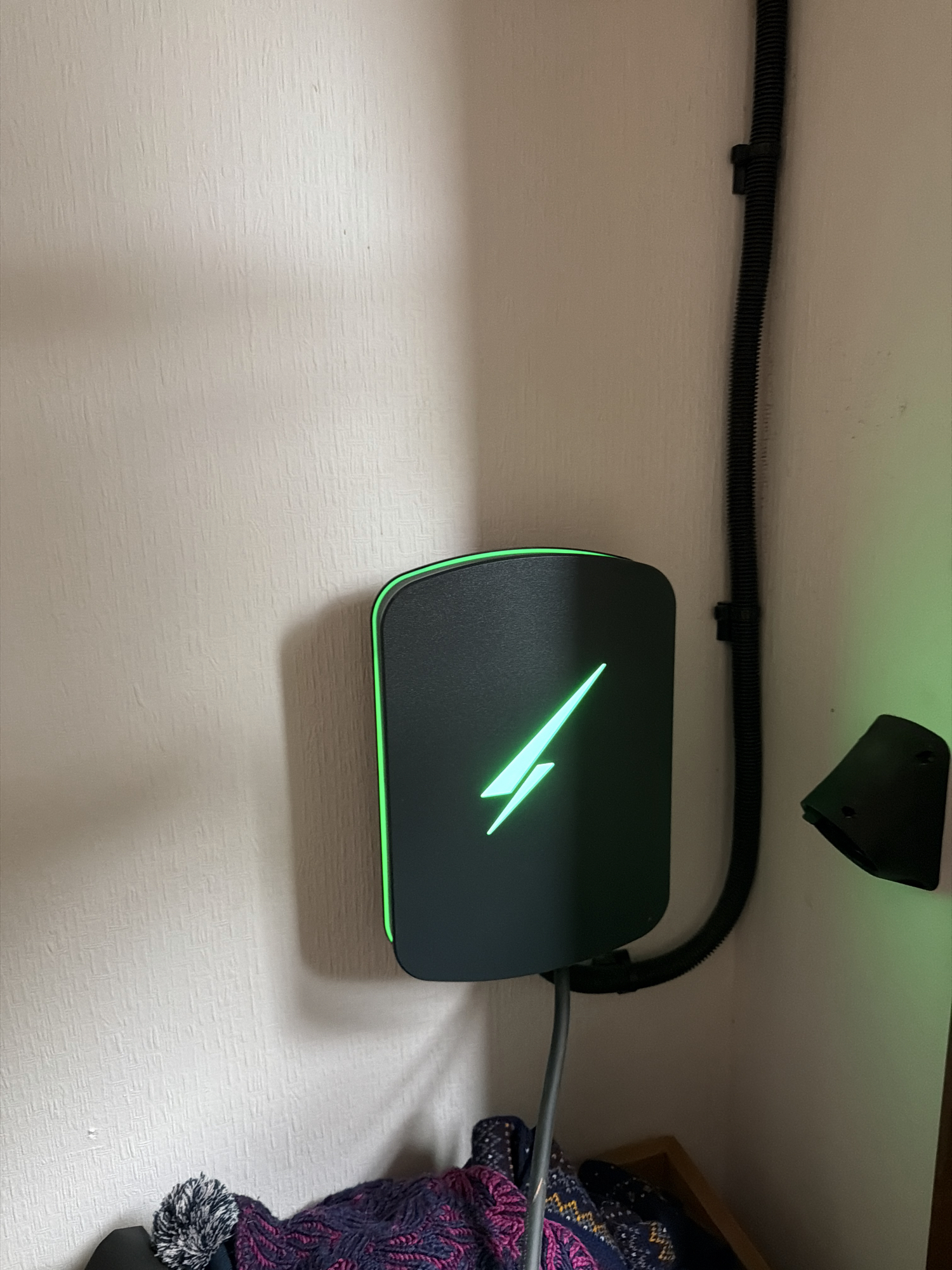
- planned loads such as an electric vehicle or heat pump; and
- whether battery storage would help increase self-consumption or provide another benefit.
The proposal explains the generation estimate and its assumptions. Tools such as the European Commission’s PVGIS calculator provide location-specific solar data, while the final MCS documentation records the estimate prepared for the designed system. Actual generation will vary with weather, system condition and operating circumstances.
Does a battery increase solar generation?
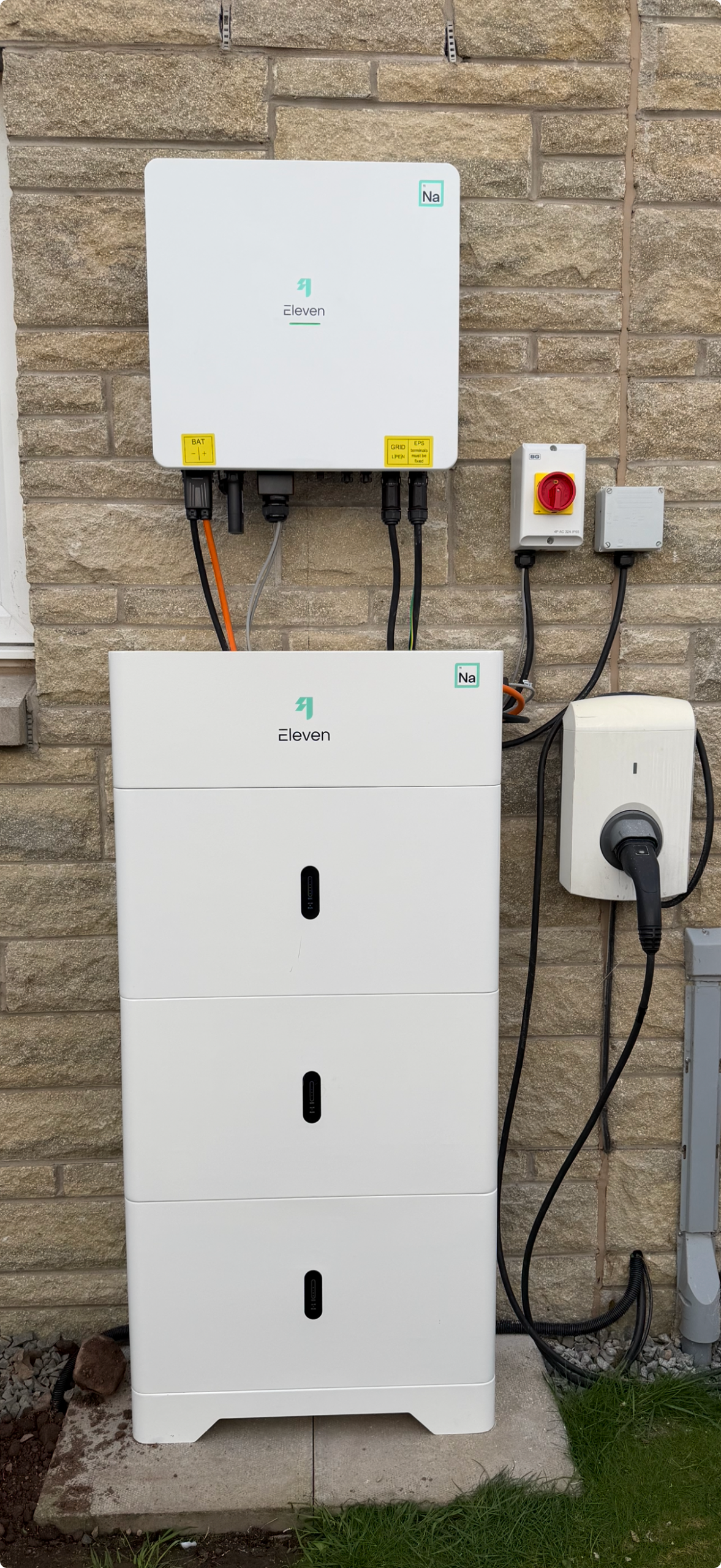
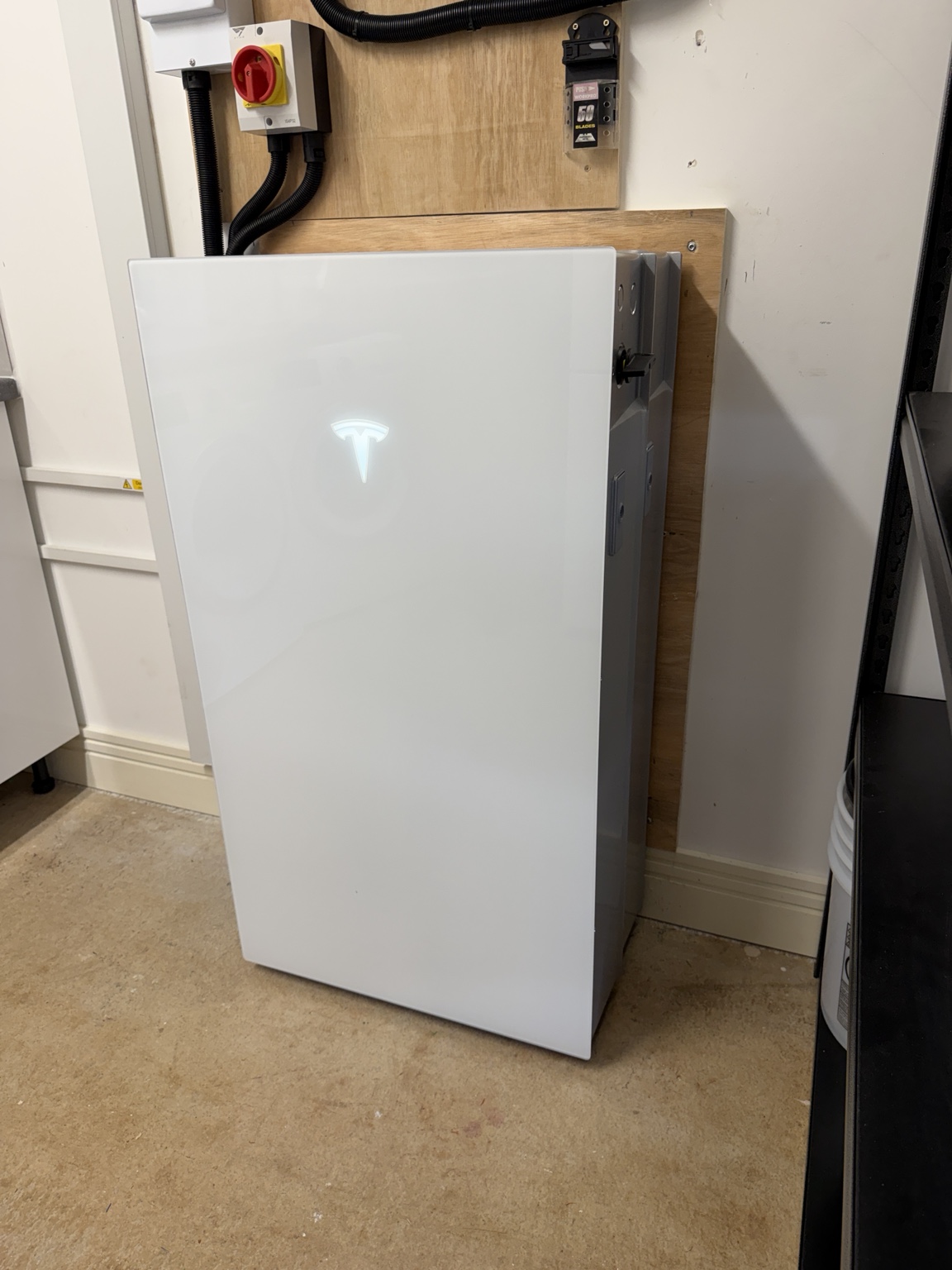
No. A battery does not make the panels generate more electricity. It stores energy that would otherwise be exported or unused so it can be used later. The value of a battery depends on the home’s consumption pattern, available solar surplus, tariff, desired backup capability and the way the system will be operated.
We can model solar PV and battery storage together and explain the assumptions separately, without promising a fixed saving or payback period.
How can I monitor actual solar output?
Most modern inverters provide an app or online portal showing live power, daily generation and historical energy production. Where a compatible battery or energy meter is installed, the portal may also show household consumption, battery charging, grid import and export.
Compare performance over suitable periods rather than judging the system from a single cloudy day. If generation changes unexpectedly or a fault appears, check the inverter or monitoring app and contact the installer. Renew-Able Solutions also provides solar PV and battery servicing for existing systems.
Frequently asked questions
Do solar panels work on cloudy days?
Yes. Solar panels use daylight rather than heat, so they still generate electricity when it is cloudy. Output will normally be lower than during strong, direct sunshine.
Will a north-facing roof work?
It may be technically possible, but expected generation is usually lower and the result depends heavily on roof pitch, shading and the precise orientation. A survey and property-specific generation estimate are needed before deciding whether it represents good value.
Can solar panels power my whole home?
Solar PV can make a substantial contribution to household electricity use, but generation and demand do not always occur at the same time. Winter production is lower, and high-power appliances may use more than the array is generating at that moment. Grid electricity, battery storage or both may still be required.
Are the highest-wattage panels always best?
No. Higher power can be useful where roof space is limited, but the best choice is the panel and system design that suits the available area, electrical configuration, shading, budget and long-term requirements.
Get a property-specific solar estimate
Renew-Able Solutions is an MCS-certified installer serving Edinburgh, East Lothian and wider Scotland. We assess the property, design the array and provide a clear generation estimate before installation.
Explore our solar PV installation service or contact our team to arrange a survey and quotation.