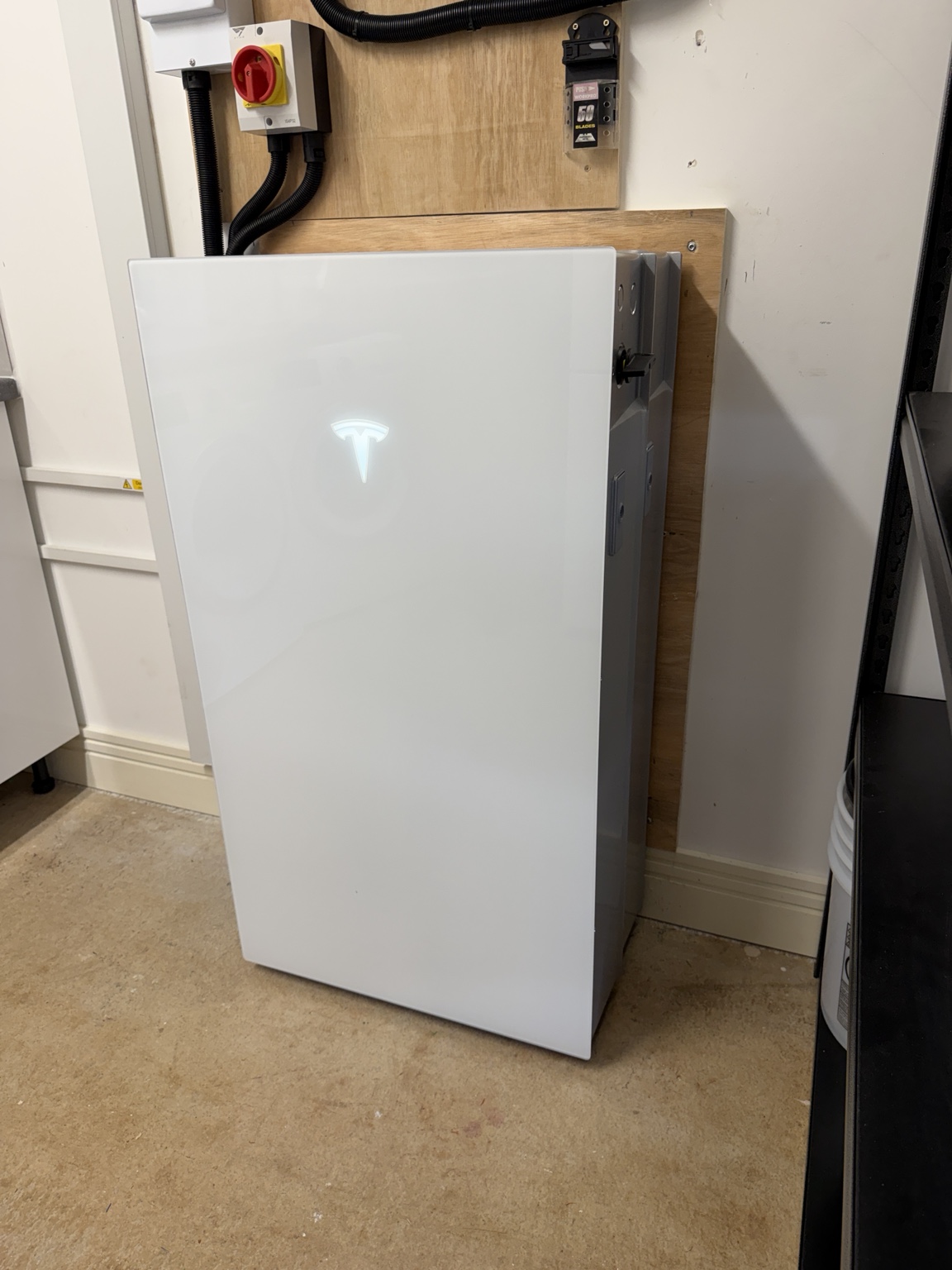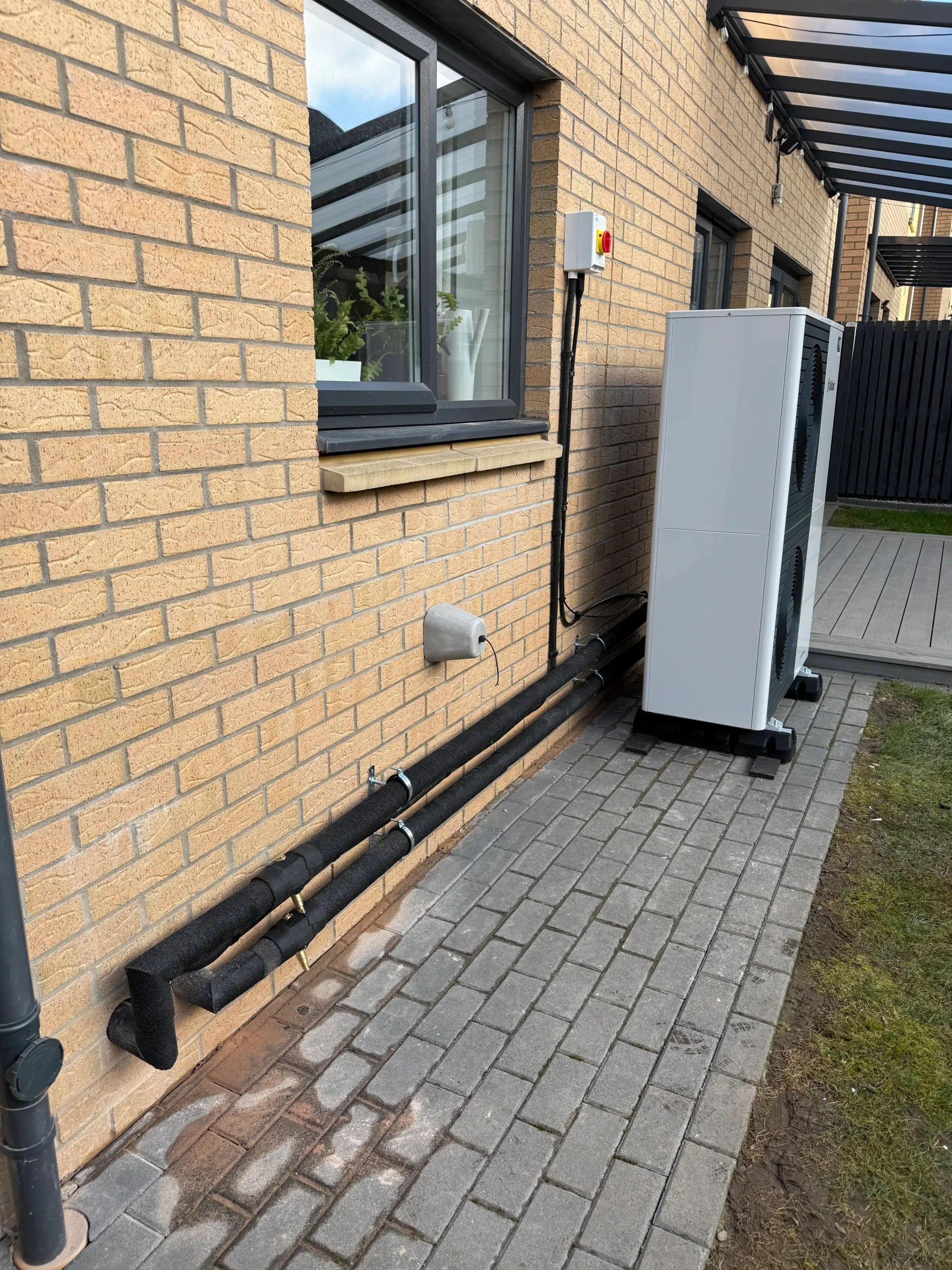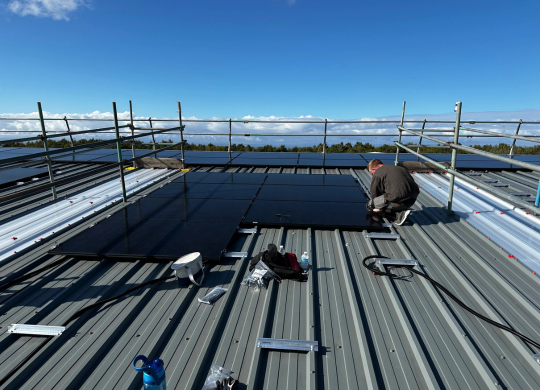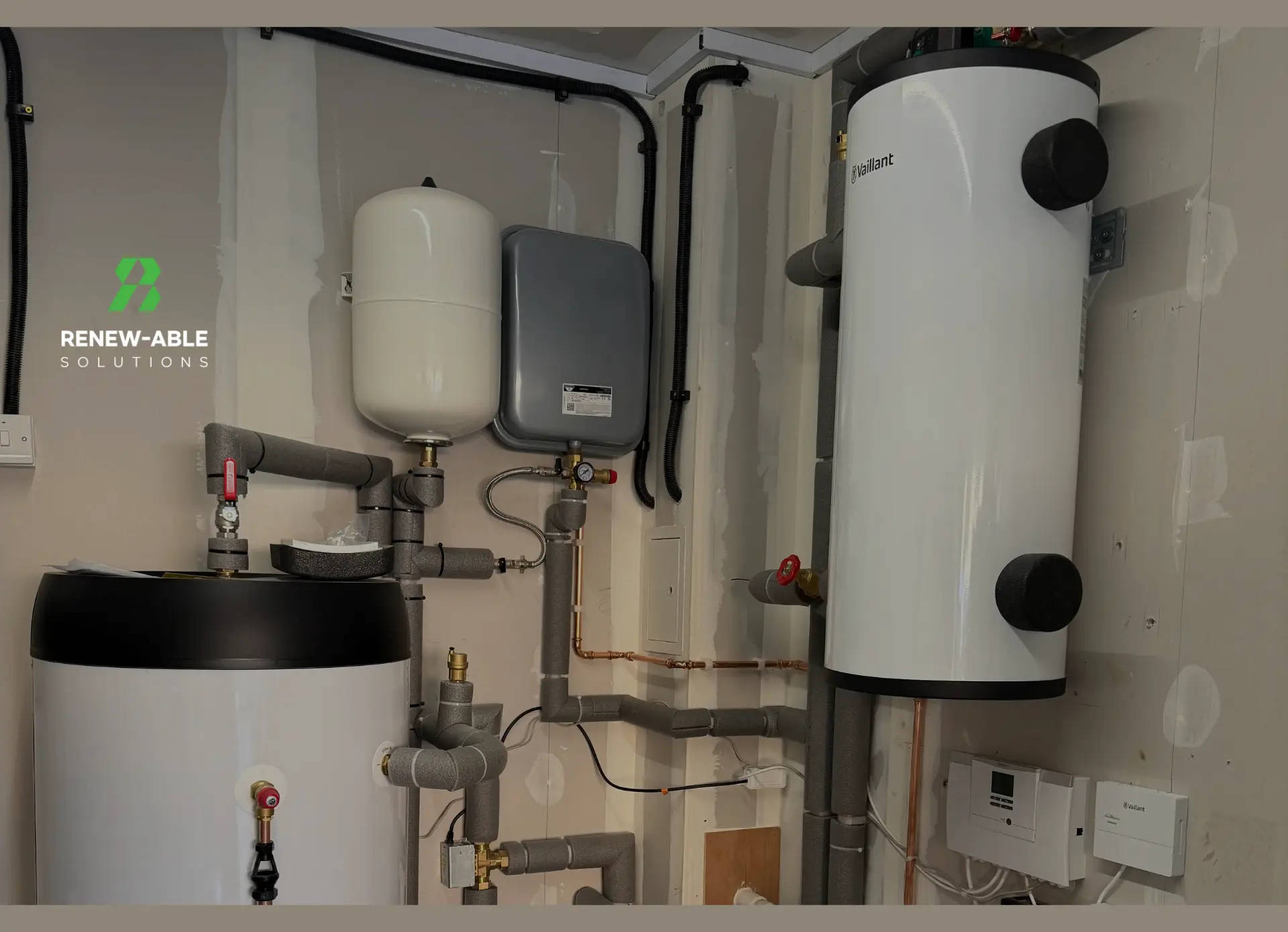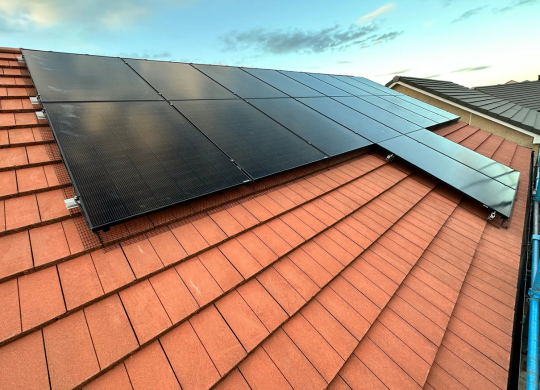
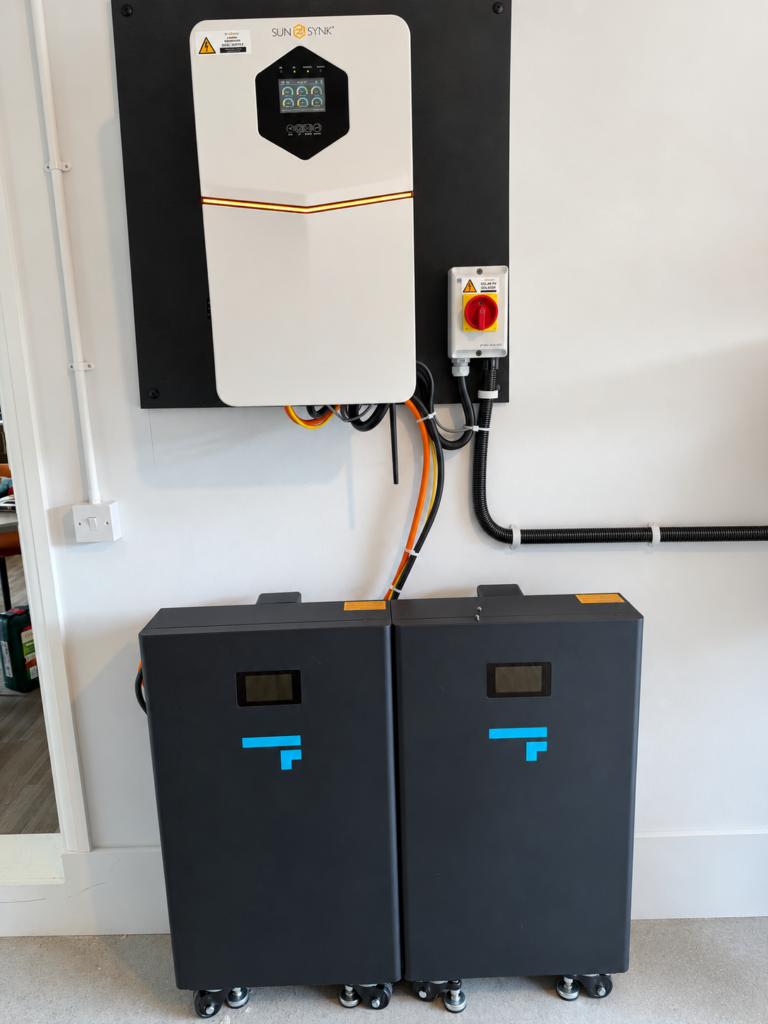
This home battery installation in Inverness pairs a Sunsynk 8kW hybrid inverter with two Fogstar 16.1kWh batteries. Renew-Able Solutions has installed the inverter and batteries, providing approximately 32.2kWh of nominal storage. Solar PV is the next phase, once scaffolding is ready.
The battery and inverter form the heart of a system designed to reduce reliance on expensive daytime electricity. We will add solar PV panels once the scaffolding is in place. The customer can then combine low-cost overnight charging with renewable electricity from the roof.
Inverness project specification: Sunsynk inverter and Fogstar batteries
The first phase of the project includes:
- One Sunsynk 8kW hybrid inverter
- Two Fogstar 16.1kWh batteries
- Approximately 32.2kWh of total nominal battery capacity
- A neat, accessible installation ready for the future solar PV array
A hybrid inverter manages the flow of electricity between the grid, batteries, solar panels and the home. With commissioning complete and a suitable tariff active, the inverter and batteries can support off-peak charging before the solar panels are installed.
How much of a home’s electricity use can a 32kWh battery cover?
Every home uses energy differently, but 32.2kWh is a substantial amount of storage for a domestic property. For many households, it can cover a large proportion of a typical day’s electricity use, including cooking, lighting, appliances and home entertainment.
The system’s real-world usable energy will depend on its operating settings, reserve level, conversion losses and the customer’s consumption pattern. Even so, this level of storage gives the household far more flexibility over when it buys electricity from the grid.
Using Intelligent Octopus Go to reduce electricity costs
The customer plans to use Intelligent Octopus Go to charge the batteries during the cheaper overnight period. They can then use that stored energy through the day when standard electricity rates are higher. This EV tariff requires an electric vehicle and a compatible car or charger, alongside a suitable smart meter. Check the supplier’s current eligibility requirements and rates.
Off-peak electricity can cost considerably less than peak-rate power, depending on the tariff and rates available at the time. A well-configured battery can therefore shift a significant amount of grid consumption into the lower-cost window.
The exact saving will vary with tariff rates, household demand, battery settings and system efficiency. The principle is simple: buy more electricity when it is cheapest and use less from the grid when prices are higher.
Adding solar PV to this Inverness battery installation
Our engineers will return once the scaffolding is ready to install the solar PV panels. When the array begins generating, the home will have another valuable source of energy for charging the batteries.
During daylight hours, the system can use solar electricity in the home first, store suitable surplus generation in the batteries and reduce the amount imported from the grid. The household can then use this stored energy later in the evening, after solar generation has fallen.
Smart tariff charging and solar PV work particularly well together:
- In winter or poor weather, the batteries can charge using low-cost overnight electricity.
- On brighter days, solar generation can supply the home and recharge the batteries.
- The inverter can coordinate the different energy sources automatically.
- The customer gains greater control over when and how grid electricity is used.
Why choose a modular battery system?
A modular installation allows battery capacity to be matched more closely to the property’s demand and future plans. Larger-capacity systems can be especially useful for homes with high electricity consumption, electric heating, an EV charger or a desire to maximise smart tariff time-shifting.
Correct system design remains essential. Battery capacity, inverter output, solar generation, electrical demand, installation location and network requirements all need to be considered together. Simply installing the largest battery available will not always produce the best return.
Professional battery and solar installation in Scotland
At Renew-Able Solutions, we design and install solar PV and battery storage systems around the way each customer actually uses energy. That includes assessing electricity consumption, roof suitability, tariff options, equipment locations, cable routes and the property’s existing electrical installation.
This home battery installation in Inverness shows how a phased approach can work. First, we install the battery storage and hybrid inverter. Then we add the solar array as soon as roof access is ready. Once complete, the customer will have a flexible system with approximately 32.2kWh of nominal storage. It can make better use of both low-cost off-peak electricity and renewable solar generation.
Home battery questions from Inverness homeowners
Is this a 32kWh or a 32.2kWh battery system?
We use 32kWh as a rounded description. The two Fogstar batteries are rated at 16.1kWh each, giving 32.2kWh of nominal capacity in total. The energy available to household appliances is lower after reserves and conversion losses.
What is the difference between 8kW and 32.2kWh?
The inverter’s 8kW rating describes power: the rate at which electricity can be supplied under the applicable operating conditions. Battery capacity in kWh describes stored energy. Actual output also depends on equipment limits and system settings.
Can a home battery work before solar panels are installed?
Yes. A correctly configured grid-charging system can store electricity bought on a suitable tariff. This project installs the batteries and hybrid inverter first, with solar PV planned for the next phase.
How much will this Inverness installation save?
This case study describes the equipment and intended operation; it does not report measured annual savings. A useful estimate needs the customer’s electricity use, tariff rates, charging losses and expected solar generation. Installation costs and battery wear also matter when assessing payback.
For another Highland installation, explore our EcoFlow PowerOcean battery project in Ballachulish, Glencoe. Existing system owners can also read about our solar PV and battery servicing.
Planning a home battery installation in Inverness?
If you are considering a home battery, solar PV or a combined system, we can help you understand the right capacity and configuration for your property. Contact Renew-Able Solutions for practical advice and a tailored quotation.
Tariff rates and actual savings vary by region, household consumption, equipment settings and energy supplier. Battery capacities quoted are nominal manufacturer figures; usable capacity may be lower.