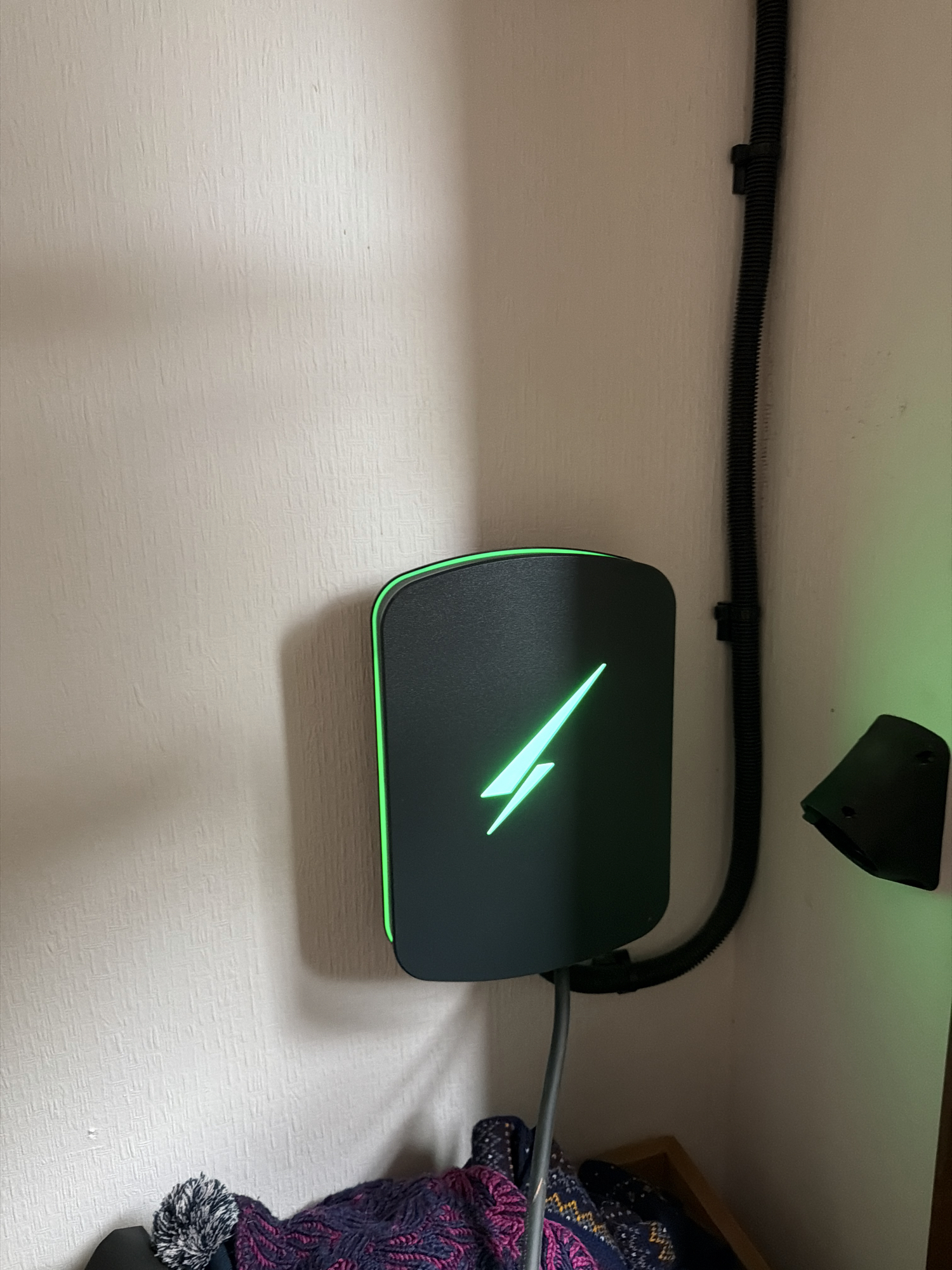
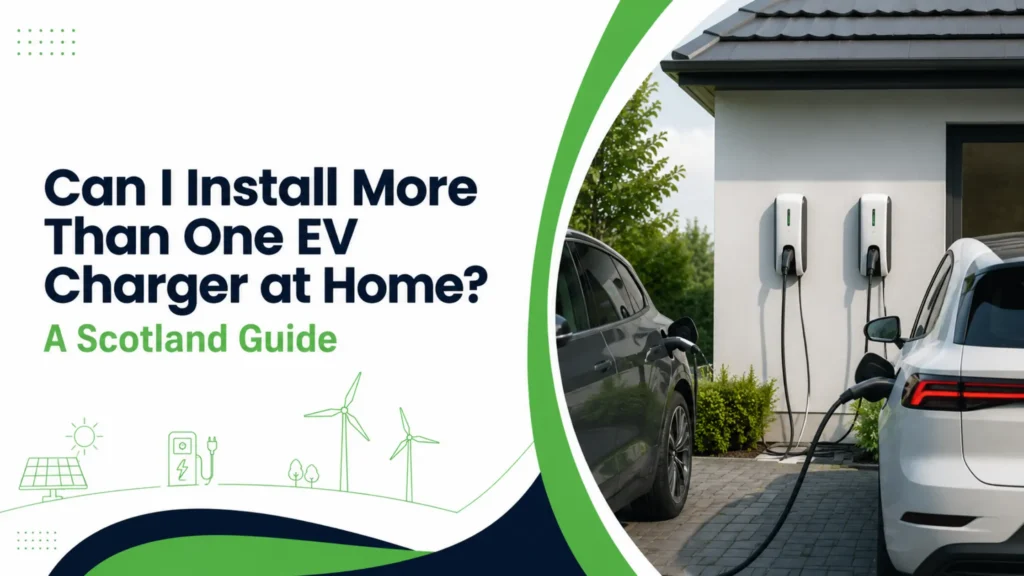
Thinking about two EV chargers at home? Start by checking the available electrical capacity and how the chargers will share it. You can also use our home EV charger comparison to compare equipment and installation extras.
Yes, it is possible to install more than one EV charger at a Scottish home. The important question is not simply how many chargers will fit on the wall, but how much electrical capacity is available and how the chargers will share it safely.
Before specifying two chargepoints, an installer should assess the incoming supply, main fuse, earthing, consumer unit, existing household loads, cable routes, parking positions and the vehicles’ AC charging limits. In Edinburgh, East Lothian and much of Central and Southern Scotland, the relevant distribution network operator is ScottishPower Energy Networks.
Can one home have two EV chargers?
Yes. Two separate chargers can be installed, or a suitable multi-outlet charging system can be used. Either design must prevent the combined demand from exceeding the safe capacity of the property and its electricity supply.
In some homes, both vehicles can charge at the same time at their requested rate. In others, dynamic load management will reduce or share the available power. A supply upgrade is only considered after the existing capacity and the available control options have been assessed.
What must be checked before installing two chargers?
Incoming supply and main fuse
Scottish homes do not all have the same service rating. The cut-out fuse may be rated at 60 A, 80 A, 100 A or another value, and the rating should be confirmed rather than assumed from its appearance. The installer must also consider the property’s maximum demand from heating, cooking, hot water, batteries and other large electrical loads.
Two nominal 7 kW chargepoints could represent a substantial combined load if both run at full output. The vehicles may accept less than the charger rating, but the installation still needs to be designed for its permitted operating conditions.
Consumer unit and protective devices
The installer will check whether the consumer unit has suitable capacity, protective devices and space for the proposed circuits. Depending on the design and manufacturer’s instructions, the work may require dedicated circuits, a separate distribution board or other alterations.
The earthing arrangement, open-PEN protection, RCD protection, cable sizing and route must also comply with the applicable wiring requirements. A spare way in a consumer unit does not, by itself, prove that a second charger can be connected.
Parking positions and cable routes
The design should work with both cars parked in their normal positions without creating trip hazards or relying on cables crossing a public pavement. Charger location, cable length and whether each unit is tethered or untethered should be agreed during the survey.
Do two EV chargers need DNO approval?
EV chargepoints follow the Energy Networks Association process for connecting low-carbon technologies. This is separate from G98, G99 and G100, which relate to generation and export rather than the normal demand created by an EV charger.
A qualified installer should assess the installation and submit the appropriate ENA information. Some compliant installations can be connected and notified to the DNO afterwards; others require an application and confirmation before connection. The route depends on the supply, existing low-carbon technologies and the proposed equipment.
ScottishPower Energy Networks covers Central and Southern Scotland, including Edinburgh and the Borders. SSEN Distribution covers the north of Scotland. The installer should confirm the correct DNO from the property’s MPAN or postcode and handle the required notification or application.
How dynamic load management works
Dynamic load management monitors electricity demand at the property and limits EV charging when necessary to protect the agreed supply capacity. When other loads fall, more power can become available to the vehicles.
With two chargers, the system may divide the available power, prioritise one vehicle or use a schedule, depending on the charger models and their control platform. Do not assume that any two smart chargers can communicate with each other. Product compatibility and the proposed load-management arrangement must be confirmed before purchase.
Renew-Able installs and assesses smart charging options including myenergi Zappi, Hypervolt and Ohme. The appropriate choice depends on the vehicles, tariff, solar or battery system and whether coordinated charging between two units is required. See our EV charging point installation service for more information.
Can solar panels charge two EVs?
Yes, but the available solar surplus has to be shared with the rest of the home. If two EVs request more power than the solar array is producing, the charger controls decide whether to reduce charging, import from the grid or prioritise one vehicle.
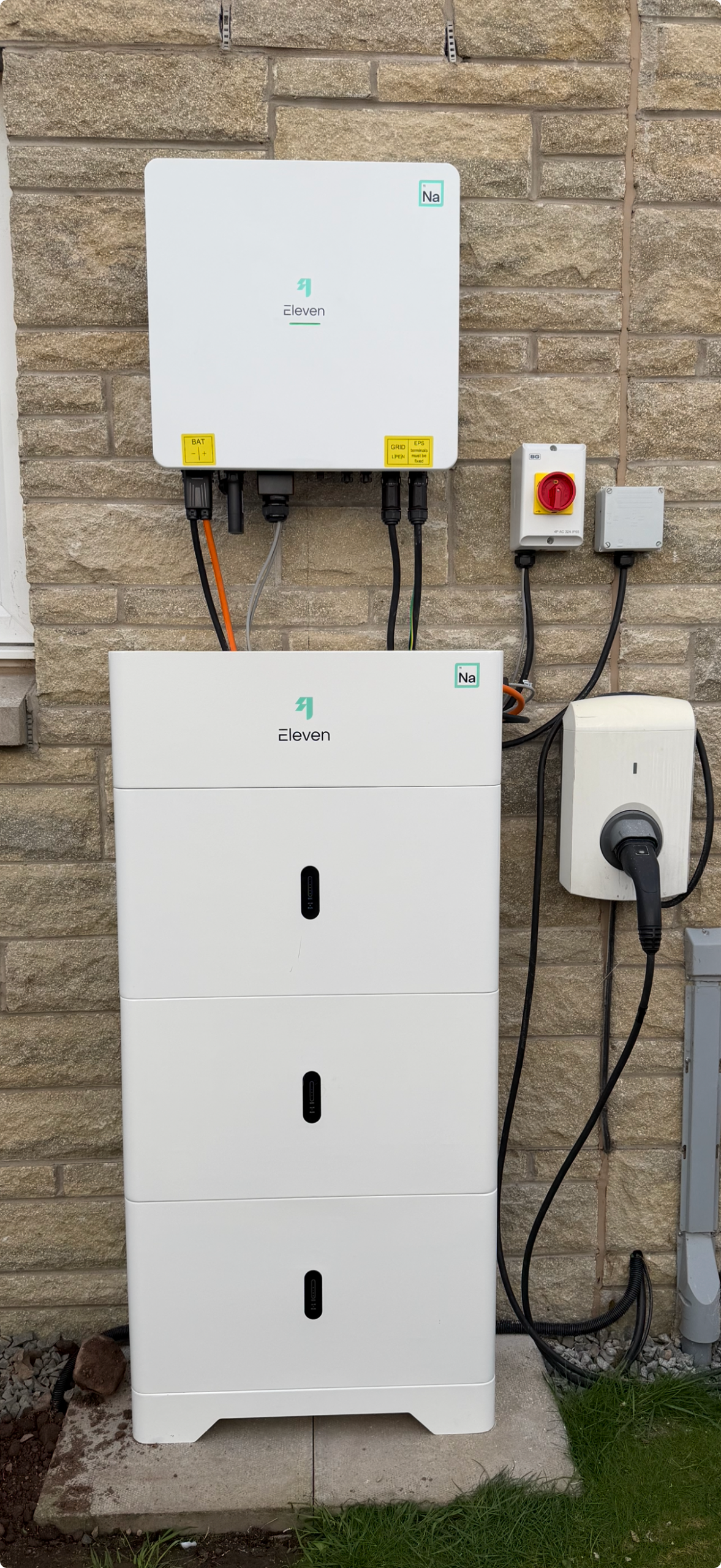
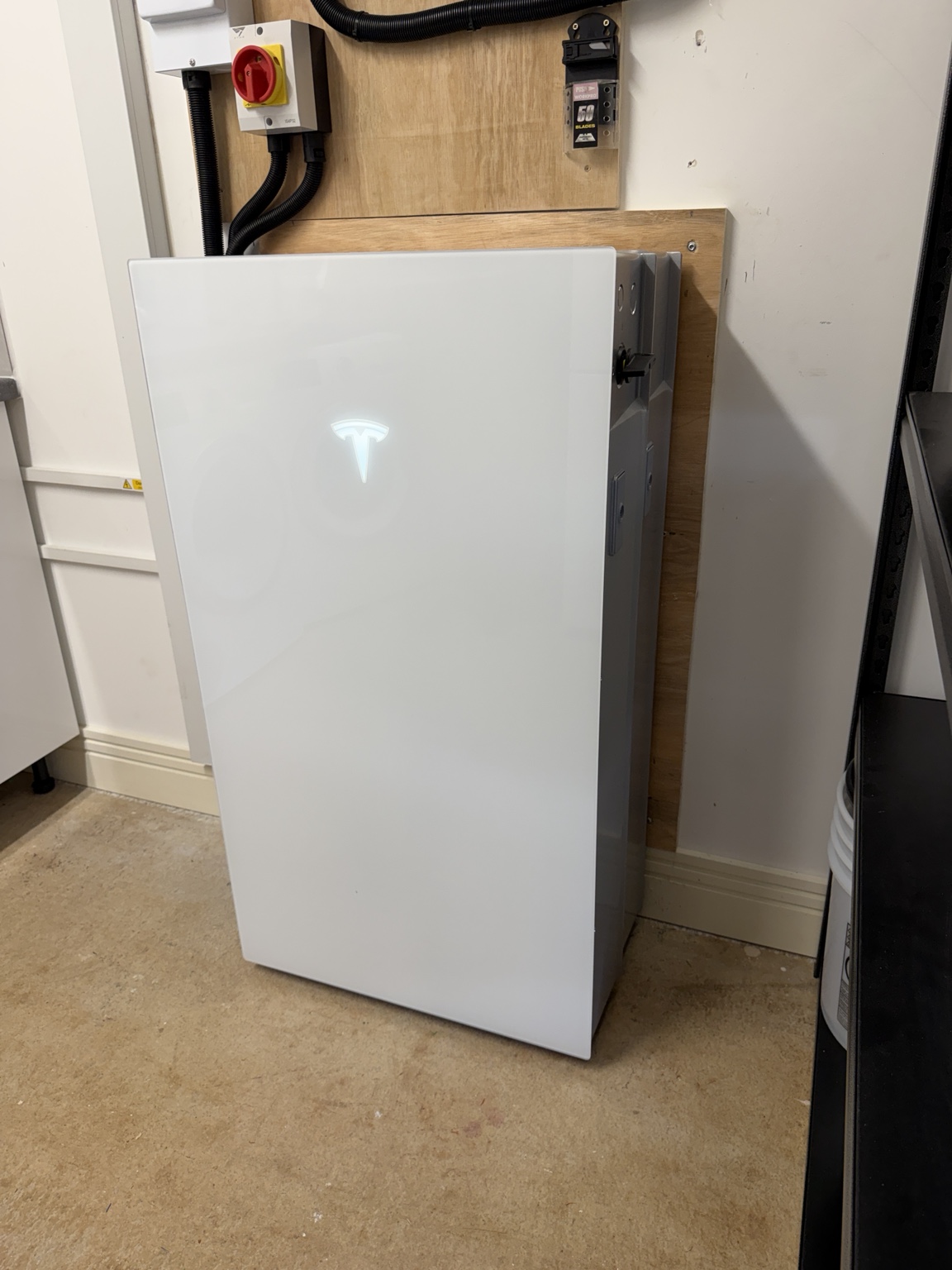
Solar charging behaviour is model-specific. Confirm that the selected chargers, monitoring equipment and control platform can coordinate two vehicles in the way you expect. A home battery adds another controllable load, so the charging strategy should consider battery charging and discharging as well as EV demand.
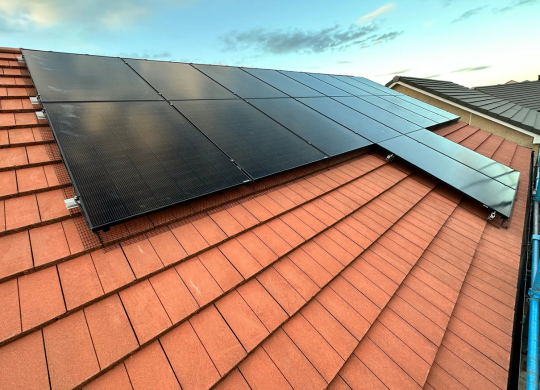
If solar generation is part of the plan, review our solar PV installation service alongside the EV design.
Are EV charger grants available in Scotland?
Grant eligibility changes and should be checked when the quotation is prepared. Current UK schemes include support for eligible renters and flat owners with private off-street parking, and a separate scheme for eligible households installing an approved cross-pavement solution for on-street parking.
Homeowners in houses with an ordinary private driveway should not assume that a domestic chargepoint grant is available. Landlords and workplaces have separate schemes and conditions. Check the latest GOV.UK eligibility rules before relying on grant funding.
Do you need planning permission in Scotland?
Scottish permitted development rights can cover wall-mounted EV charging outlets in qualifying parking areas, but conditions and exclusions apply. These include restrictions relating to size and proximity to a road, and additional controls may apply to listed buildings or sensitive locations.
Where there is any doubt, confirm the position with the local planning authority before installation. Planning permission and DNO notification are separate requirements.
What affects the installed cost?
There is no reliable standard price for a two-charger installation. The quotation depends on:
- the charger models and cable options;
- cable lengths, containment and groundworks;
- consumer-unit or distribution-board alterations;
- dynamic load-management equipment;
- earthing and protective-device requirements;
- DNO requirements or a service alteration; and
- solar and battery monitoring integration.
A site survey and load assessment are needed before a fixed quotation can be provided. Renew-Able carries out EV charger surveys across Edinburgh, East Lothian and the wider Central and East Scotland service area.
Questions to ask before ordering two chargers
- Has the service fuse rating and earthing arrangement been confirmed?
- What maximum demand has been allowed for the rest of the property?
- Can the two selected chargers coordinate load sharing?
- What happens when both vehicles request maximum power?
- Who will submit the ENA/DNO notification or application?
- How will solar PV and any home battery interact with EV charging?
The right design may use two chargers, one charger used alternately between vehicles, or a coordinated multi-outlet system. The survey should identify the safest and most practical option rather than assuming two independent 7 kW units will always run at full output.
Explore Renew-Able’s complete renewable-energy services or request a survey for a two-EV household.
Frequently asked questions
Can I install two 7 kW EV chargers on a 100 A home supply?
Possibly, but the fuse rating alone is not enough to decide. The installer must assess maximum demand, earthing, existing electrical loads and the proposed load-management system. The chargers may need to share the available capacity.
Do two home EV chargers need DNO approval?
The installation must follow the ENA low-carbon technology connection process. Some installations can be notified after connection, while others require an application before connection. The installer should confirm and complete the correct route with the local DNO.
Can both EV chargers run at full power simultaneously?
Only when the supply, installation and vehicles can support the combined demand. Dynamic load management may divide or reduce charging power when the home approaches its permitted capacity.
Do I need planning permission for two EV chargers in Scotland?
Permitted development rights may cover wall-mounted chargers in qualifying parking areas, but conditions and exclusions apply. Check with the local planning authority for listed buildings, sensitive locations or any installation that may fall outside the permitted limits.
Can two EV chargers use surplus solar power?
Yes, when the chargers and monitoring system support coordinated solar charging. How surplus is divided or prioritised is product-specific, and the design should also account for household demand and any home battery.