Home battery arbitrage means charging a battery when electricity is cheaper and using that stored energy when buying from the grid would cost more. You can do this with a suitable battery and tariff even without solar panels. The saving depends on the price gap, energy losses and how much expensive electricity you actually avoid.
How it works during a normal day
Imagine your tariff has a cheap overnight window. The battery charges during that period, then supplies some of your household demand after the cheap rate ends. If the battery is empty, reaches its reserve or cannot meet the full demand, the grid supplies the difference. You continue to pay the standing charge.
Energy Saving Trust’s battery guide explains that storage can be used with solar, a time-of-use tariff, or both. The key decision is whether its likely lifetime benefit justifies the installed cost for your home.
A worked example that includes charging losses
Assume you want to deliver 8 kWh from the battery to your home during expensive hours. For this illustration, the cheap rate is 8p/kWh, the avoided daytime rate is 28p/kWh and overall grid-to-battery-to-home efficiency is 90%. These are example inputs, not a live tariff or a claim about a particular battery.
| Step | Calculation | Result |
|---|---|---|
| Electricity bought to deliver 8 kWh | 8 ÷ 0.90 | 8.89 kWh |
| Overnight charging cost | 8.89 × 8p | About £0.71 |
| Daytime grid cost avoided | 8 × 28p | £2.24 |
| Gross operating saving | £2.24 − £0.71 | About £1.53 per day |
Repeating that result on 250 days gives roughly £382 a year; on 365 days, roughly £558. Those are arithmetic scenarios, not forecasts. They exclude installation and finance costs, battery wear, maintenance, any additional standby use not captured by the efficiency assumption, and changes to tariffs or demand.
The useful break-even calculation
Effective stored electricity cost = charging rate ÷ round-trip efficiency. At 8p and 90%, the energy cost is about 8.9p for each kWh delivered. There must be enough value above that to justify cycling the battery and, ultimately, paying for the equipment. A tiny rate difference may not be worthwhile.
For another perspective, an assumed £5,000 battery installation saving £400 a year has a simple 12.5-year payback before other costs. That is why a large daily percentage saving is not enough information on its own. Ask for a lifetime comparison with realistic changes in capacity, tariffs and replacement costs.
Five checks that determine your result
Usable capacity: a reserve for backup and manufacturer operating limits reduce the energy available for daily shifting. Size the system around demand that occurs outside cheap periods, not your total daily consumption alone.
Power limits: capacity is measured in kWh, while charge and discharge speed is measured in kW. A short cheap window or a high evening load can limit the saving even if the battery has plenty of capacity.
Tariff eligibility: some low-rate offers require a qualifying EV, charger, heat pump or control arrangement. Check your exact equipment, smart-meter requirements and the full tariff terms. Do not assume an EV rate is available to a battery-only household.
Whole-bill cost: compare the expensive rate and standing charge too. A cheaper overnight period can be outweighed by daytime purchases if the battery cannot cover them.
Warranty and control: check permitted use, throughput limits and export conditions. Decide which system controls charging so that a supplier service, inverter schedule and home automation do not issue conflicting instructions.
How solar changes the calculation
With solar PV, charging from spare generation can avoid later grid purchases. But exported solar has a value too. Compare the export income you give up with the value of the energy delivered after storage losses. Charging fully overnight may leave too little room for the next day’s sunshine.
This is why schedules should change with the season and household routine. A sensible winter strategy may look different from a bright summer day. Automated planning can help, but it still relies on correct settings and reliable data.
How Renew-Able Solutions assesses battery arbitrage
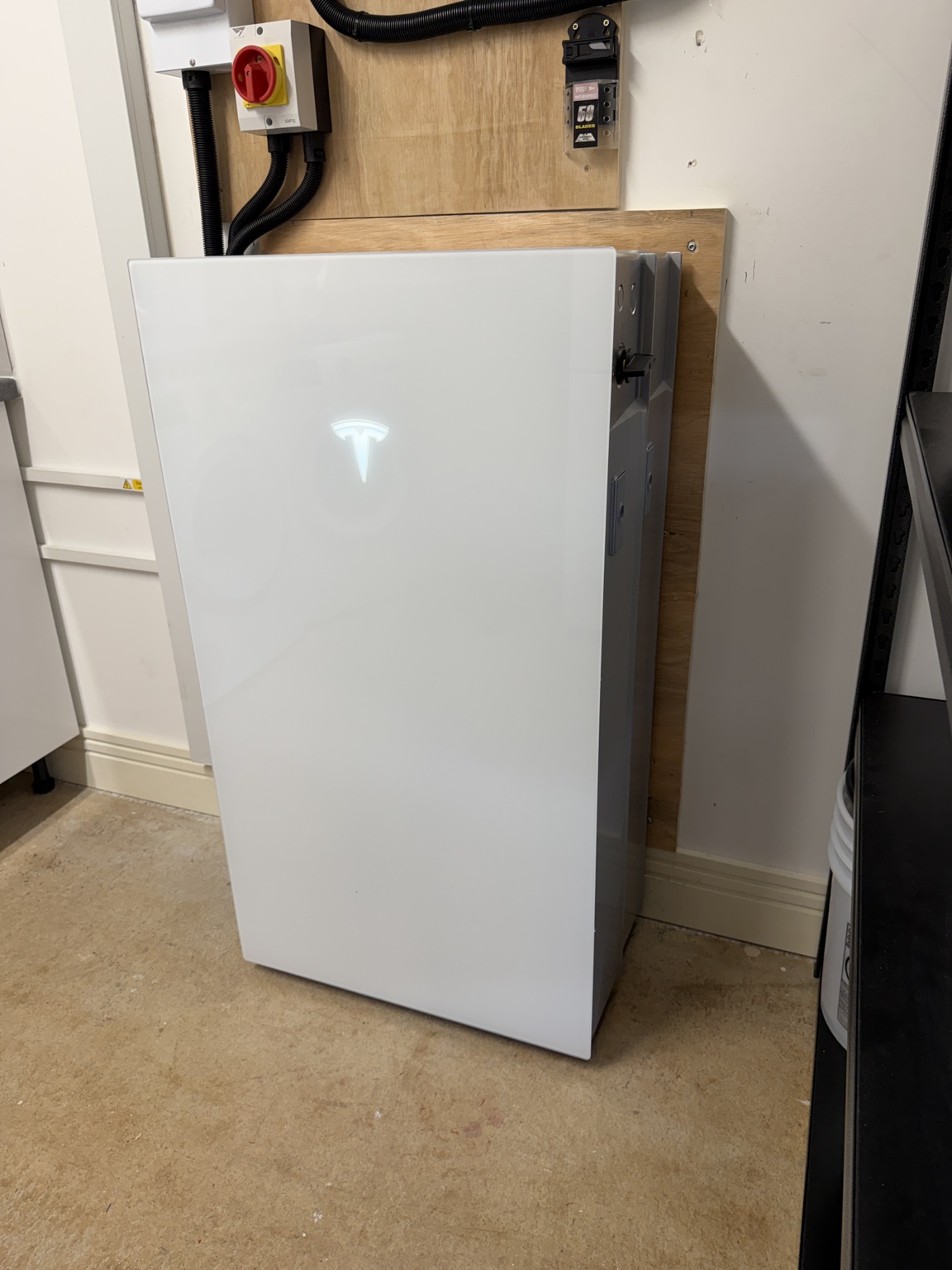
For battery storage projects in Edinburgh, East Lothian and wider Central and East Scotland, we review the existing electrical system, usage, tariff, equipment compatibility and installation location. Our North Berwick Powerwall case study also shows why installation and aftercare matter alongside the headline specification.
Frequently asked questions
Do I need solar? No, provided the battery supports grid charging and your tariff and installation permit the intended use.
Can I sell stored grid electricity? Only where your export contract, metering, equipment and network permissions allow it. An export payment for solar does not automatically permit every form of battery trading.
Is the saving guaranteed? No. Start with measured consumption and compare a conservative scenario before committing to the investment.
Planning an energy upgrade in Edinburgh, East Lothian or Central and East Scotland? Tell Renew-Able Solutions about your property and we can assess the options around your energy use, equipment and budget.