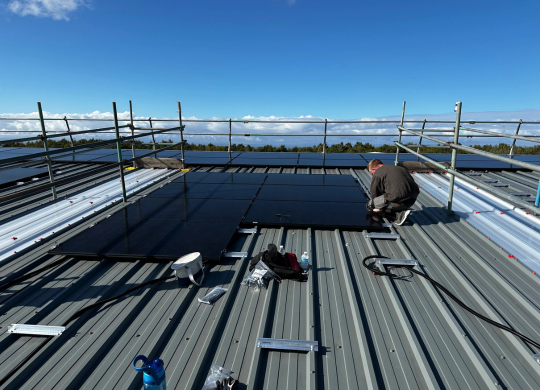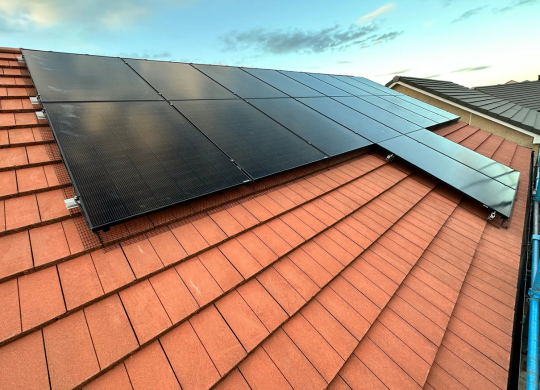
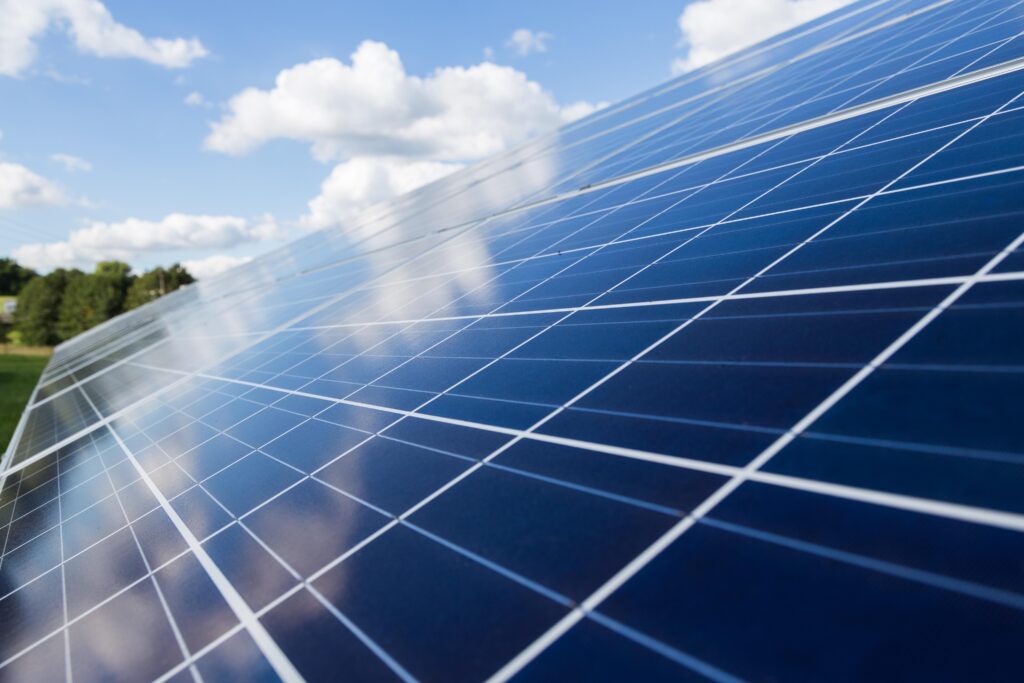
Solar panels still generate electricity in shade and cloudy conditions, but shading can reduce their output. The size of the reduction depends on what is casting the shade, which part of the module is affected, the time of day and year, and how the panels, strings and inverter are designed.
There is no reliable universal percentage for “shading loss”. A property-specific survey and generation estimate are needed. Renew-Able Solutions assesses roof layout, obstructions and seasonal shading when designing MCS-certified solar PV systems across Edinburgh, East Lothian and wider Scotland.
Do solar panels work in the shade?
Yes. Photovoltaic panels use daylight, so they can produce electricity without direct sunshine. However, lower solar irradiance means lower output. A panel under a dense shadow from a chimney will behave differently from one under light cloud or brief early-morning shade.
Shade should therefore be assessed over time. A shadow that crosses one panel for 20 minutes in a winter morning is not the same design issue as a tree or neighbouring building shading half the array around midday for much of the year.
What can cause solar-panel shading?
- Roof features: chimneys, dormers, vents, aerials and parapets.
- Nearby buildings: neighbouring houses, extensions, walls and taller structures.
- Trees and vegetation: including seasonal leaf growth and future growth.
- Other parts of the array: rows on a flat roof or ground-mounted system can shade one another if spacing and tilt are not designed correctly.
- Temporary coverage: leaves, bird fouling, snow or accumulated debris.
- Changing conditions: the sun’s position changes through the day and between summer and winter.
Cloud is better described as reduced irradiance across a wider area rather than a fixed roof obstruction. It affects generation, but it does not create the same electrical mismatch as a hard shadow covering only part of one module or string.
How does shade affect a solar PV system?
Most conventional solar arrays connect groups of modules in series strings. The same current passes through modules in a string, so a module operating under different conditions can create mismatch. The effect on the whole system depends on the panel’s internal bypass diodes, the pattern of the shade, the string arrangement, the inverter’s maximum-power-point trackers (MPPTs) and its control behaviour.
Modern solar modules normally contain bypass diodes that allow current to pass around sections of cells when required. This can protect the module and limit some losses, but it does not make shading irrelevant. A bypassed section contributes less or no power while it is bypassed.
It is therefore inaccurate to say that any shade on one cell will always reduce every panel to zero, or that every shaded array loses a fixed percentage. A proper design calculation is needed for the specific system.
How we assess shading before installation
Shading is considered alongside the roof condition, available area, orientation, pitch, structural constraints and electrical design. Depending on the project, our survey and design process can include:
- a site and roof survey, including drone imagery where suitable;
- identification of chimneys, trees, roof features and surrounding buildings;
- assessment of when shadows are likely to reach the proposed module positions;
- a panel layout designed around unsuitable or heavily shaded areas;
- string and MPPT planning for the selected inverter;
- modelling of expected generation and shading losses; and
- the applicable MCS shade-evaluation and performance-estimate process.
The resulting proposal should explain the generation estimate and the assumptions used. Actual generation will still vary with weather, system availability and changes around the property.
Ways to reduce the effect of shading
1. Improve the panel layout
The simplest solution is often to avoid the worst shade. Moving a panel, leaving a gap around a chimney or using a different roof face can produce a better overall design than filling every available space. Adding a heavily shaded panel does not automatically improve annual generation enough to justify its cost.
2. Design the strings and MPPTs correctly
Where the inverter provides multiple MPPTs, modules on different roof orientations or with materially different operating conditions may be separated where the equipment and string-voltage requirements allow. Parallel strings and unequal strings need careful design; they should not be rearranged using simple rules without checking the inverter and module specifications.
3. Use power optimisers where justified
A compatible module-level optimiser can reduce mismatch losses by allowing an affected module to operate more independently. Optimisers do not remove the shade or increase the panel’s rated power, and they may offer little generation benefit on an unshaded roof.
They also add electronic equipment beneath the array, so compatibility, communications, monitoring, warranty configuration, maintenance access and cost must be considered. Read our practical guide: Are Tigo optimisers worth it?
4. Consider microinverters for a suitable design
A microinverter converts DC electricity to AC at each module, allowing module-level power conversion and monitoring in compatible systems. This can reduce interaction between differently performing panels, but it changes the electrical architecture and introduces more roof-mounted electronics. It should be selected because it suits the complete project, not solely as a response to minor shade.
5. Manage removable obstructions safely
Tree work may help where it is safe, lawful and acceptable to the owner. Conservation restrictions, tree-preservation orders, nesting birds and ownership boundaries may apply, so vegetation should not be cut without the appropriate permission and competent advice.
Does dirt have the same effect as shade?
Dirt, leaves and bird fouling block light and can reduce output, but the severity varies. Many pitched arrays receive useful natural washing from rainfall; an automatic annual cleaning schedule is not necessary for every system.
Check performance and inspect safely from ground level. Do not climb onto the roof or pressure-wash the modules. Where contamination is significant, difficult to access or associated with a performance problem, use a competent solar-maintenance provider and follow the module manufacturer’s cleaning instructions. Renew-Able Solutions provides solar PV and battery servicing.
Can optimisers make a roof “shade-proof”?
No. No device can create sunlight that does not reach the panel. Optimisers and microinverters can reduce certain mismatch losses, but a shaded module will still have less solar energy available. Avoiding excessive shade and designing the array properly remain the priorities.
How can I tell whether shading is affecting an existing system?
Look for repeatable reductions at similar times on clear days, differences between comparable strings or modules, and changes that coincide with tree growth or a new obstruction. Inverter and monitoring data can help, but it must be interpreted alongside the roof layout and weather.
Low generation can also be caused by an inverter fault, isolator issue, electrical problem, communications failure or system downtime. Diagnosis should come before assuming that optimisation is the answer.
Frequently asked questions
Will one shaded panel stop the whole system?
Usually not completely. It can reduce string output, but the size of the effect depends on the shade pattern, bypass diodes, string configuration, inverter MPPTs and any module-level electronics.
Are solar panels suitable in cloudy Scotland?
Yes. Solar PV works from daylight and is widely installed in Scotland. Location and weather affect annual generation, so the proposal should use local data and the actual roof design. See how much electricity solar panels can produce in Scotland.
Should every shaded panel have an optimiser?
Not automatically. The design must identify the cause and value of the expected losses, confirm equipment compatibility and follow the optimiser manufacturer’s deployment rules.
Is an unshaded roof always required?
An unshaded area is preferable, but limited shading does not necessarily make solar unsuitable. The question is whether the designed system provides a sensible, transparent result after the shading loss is included.
Arrange a solar PV survey
Renew-Able Solutions is an MCS-certified installer serving Edinburgh, East Lothian and wider Scotland. We assess shading, panel layout, roof orientation, equipment compatibility and expected generation before installation.
Explore our solar PV installation service or contact our team to arrange a survey and quotation.
Further guidance: MCS Solar PV Shade Evaluation Procedure and the Energy Saving Trust solar installation guide.