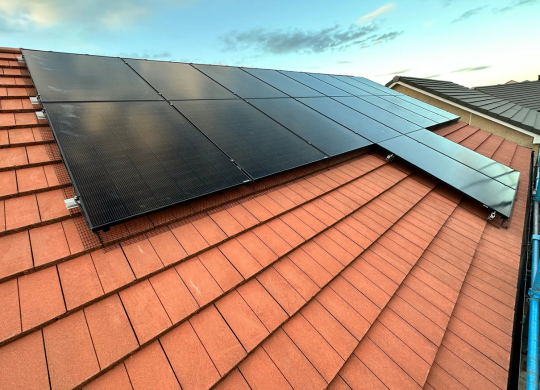
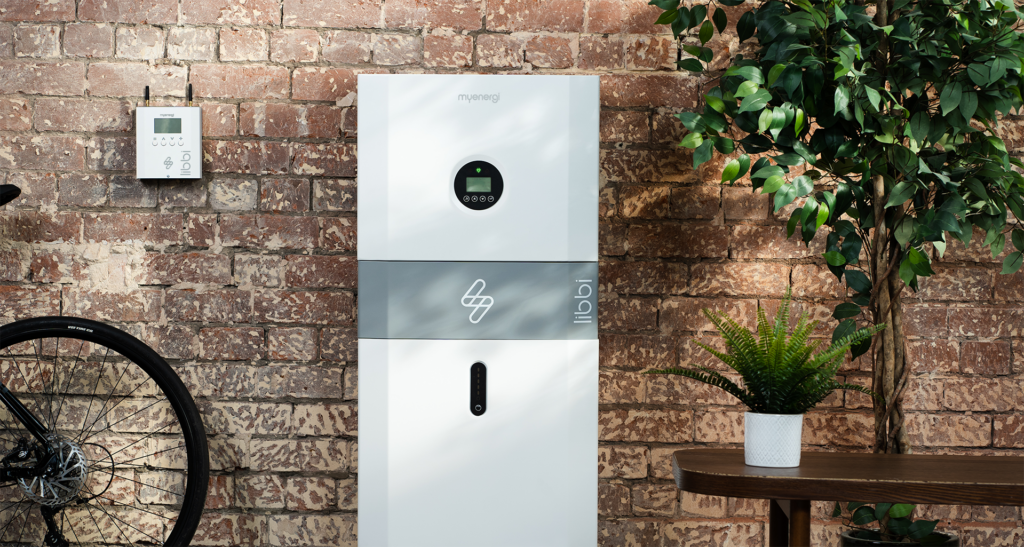
UPS vs EPS is an important comparison if you want power during a cut. Both can keep electrical equipment running when the grid fails, but they are designed for different jobs. A UPS normally protects specific electronic equipment from an interruption or poor-quality supply. An EPS on a solar-and-battery system provides backup power to selected circuits—or, with the right design, much of the home—after the property has safely disconnected from the grid.
The key point is that a home battery with an EPS output is not automatically a UPS. Transfer time, power quality, output capacity, earthing arrangements and the appliances connected all matter.
What is a UPS?
UPS stands for Uninterruptible Power Supply. It is usually installed between the mains supply and a particular item or group of equipment, such as a computer, server, broadband router, alarm or control system.
A UPS can maintain power when the mains supply fails. Depending on its design, it may also regulate voltage and help protect sensitive electronics from dips, surges or other supply disturbances. UPS products have different topologies: online double-conversion systems, line-interactive units and standby or offline units do not all provide the same transfer performance or power conditioning.
Where uninterrupted operation is essential, choose equipment that is specified and certified for that purpose. The relevant product family is the BS EN IEC 62040 series. A fast manufacturer-quoted switchover alone does not make a home battery system a certified UPS.
What is an EPS on a home battery?
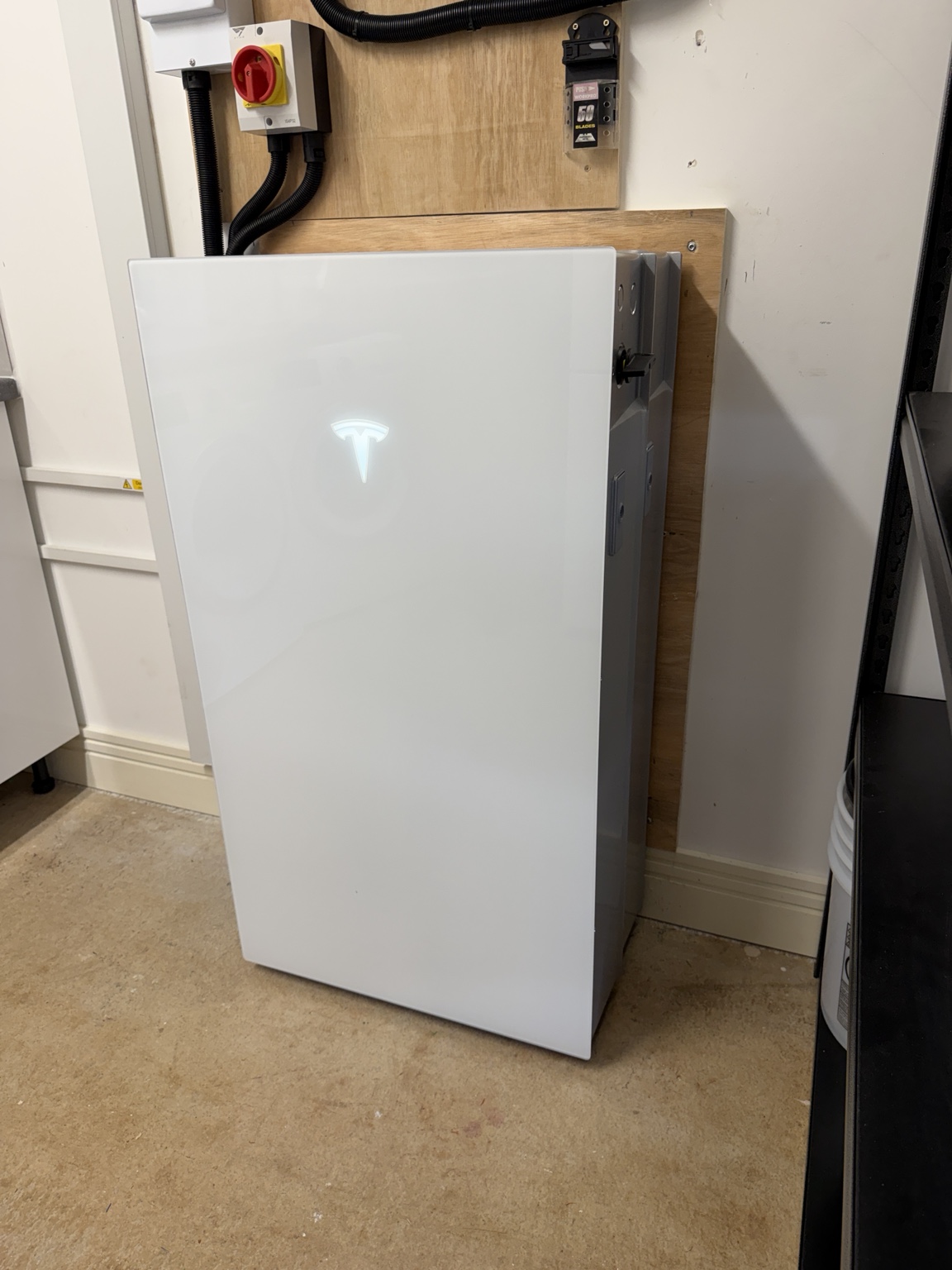
EPS commonly means Emergency Power Supply. In domestic solar and battery storage, it normally describes an inverter or battery output that can supply power when the grid is unavailable.
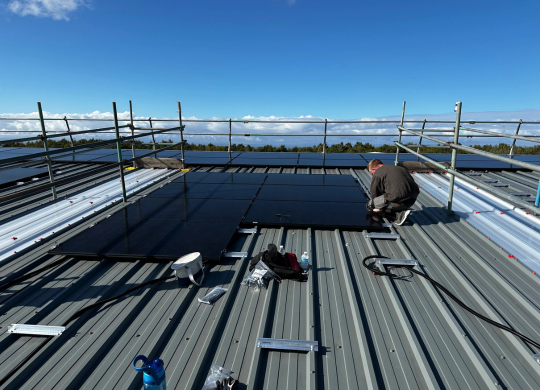
During a power cut, a correctly designed system detects the grid failure, disconnects the backup installation from the public network and supplies the designated circuits from the battery. This is called island mode. Solar panels may be able to recharge the battery while islanded, but that capability depends on the inverter, system design, battery state and available sunlight.
Some systems supply one dedicated socket or a small essential-load consumer unit. Others can be designed for broader or whole-home backup. The word “whole-home” does not mean every appliance can run at full power simultaneously—the inverter’s output and surge limits still apply.
UPS vs EPS: the main differences
| Feature | UPS | Home-battery EPS |
|---|---|---|
| Main purpose | Continuity and, depending on topology, power conditioning for specific equipment | Backup energy for selected household circuits or a suitably designed wider installation |
| Transfer | Can be no-break or have a brief transfer, depending on the UPS type | Varies by inverter and installation; never assume it is suitable for every sensitive load |
| Typical runtime | Often sized for minutes or enough time for orderly shutdown, although larger systems are available | Often hours, depending on battery capacity, state of charge and household demand |
| Typical loads | Computers, networking, controls and other compatible electronic equipment | Lighting, refrigeration, internet, sockets and other circuits selected during the design |
| Solar recharging | Not normally part of a small standalone UPS | May be available in island mode where the system supports it |
| Installation scale | Usually protects one device or a defined group of loads | Integrated with the inverter, battery, consumer unit, protection and changeover arrangement |
| Product requirements | Look for the appropriate BS EN IEC 62040 compliance and manufacturer specification | Must be designed around the particular inverter, battery, grid connection and UK wiring requirements |
Does an EPS switch over instantly?
Not necessarily. EPS transfer time varies between products and system configurations. A short interruption may be unnoticeable to lights and many domestic appliances but enough to restart a computer, router or sensitive control system.
If a particular device must not reboot, the safest approach may be to use a dedicated UPS for that device even when the property also has battery backup. The UPS deals with immediate continuity, while the larger battery system provides longer-duration energy. Compatibility should always be checked against both manufacturers’ instructions.
Battery capacity and backup output are different
Two figures determine what a battery backup system can do:
- Capacity, measured in kilowatt-hours (kWh), affects how long the stored energy may last.
- Output, measured in kilowatts (kW), limits how much equipment can operate at the same time.
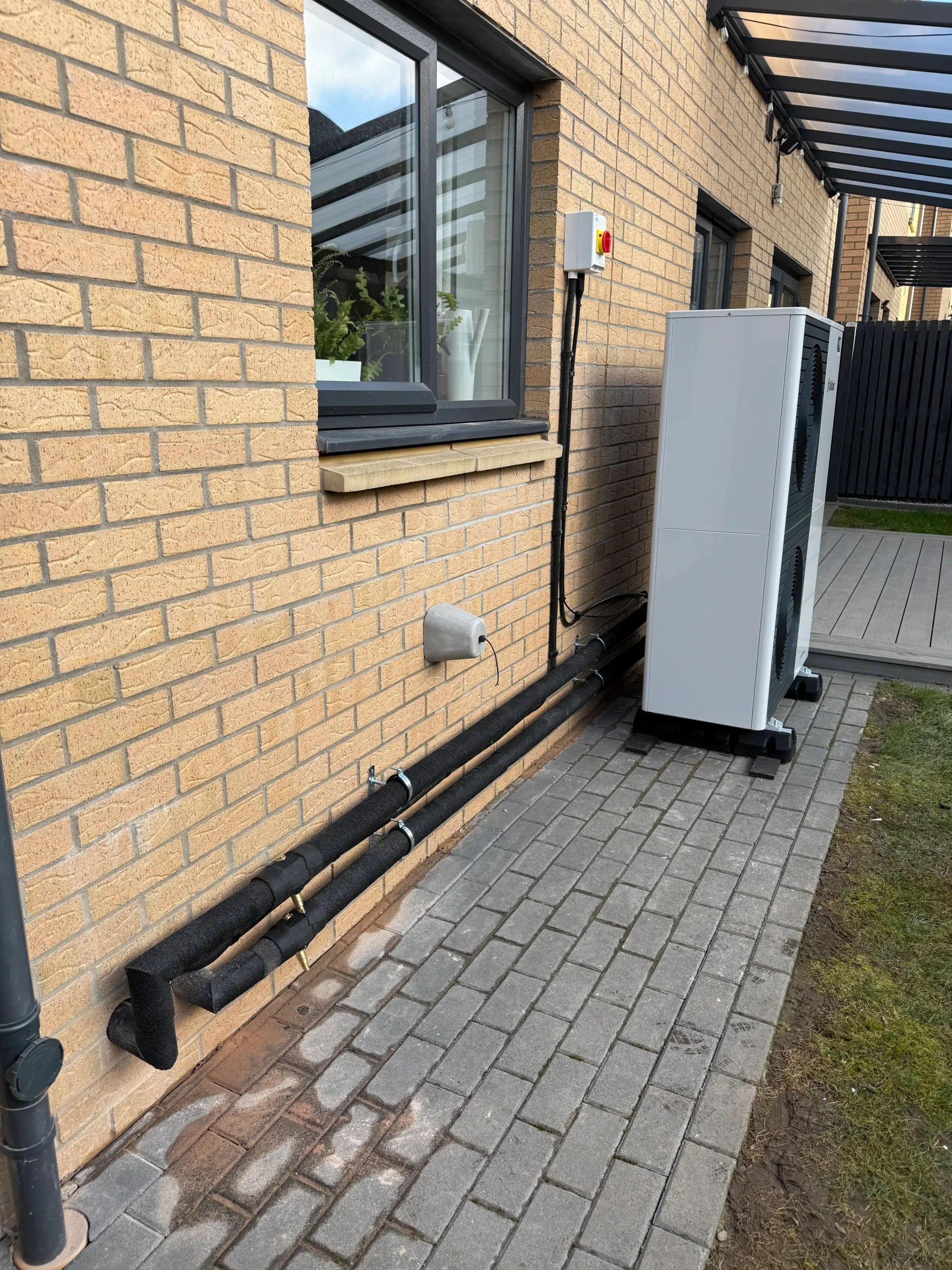
For example, a battery may hold plenty of energy but still be unable to start or run several high-power appliances together. Kettles, electric showers, ovens, immersion heaters, heat pumps and EV chargers can create substantial continuous or starting loads. An installer should identify essential appliances, expected simultaneous demand and any motor-starting surge before choosing the backup arrangement.
Essential-circuit or whole-home backup?
An essential-circuit system supplies a planned group of loads during an outage. These might include lighting, refrigeration, broadband, heating controls and selected sockets. Restricting backup to essential loads can reduce cost, avoid accidental overload and extend runtime.
A whole-home arrangement can be more convenient but requires careful design. The property still needs load management, and some high-demand circuits may need to be excluded or used selectively. Three-phase properties, large heat pumps, electric heating and EV charging require particular consideration.
Read our detailed guide to using a home battery during a power cut for a fuller explanation of essential loads, whole-home backup and expected runtime.
Safe island-mode design matters
Backup power involves more than connecting a socket to a battery. When operating in island mode, the installation must be safely separated from the distribution network. The changeover arrangement, switching of live conductors, neutral treatment, earthing, fault protection and circuit selection must work together.
The correct design depends on the property’s earthing system and the equipment being installed. Independent earthing may be required so protective devices continue to operate correctly when the grid is absent. The system must also prevent any unsafe backfeed onto the network.
Battery storage should be designed and installed by a competent contractor in accordance with the applicable wiring requirements, manufacturer instructions and the MCS Battery Installation Standard. Grid-connected generation and storage may also require G98 or G99 notification or approval from the Distribution Network Operator.
Which option is right for your home?
- Choose a dedicated UPS when specific compatible electronics need immediate continuity or defined power-quality protection.
- Choose a battery EPS arrangement when you want longer backup for selected household circuits or a properly designed wider installation.
- Consider both when sensitive electronics must remain live through the EPS changeover and the home also needs longer-duration backup.
A standard domestic EPS should not be treated as a life-safety supply. Medical equipment, fire-safety systems and other critical applications need specialist assessment, appropriate certified equipment and a documented contingency plan.
UPS vs EPS frequently asked questions
Is EPS the same as a UPS?
No. EPS is commonly the backup output of a home battery or inverter, while a UPS is equipment designed for continuity and, depending on its topology, power conditioning. An EPS may switch quickly, but it is not automatically a UPS.
Will my computer stay on when the EPS starts?
It depends on the inverter’s transfer time and the computer’s power supply. If avoiding a restart is important, use a suitable dedicated UPS and confirm compatibility with the battery system.
Can an EPS power my entire house?
Some systems support whole-home backup, but the design must respect the inverter’s output, surge capability and battery capacity. High-power appliances may need to be excluded or managed.
Can solar panels work during a power cut?
Ordinary grid-connected solar normally shuts down when the grid fails. A compatible battery and inverter system may continue operating in island mode and may use solar to support loads or recharge the battery. This must be designed into the installation.
How long will battery backup last?
Runtime depends on usable battery capacity, state of charge, connected loads and whether solar generation is available. Reducing demand to essential circuits can extend backup considerably.
Plan the right backup system
Renew-Able Solutions designs and installs battery storage systems and solar PV across Edinburgh, East Lothian and wider Central and East Scotland. We can assess your essential loads, consumer unit, earthing arrangement, required runtime and whether a dedicated UPS is also appropriate.