A home battery can be worthwhile when it is sized around how your household actually uses electricity. The strongest cases normally combine solar generation, evening electricity demand, a suitable time-of-use tariff or a need for properly designed backup power. A battery is not automatically a good investment for every property.
The right question is not simply “how big is the battery?” It is how often the usable capacity will cycle, what each stored unit of electricity is worth, how much power the system can deliver and whether the design suits your existing solar panels, tariff and future plans.
The short answer: is home battery storage worth it?
For many UK households, the answer is yes, provided the system is correctly specified. Battery storage can reduce expensive grid imports by keeping surplus solar electricity for later or by charging at a cheaper off-peak rate. It can also provide optional resilience during a power cut when compatible equipment and the necessary EPS or backup wiring are included.
However, a battery may take longer to justify if daytime electricity use already consumes nearly all your solar generation, the difference between your import and export rates is small, the battery is oversized, or it rarely completes a useful charge-and-discharge cycle.
When is a home battery most likely to be worthwhile?
- You export substantial surplus solar electricity during the day but import electricity in the evening.
- Your tariff offers meaningfully cheaper electricity at certain times.
- You have predictable evening loads such as cooking, an EV, an immersion heater or a heat pump.
- The battery is sized from half-hourly or daily consumption data rather than guesswork.
- You expect to remain in the property long enough to benefit from the system.
- You value backup power and understand that the backup equipment is a separate design decision.
When might it be less compelling?
- Your daytime demand already uses most of your solar output.
- Your export tariff pays close to, or more than, the value of the electricity the battery would replace.
- The proposed battery is much larger than your typical overnight consumption.
- You cannot access a useful off-peak tariff and have little solar surplus.
- The quote relies on an unrealistic number of full cycles or assumes electricity prices will never change.
How a home battery actually saves money
A battery does not create electricity. It moves electricity from one time to another. The financial value normally comes from two routes:
- Solar self-consumption: surplus solar is stored instead of exported, then used when the panels are producing less.
- Tariff shifting: the battery charges when electricity is cheaper and discharges when grid electricity is more expensive.
A sensible assessment compares the cost of the grid electricity avoided with the export payment given up, then allows for conversion losses, standing consumption, battery degradation and tariff restrictions. Exported solar may qualify for payment through the Smart Export Guarantee, so exported electricity should never be treated as having no value.
Simple principle: battery value is driven by useful energy shifted, not just the capacity printed on the specification sheet.
Solar and battery versus a battery without solar
A battery can work with or without solar panels. With solar, it stores generation that would otherwise be exported. Without solar, it can charge from the grid during a cheaper tariff period and supply the home later.
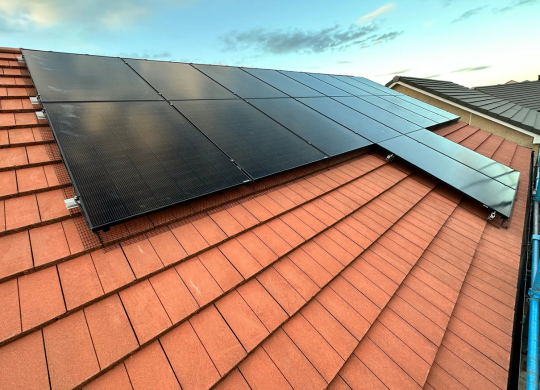
Solar and battery storage installed together can share parts of the design and installation process. A battery-only system can still be useful for tariff shifting, high evening demand or future solar plans, but its economics depend heavily on the tariff remaining suitable. Read more about our solar PV installations and battery storage systems.
How much does a home battery cost?
Battery prices vary significantly according to usable capacity, inverter power, backup equipment, electrical work, location and whether the system is installed with solar. The Energy Saving Trust currently gives a broad range of £1,500 to £10,000 and an indicative figure of around £4,600 for a 5kWh system. These are market guides rather than quotations for a particular property.
Qualifying professionally installed domestic battery storage is currently covered by the temporary zero rate of VAT in Great Britain until 31 March 2027. Eligibility depends on the installation and the installer is responsible for applying the correct VAT treatment. Current guidance is available from HMRC.
What size battery does a house need?
There is no reliable “one battery per house size” rule. Two similar homes can have completely different demand profiles. We consider annual consumption, when the electricity is used, solar-array output, seasonal variation, tariff windows, large loads and whether future equipment such as an EV or heat pump is planned.
Capacity in kWh versus power in kW
Capacity, measured in kilowatt-hours (kWh), is the amount of energy the battery can store. Power, measured in kilowatts (kW), is how quickly the system can charge or supply that energy. A large-capacity battery with a modest discharge rate may still import from the grid when several high-power appliances run together.
Nominal and usable capacity
Compare systems using usable capacity, not just nominal capacity. The battery management system normally reserves part of the battery to protect performance and lifespan. Also check charge and discharge limits, round-trip efficiency, operating-temperature limits, warranty conditions and the guaranteed retained capacity or energy throughput.
AC-coupled or DC-coupled battery?
A DC-coupled battery is commonly designed alongside a new solar array using a hybrid inverter. An AC-coupled battery has its own battery inverter and is often practical when adding storage to an existing solar system. Neither arrangement is universally best: compatibility, existing warranties, inverter capacity, export limits, efficiency and future expansion all matter. Our detailed guide explains AC-coupled versus DC-coupled battery storage.
Will a home battery work during a power cut?
Not automatically. A standard grid-connected battery may switch off with the grid even when it still contains energy. Backup requires compatible equipment, safe isolation from the network, suitable earthing and a defined backup arrangement.
Depending on the system, backup may supply one dedicated socket, selected essential circuits or a larger part of the property. The available power, stored energy and battery state of charge still limit what can run and for how long. If resilience matters, it must be included at the survey and design stage. See our guide to battery EPS during a power cut and our comparison of UPS and EPS.
Battery lifespan, warranty and safety
Modern home batteries are generally designed for many years of service, but the warranty matters more than a blanket lifespan claim. Check the product warranty, cycle or throughput limit, minimum retained capacity, labour terms and any requirements for internet connectivity, servicing or approved operating conditions.
Lithium iron phosphate, often shortened to LFP or LiFePO4, is widely used in current domestic storage systems. It offers useful cycle life and thermal-stability characteristics, but no battery chemistry should be described as risk-free or impossible to ignite. Correct product selection, location, clearances, protection, commissioning and manufacturer instructions remain essential. MCS publishes the UK battery installation standard MIS 3012 for the design and installation of electrical energy storage systems.
Choosing the system, not just the battery brand
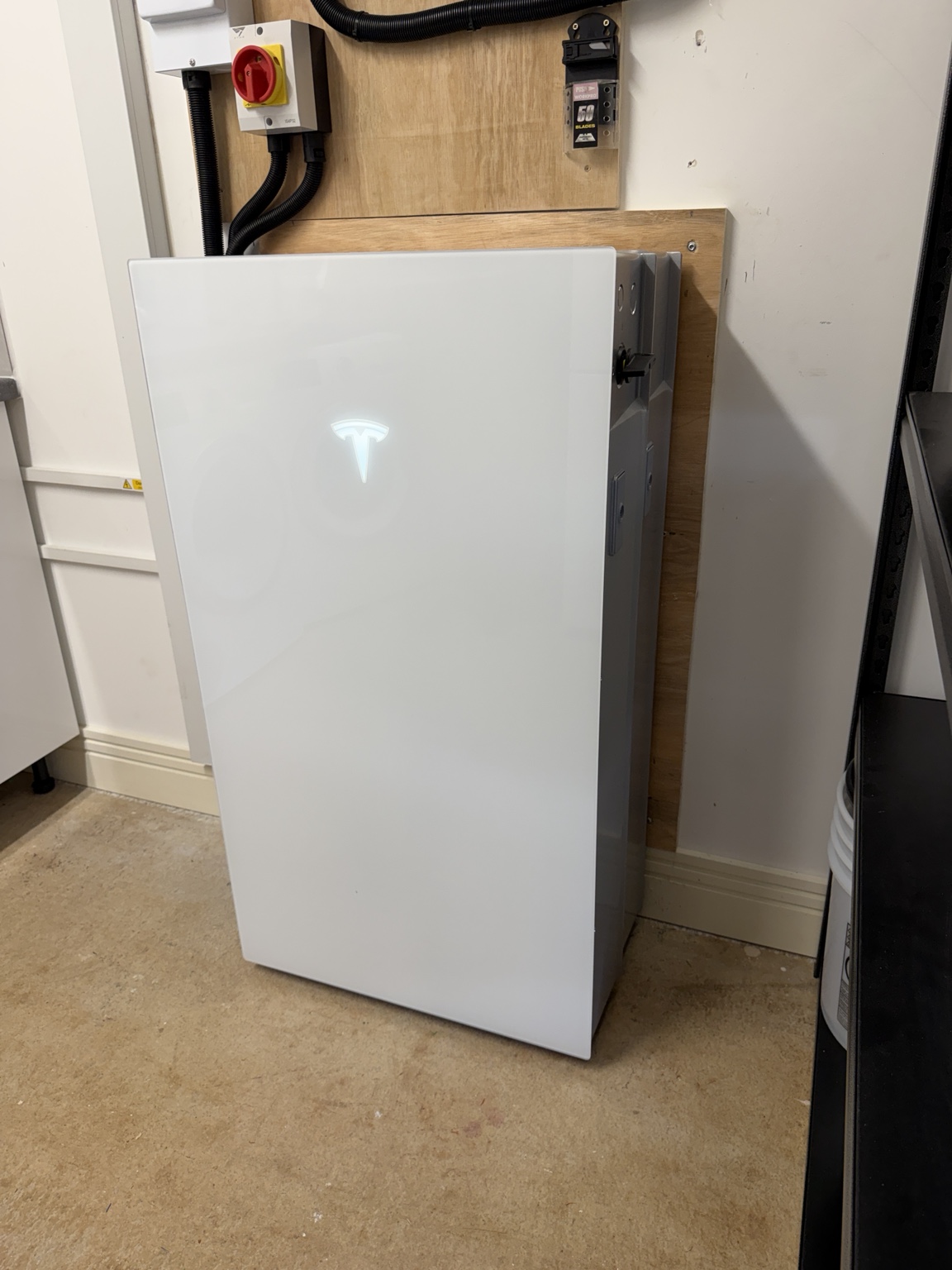
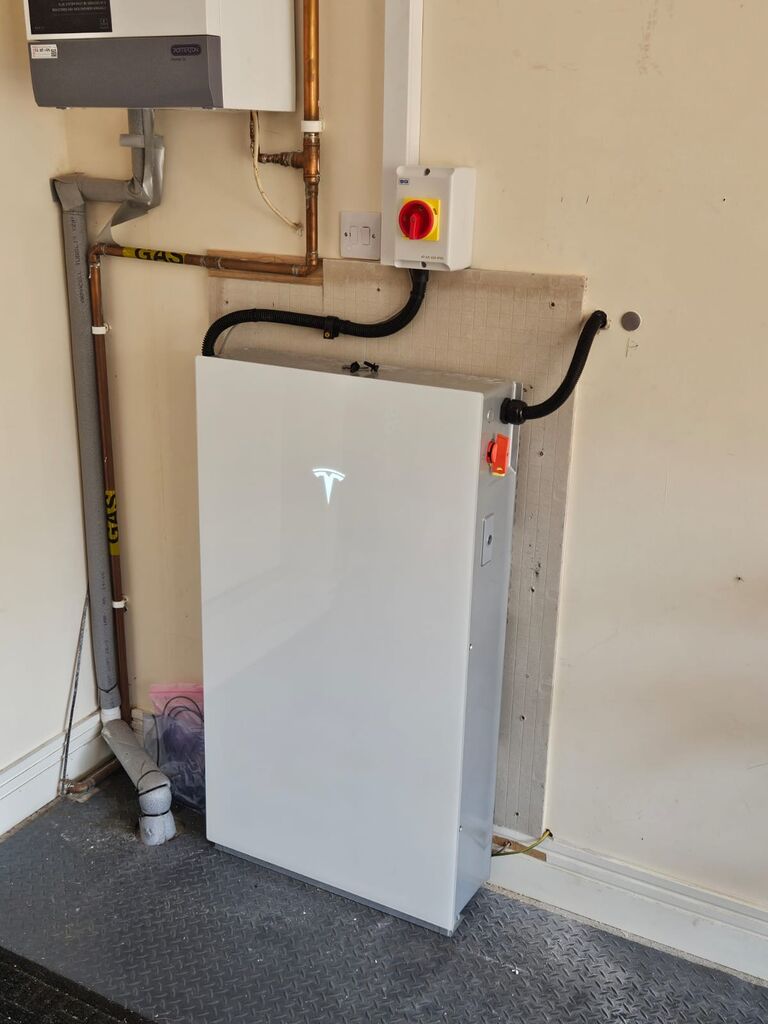
Renew-Able Solutions installs battery platforms from Sigenergy, Tesla, Fox ESS and Eleven Energy, subject to product suitability, availability and the requirements of the property. The best choice is not necessarily the largest battery or the best-known logo.
We compare inverter power, usable storage, phases, monitoring, expandability, backup options, existing equipment, DNO requirements and aftercare. A hybrid inverter can be a neat choice for new solar-and-battery projects, while a separate AC-coupled system can protect the value of an existing solar installation.
Questions to ask before accepting a battery quote
- What are the nominal and usable capacities?
- What continuous and peak power can the system supply?
- How were the proposed capacity and savings calculated?
- Has the export income given up by storing solar been included?
- What does the warranty guarantee after ten years?
- Can the battery be expanded later, and on what terms?
- Will it operate during a power cut, and which circuits will it supply?
- Are backup wiring, earthing and changeover equipment included?
- Where will the equipment be located and why?
- Which tariff assumptions have been used?
Frequently asked questions
Can I add a battery to existing solar panels?
Usually, yes. An AC-coupled battery is often the simplest retrofit, although replacing or reconfiguring an existing inverter may sometimes provide a better long-term design. Compatibility, warranties and DNO limits should be checked first.
Can a battery charge from the grid?
Many systems can charge from the grid according to a schedule or tariff. Whether this saves money depends on the price difference, efficiency losses, tariff rules and how consistently the stored electricity is used.
Does a bigger battery always save more?
No. An oversized battery may spend long periods partly charged and deliver fewer useful cycles. Capacity should be matched to the household’s demand, available solar surplus and tariff window.
Will a battery make my home energy independent?
It can reduce grid dependence, but most UK homes still need the grid to balance seasonal generation and demand. Winter solar output, sustained high loads and the battery’s power and capacity all limit independence.
How do I know whether a battery is worth it for my home?
Use your electricity consumption profile, existing or proposed solar generation, import and export tariffs and the system’s usable capacity and efficiency. A property-specific assessment is more reliable than a universal payback promise.
Get a property-specific battery assessment
Renew-Able Solutions designs and installs battery storage across Edinburgh, East Lothian and wider Central and East Scotland. We assess the property, existing electrical equipment, energy profile, proposed location, tariff strategy and backup requirements before recommending a system.
Contact Renew-Able Solutions to discuss a new battery, a solar-and-battery installation or storage for an existing solar PV system.