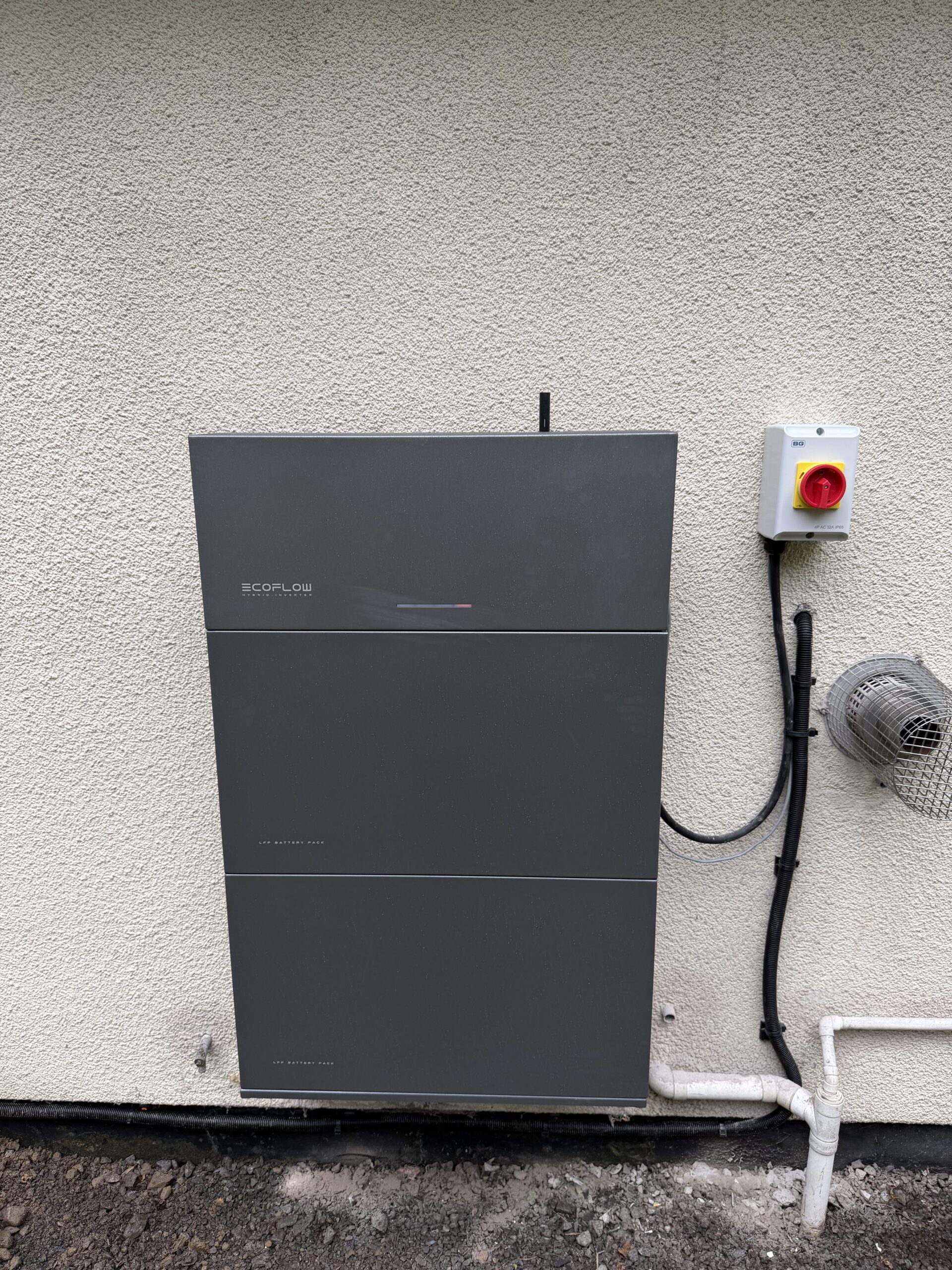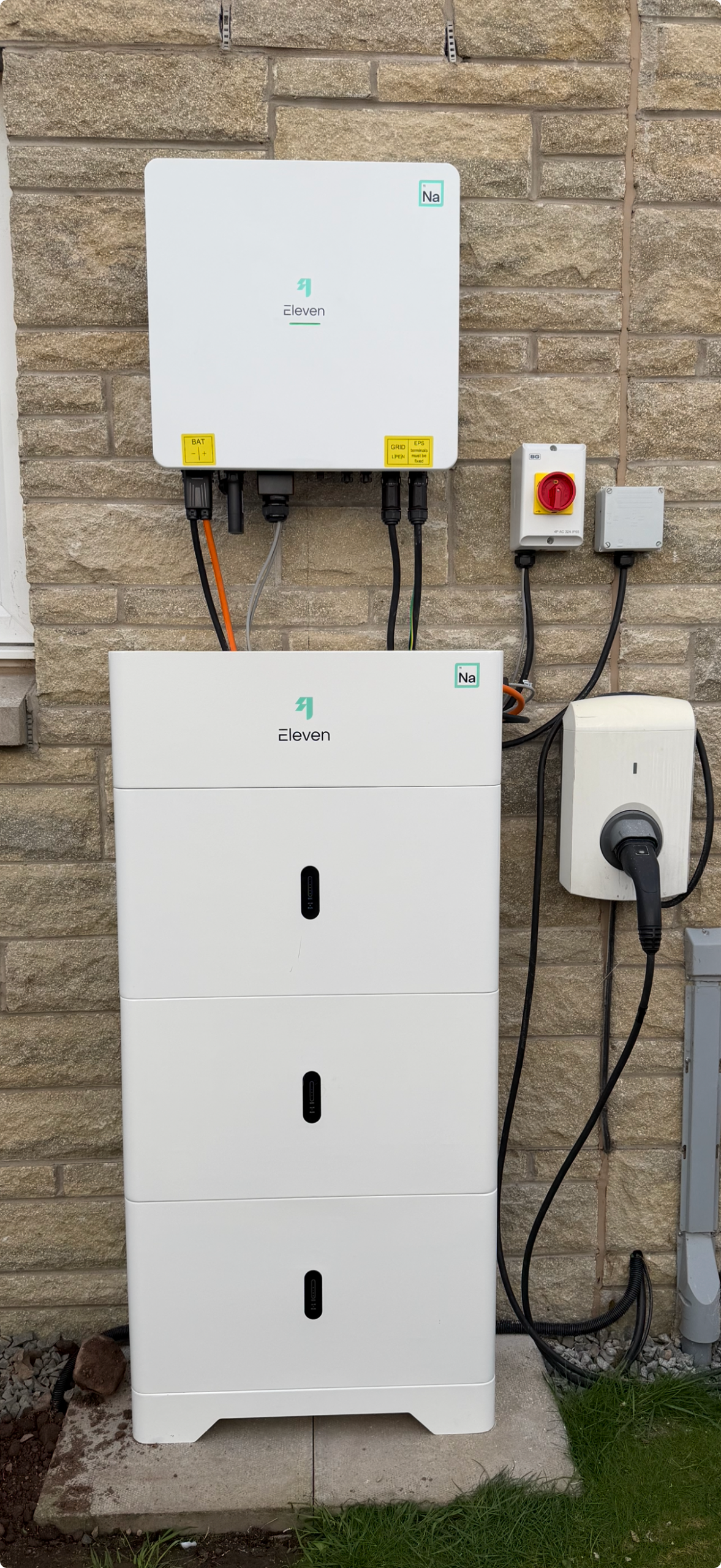
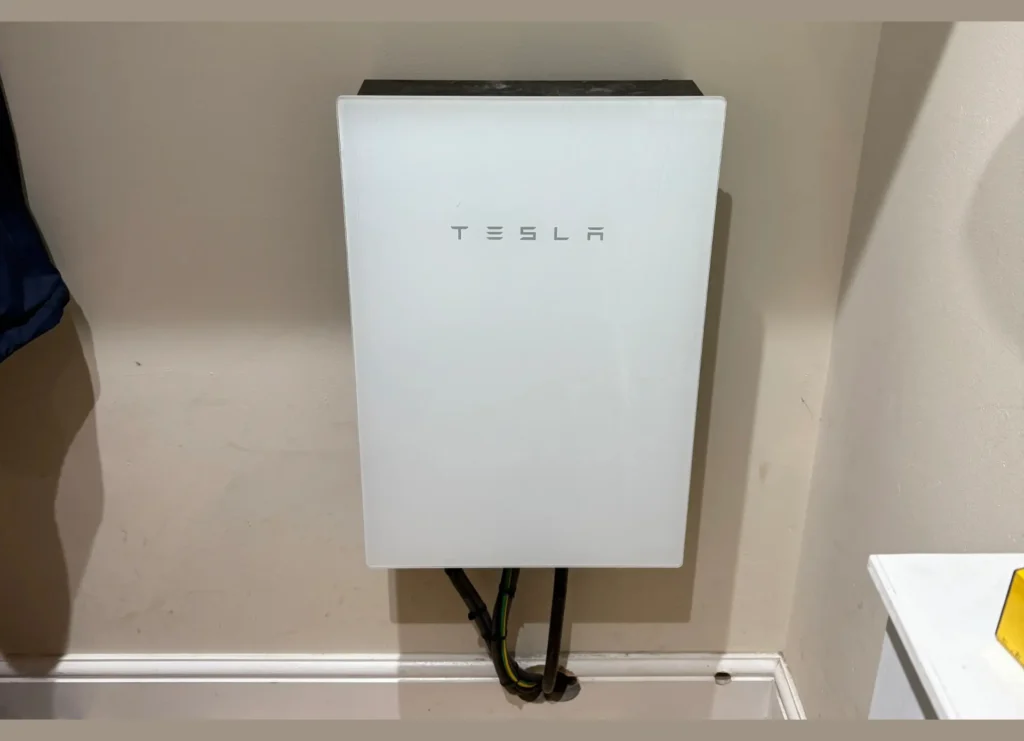
A hybrid inverter combines the main functions needed to manage solar panels and battery storage in one unit. It converts the direct current (DC) produced by solar panels into alternating current (AC) for the home, while also controlling when a compatible battery charges and discharges.
For a new solar-and-battery installation, this can create a tidy, efficient system with fewer separate components. However, hybrid inverters are not all identical. Battery compatibility, backup capability, output power, phase arrangement and grid-connection requirements must all be checked before choosing one.
Considering a Fox ESS system? Our Fox ESS hybrid inverter, battery and EPS backup guide compares single-phase and three-phase options, compatible batteries and backup for selected household circuits.
How does a hybrid inverter work?
Solar panels generate DC electricity. A normal solar inverter converts that electricity to AC so it can power household appliances or be exported to the grid. A hybrid inverter adds battery-control functions, allowing solar electricity to be directed between the home, a compatible battery and the grid.
During a typical day, the system may work like this:
- Solar power supplies the electrical demand in the home.
- Surplus solar charges the battery, subject to its charge limit and state of charge.
- Once the battery is full, remaining surplus can be exported to the grid or managed according to the system settings.
- When solar generation falls, the battery can discharge to reduce electricity imported from the grid.
- The battery may also charge from the grid during a cheaper time-of-use tariff, if the customer’s tariff and system settings allow it.
The exact priorities can normally be configured through the manufacturer’s app or commissioning software. Export limits, reserve levels and tariff schedules must be set around the approved system design.
Hybrid inverter vs solar inverter vs AC-coupled battery
| System type | What it controls | Often best suited to |
|---|---|---|
| Hybrid inverter | Solar PV conversion and compatible battery charging/discharging in one platform | New solar-and-battery installations or solar fitted with a planned future battery |
| Standard solar or string inverter | Solar PV generation only | Solar-only installations where battery integration is not required |
| AC-coupled battery inverter | A battery operating alongside a separate solar inverter | Retrofitting storage to existing solar or creating a more modular arrangement |
A hybrid system is commonly DC-coupled: solar energy can charge the battery on the DC side before conversion to AC. An AC-coupled battery has its own inverter and connects on the AC side of the property. Both approaches can work well. The right choice depends on whether solar already exists, equipment compatibility, expected power flows, backup requirements and future plans.
Our guide to AC-coupled and DC-coupled battery storage explains these arrangements in more detail.
Can a hybrid inverter work without a battery?
Many hybrid inverters can operate as an ordinary grid-connected solar inverter before a battery is installed. This can be useful if you want solar now and intend to add storage later.
However, “hybrid,” “battery-ready” or “storage-ready” should not be treated as a universal promise. Before installation, check:
- Which battery models and capacities the inverter supports
- Whether extra hardware, licences or communication equipment will be required
- Whether the intended battery is likely to remain available
- The maximum battery charge and discharge power
- Whether adding the battery later changes the DNO application
- Whether backup power needs a separate gateway, changeover device or essential-load consumer unit
A separate AC-coupled battery can sometimes offer more flexibility on a retrofit because it is less dependent on the original solar inverter’s battery ecosystem.
Does a hybrid inverter provide backup during a power cut?
Not automatically. A normal grid-connected solar installation must shut down when the grid fails. This protects engineers working on the network and prevents unsafe backfeed.
To provide backup, the chosen inverter and battery must support EPS or island-mode operation, and the installation needs the correct isolation, changeover, earthing and protection arrangements. Some systems include the necessary switching; others require a separate backup gateway or additional equipment.
Backup may supply:
- A dedicated backup socket
- Selected essential circuits, such as lighting, refrigeration, broadband and heating controls
- A wider or whole-home arrangement where the equipment and electrical design permit it
Even a whole-home system has power limits. High-demand appliances may need to be excluded or managed. Transfer time also varies, so a sensitive computer or network device may still need a dedicated UPS. See our guides to home battery power during a blackout and UPS vs EPS.
Inverter kW, battery kW and battery kWh
These figures describe different parts of the system:
- Inverter rating in kilowatts (kW) limits how much AC power the inverter can deliver, subject to its operating mode and specification.
- Battery output in kilowatts (kW) affects how much demand the battery can support at one time.
- Battery capacity in kilowatt-hours (kWh) affects how much energy can be stored and therefore how long it may last.
- Solar array size in kilowatt peak (kWp) describes the rated DC capacity of the panels under standard test conditions.
A large battery does not automatically provide a large power output, and a powerful inverter does not make a small battery last longer. Correct sizing considers annual consumption, daytime demand, peak loads, EV charging, heating, tariffs, roof capacity and the intended level of backup.
Single-phase and three-phase hybrid inverters
The inverter must be designed around the property’s electrical supply. Most UK homes are single-phase, while some larger homes and commercial properties have three-phase supplies.
On a three-phase property, it is important to establish which phases the solar, battery and backed-up circuits will use. Some three-phase systems can provide balanced output or backup across phases; others have product-specific restrictions. Large heat pumps, workshops, commercial equipment and three-phase EV chargers can materially affect the design.
DNO approval and export limitation
A hybrid inverter is grid-connected generation equipment, so the Distribution Network Operator must be considered. G98 generally covers qualifying type-tested systems up to 16 A per phase. Larger systems, certain combinations of inverters or installations outside G98 conditions require G99 approval before connection.
The DNO may approve a system with a G100-compliant export limitation. This can restrict the power exported to the network while still allowing the property to use more generation or battery power behind the meter, subject to the approved design.
Read our explanation of G98, G99, G100 and DNO applications.
Advantages of a hybrid inverter
- One coordinated platform for solar generation and compatible battery storage
- Fewer separate inverter units in many new installations
- Potentially efficient DC charging from solar to the battery
- Unified monitoring and energy-management controls
- Can allow a planned battery to be added later where compatibility is confirmed
- Backup capability may be available with the appropriate battery and installation design
Limitations to consider
- The inverter may only support a limited range of batteries
- Battery charge and discharge power may be lower than expected
- Backup is not standard on every product
- A combined unit can create a greater single point of failure
- A separate AC-coupled battery may be more practical when retrofitting existing solar
- Future expansion can be restricted by product, firmware, phase or DNO limits
Which hybrid inverter brands do Renew-Able install?
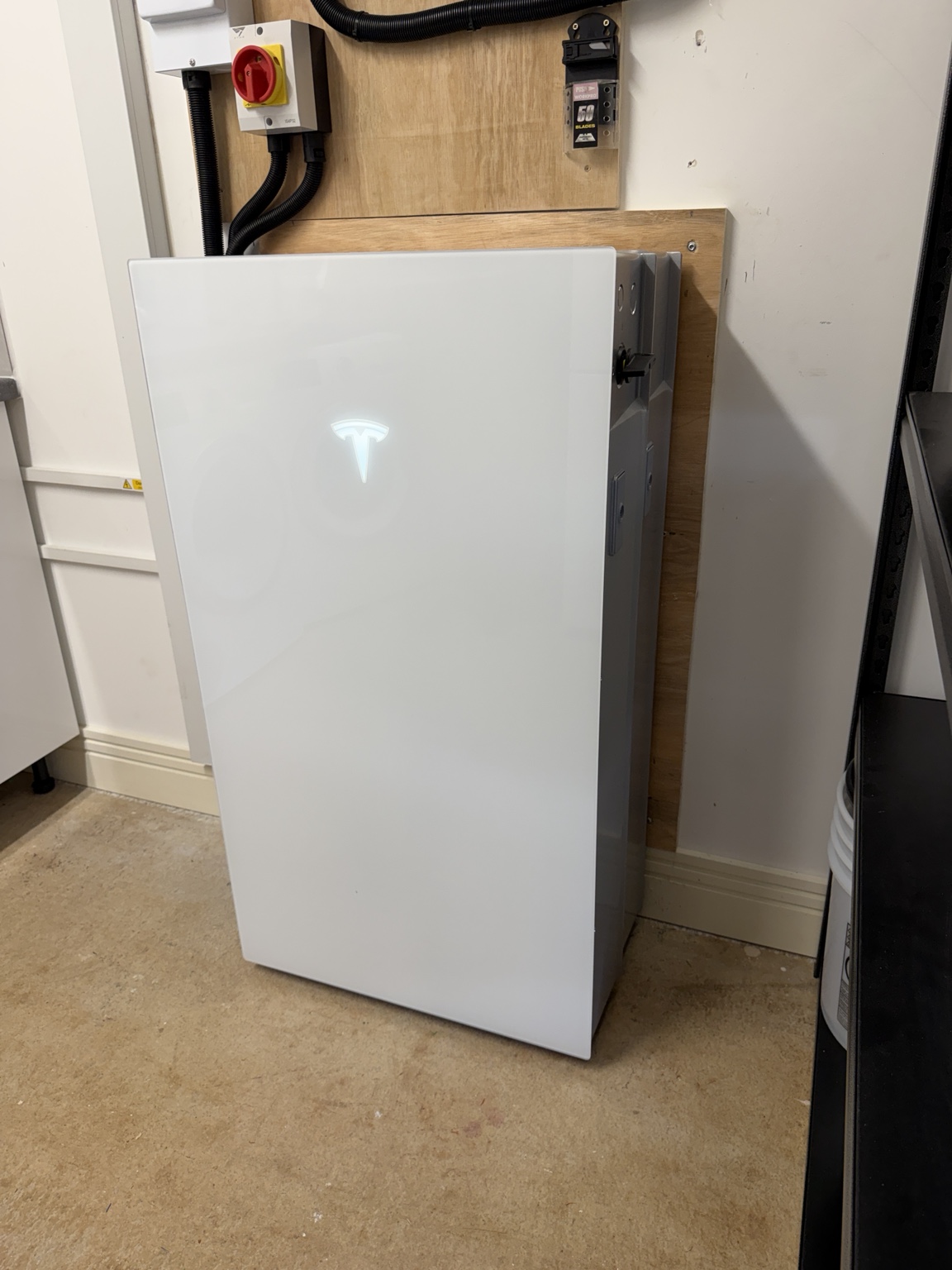
Renew-Able Solutions designs solar and battery systems using manufacturers including Sigenergy, Tesla, Fox ESS and Eleven Energy. These products do not all use the same architecture: some combine more functions within one energy platform, while others use separate or modular inverter, battery and backup components.
We select equipment around the property, roof design, electrical supply, DNO position, expected consumption, tariff and backup requirements—not simply the inverter label. Explore our solar PV installation and battery storage services.
Hybrid inverter FAQs
Is a hybrid inverter worth it?
It can be a strong choice for a new solar-and-battery installation because it coordinates both systems in one platform. For existing solar, an AC-coupled battery may be simpler or more flexible. A site-specific design is needed to compare the options properly.
Can I add any battery to a hybrid inverter?
No. The battery must be electrically and digitally compatible with the inverter. Use the manufacturer’s approved compatibility list and check supported capacity, voltage, current, firmware and communication requirements.
Can a hybrid inverter charge a battery from the grid?
Many can, allowing the battery to charge during a cheaper tariff period. The feature, permitted settings and available power depend on the product, tariff and installation design.
Will solar panels work in a power cut?
Not on an ordinary grid-connected installation. Solar can continue during an outage only where a compatible battery, inverter and island-mode system have been designed to operate safely while separated from the grid.
Can a hybrid inverter run a home off-grid?
Some products support off-grid operation, but a reliable off-grid home requires much more than selecting that mode. Seasonal generation, maximum loads, surge demand, battery autonomy, generator provision and protection arrangements all need specialist design.
Get the right inverter and battery design
Renew-Able Solutions installs solar PV and battery storage across Edinburgh, East Lothian and wider Central and East Scotland. We assess the roof, consumer unit, electrical supply, energy use, DNO requirements and backup priorities before recommending the system architecture.
Battery installations should follow the applicable wiring requirements, manufacturer instructions and the MCS Battery Installation Standard.