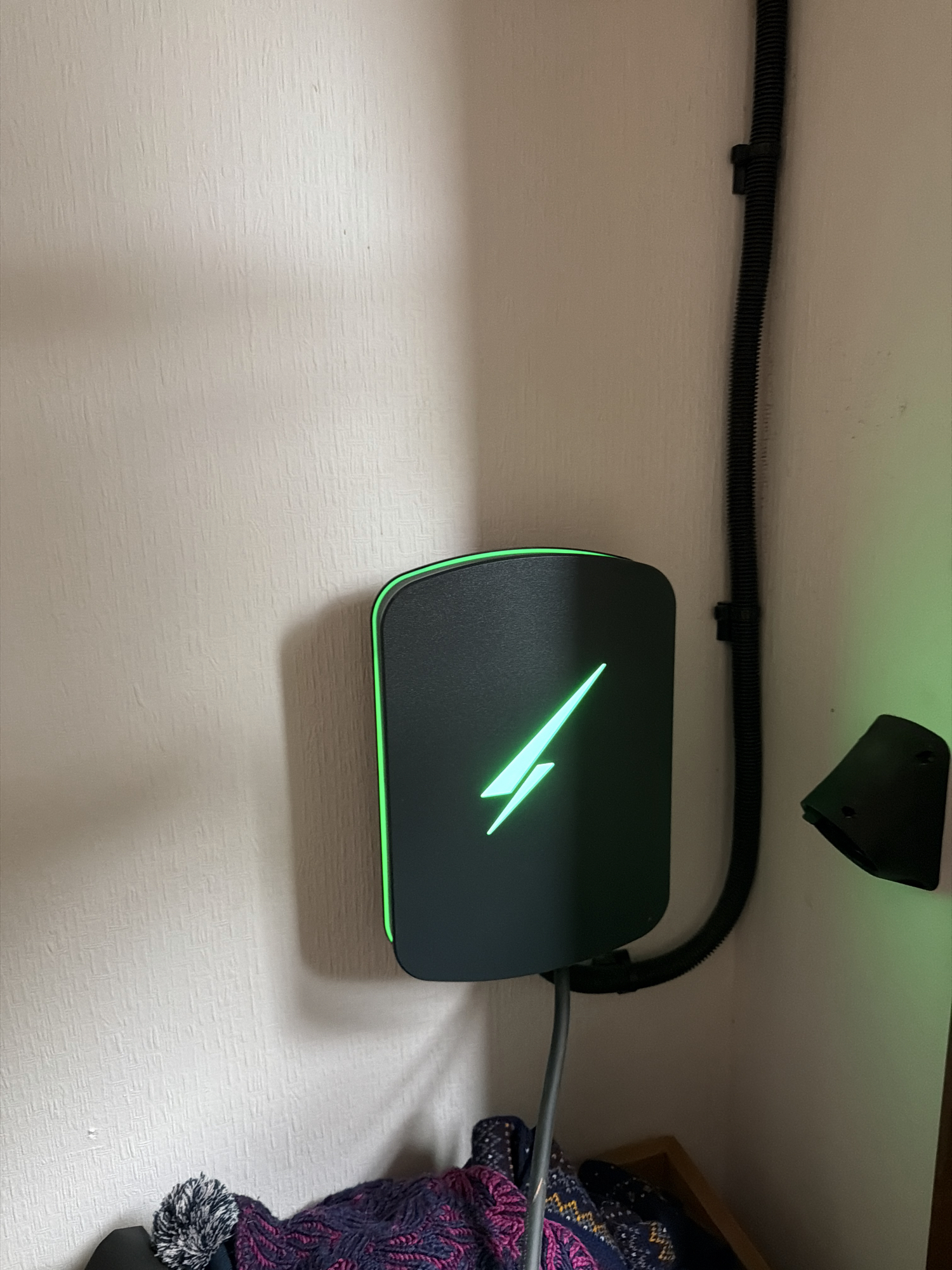
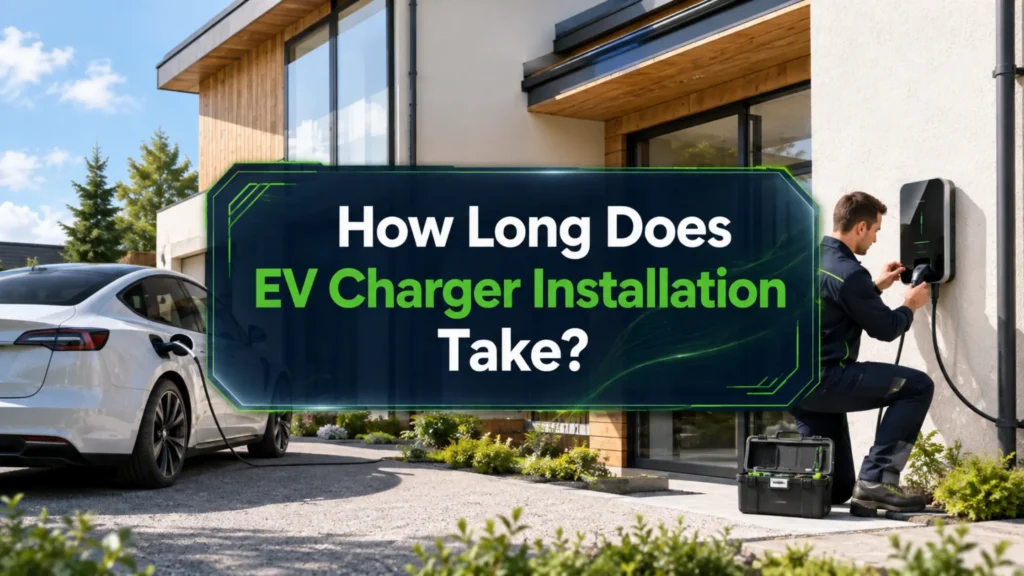
EV charger installation time depends on the electrical supply, cable route and work agreed after the survey. Before choosing equipment, use our home EV charger comparison to compare features and installation extras.
Many straightforward home EV charger installations can be completed during a single visit, often within part of a working day. More complex projects may take a full day, require preparatory work or need separate visits.
The physical installation is only one part of the timeline. Surveying, selecting the charger, checking the electricity supply, completing any required DNO process and scheduling the work can all affect how soon the charger is ready to use.
For homes in Edinburgh, East Lothian and across Central and East Scotland, Renew-Able confirms the likely programme after reviewing the property, vehicle and proposed cable route.
EV charger installation time: the work at your home
A simple installation may take around half a day. This could involve mounting the charger close to the consumer unit, installing a straightforward cable route, completing the required electrical protection, testing the circuit and setting up the charger.
Allow a full day or longer where the cable route is difficult, the charger is far from the supply, groundworks are needed, the consumer unit requires alterations or several energy systems need to be coordinated. The survey should identify these factors before the work is booked.
The EV charger installation timeline
| Stage | What affects the timing? |
|---|---|
| Initial assessment | Availability of supply details, photographs, MPAN and vehicle information |
| Survey and design | Cable route, parking position, consumer unit, earthing, maximum demand and solar or battery integration |
| DNO process | Whether the installation qualifies for connect-and-notify or needs an application before connection |
| Scheduling | Charger stock, installer availability, groundworks and any third-party permissions |
| Installation | Usually one visit for a straightforward home; longer or multiple visits for complex work |
| Commissioning | Electrical testing, app connection, smart settings, customer handover and documentation |
Step 1: assessment and survey
The installer needs enough information to design and price the work accurately. A preliminary remote assessment may be possible using photographs and supply details, but this does not remove the need for the electrical installation to be properly assessed.
The assessment should cover:
- the incoming supply and service-fuse rating;
- earthing and open-PEN protection requirements;
- consumer-unit condition and available capacity;
- maximum demand and other large electrical loads;
- the charger position, parking arrangement and cable route;
- the vehicle’s AC charging limit;
- Wi-Fi or mobile connectivity for smart functions; and
- any solar PV, battery storage or second charger.
Renew-Able can then recommend a suitable charger from the options it installs, including myenergi Zappi, Hypervolt and Ohme. See our EV charging point installation service.
Step 2: ENA and DNO checks
Domestic EV chargepoints follow the Energy Networks Association connection process for low-carbon technologies. This is not a G98 or G99 generation application.
Some installations can be connected and then notified to the distribution network operator within the required period. Other installations need an application and confirmation before they are connected, particularly where the supply assessment identifies relevant constraints or other low-carbon technologies.
It is therefore inaccurate to assume that every 7 kW home charger creates the same multi-week delay. Equally, all chargepoints should be assessed through the correct process rather than assuming that lower-powered equipment requires no DNO notification.
ScottishPower Energy Networks is the DNO for Edinburgh, the Lothians and much of Central and Southern Scotland. SSEN Distribution covers northern Scotland. The installer should confirm the correct operator from the MPAN or postcode and complete the appropriate submission.
Step 3: installation and electrical work
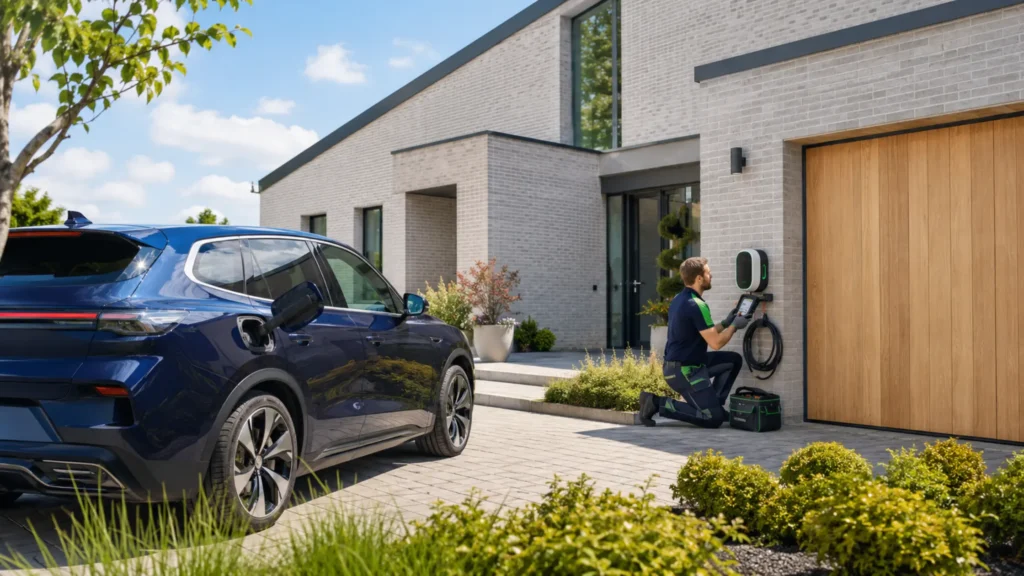
On installation day, the work normally includes mounting the chargepoint, installing the supply cable and containment, fitting the specified protective devices, completing earthing and safety measures, and connecting the equipment in accordance with the design and manufacturer’s instructions.
The installer will need access to the consumer unit, meter area, charger position and the agreed cable route. Electricity may need to be isolated for part of the work, so the timing of any interruption should be discussed beforehand.
Adding a second charger can require a coordinated load-management design rather than two independent circuits operating without control. Our guide to installing more than one EV charger at home explains the additional assessment.
Step 4: testing, commissioning and handover
The charger should not simply be energised and left. The new circuit and protective functions must be tested, the chargepoint commissioned and the customer shown how to use it.
Handover may include connecting the charger to its app, applying software updates, setting access controls, configuring schedules and explaining smart-tariff or solar-charging modes. App or internet issues can extend this part of the visit, so it helps to have the home Wi-Fi details and charger account available.
What can make installation take longer?
A long or difficult cable route
Routes through several rooms, around stonework or finished surfaces, or to a detached garage require more time than a charger mounted close to the electrical supply. Underground routes may need trenching or separate groundworks before the electrical installation.
Consumer-unit or supply alterations
A consumer unit does not automatically need replacing because an EV charger is being fitted. Its condition, protective arrangements and capacity must be assessed. The solution might be an additional distribution board, changes to protective devices, remedial work or, where justified, a consumer-unit replacement.
If the DNO needs to alter the service fuse, meter tails or incoming supply, that work is arranged separately and the timescale is set for the specific property. Avoid relying on a generic number of weeks before the DNO has assessed the request.
Flats, communal areas and rented properties
Flats and shared car parks can involve permissions from the owner, landlord, factor or management company. Cable routes through communal areas and connections to shared electrical infrastructure may also require a more detailed design.
Solar PV and home-battery integration
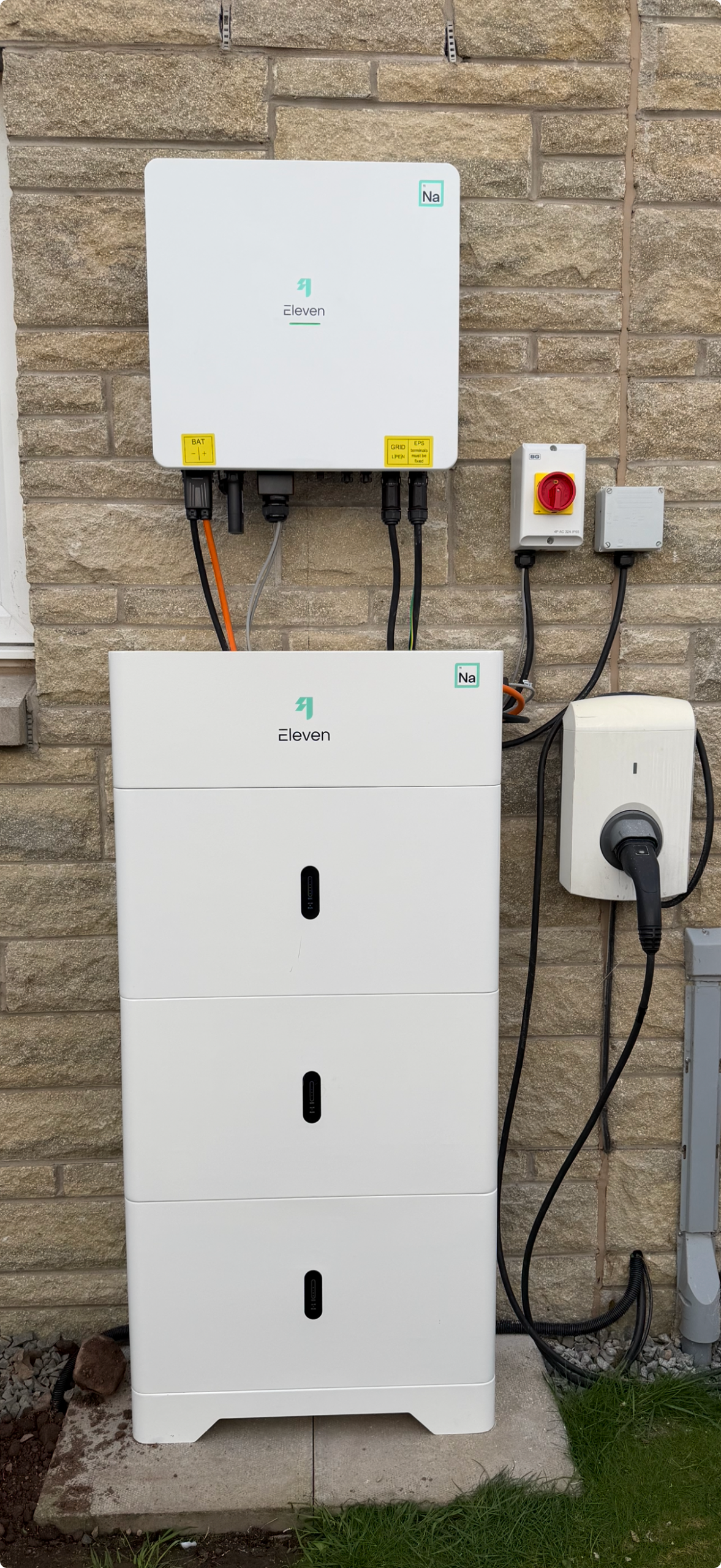
A solar-compatible charger may need current transformers, monitoring equipment and additional commissioning. The cable arrangement itself does not determine solar compatibility; compare charger models and control features. See our guide to tethered and untethered EV chargers and our solar PV installation service.
How to avoid unnecessary delays
- Provide the MPAN, supply details and clear photographs promptly.
- Confirm the EV model, charging inlet and onboard AC charging limit.
- Choose the preferred parking position and consider future vehicles.
- Identify proposed solar PV, batteries, heat pumps or a second charger.
- Obtain landlord, factor or property-owner permission where required.
- Keep access clear around the consumer unit, meter and cable route.
The best way to get an accurate programme is to complete the technical assessment before fixing the installation date. Renew-Able can assess the full electrical and renewable-energy setup across Edinburgh and the Lothians rather than treating the charger as an isolated appliance. Explore all our renewable-energy services.
Frequently asked questions
Can a home EV charger be installed in one day?
Yes. Many straightforward installations are completed during one visit, often within part of a working day. Difficult cable routes, groundworks, electrical alterations or complex system integration can require longer or separate visits.
Does every EV charger need DNO approval before installation?
No. Every installation should be assessed through the ENA process, but some can be connected and notified afterwards while others need an application before connection. The installer should complete the correct route with the local DNO.
Do I need to be home while the EV charger is installed?
The installer needs authorised access to the consumer unit, meter area, charger position and cable route, plus someone available for the handover. Ask the installer whether another responsible adult can provide access if you cannot be present.
Will my consumer unit need to be replaced?
Not automatically. Its condition, capacity and protective arrangements must be assessed. The correct solution may be new protective devices, an additional distribution board, remedial work or a replacement consumer unit.
Does solar PV make EV charger installation take longer?
It can add commissioning time where solar monitoring equipment or control settings are required. The physical charger installation may be similar, but the installer should test the solar-charging behaviour and explain how grid import, surplus generation and any home battery interact.
For independent background, read the Energy Saving Trust guide to charging electric vehicles. Then compare the cable, controls and installation scope in your own quotation.